Clarified Butter and Ghee: A Guide
Clarified butter and ghee: pure butterfat that won't burn, even at searing heat. Learn the difference, make both at home, and cook with real confidence.

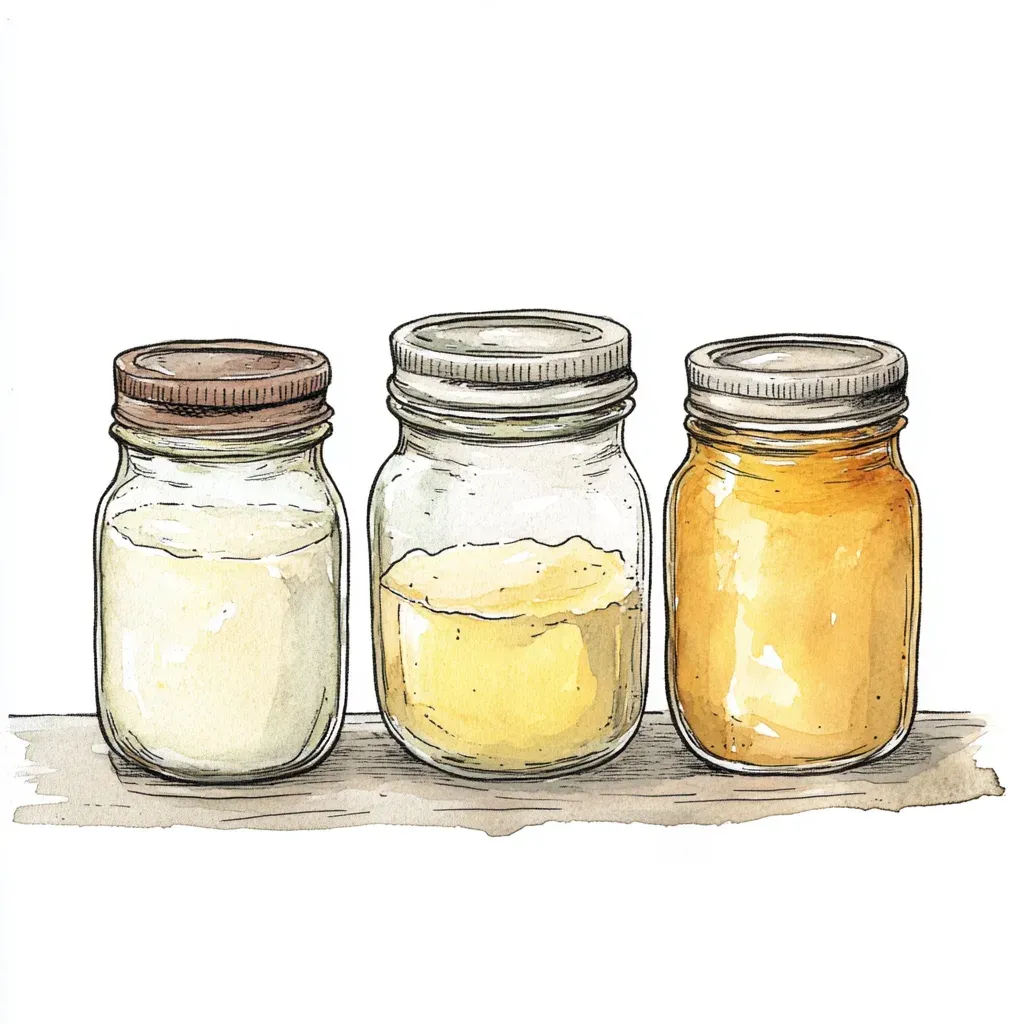
Regular butter has a flaw it hides well most of the time: it hates high heat. The water and milk solids that give it that familiar creamy flavor are the same ones that turn it black and bitter the moment your pan gets seriously hot. If you have ever gone for a restaurant-quality sear and ended up with grey meat sitting in burnt fat, that is why.
Clarified butter and ghee solve this. Both are butter with the water and milk solids removed, leaving pure butterfat that handles heat without incident. The difference between them is subtle but worth understanding, and making either takes about 20 minutes and one pot. For date night, they add sophistication to dishes while preventing the burnt butter flavor that ruins many home-cooked meals.
What clarified butter actually is
Regular butter is roughly 80% fat, 18% water, and 2% milk solids. When you heat butter gently, those three components separate on their own. The fat floats in the middle as a clear golden layer, foam from the milk proteins rises to the top, and the remaining solids sink.
Clarified butter is what you get when you skim the foam and strain out the solids, keeping only the fat. The result is a clean, golden cooking fat with a smoke point around 450°F, compared to regular butter’s 350°F. That 100-degree gap separates a proper sear from a pan full of smoke and acrid smell. The flavor stays buttery, just without the milky undertone or any burn risk. It is what French kitchens have used for centuries in beurre blanc and for basting proteins at high heat.
Ghee: clarified butter with ambition
Ghee starts identically to clarified butter, then goes further. After the water and milk solids separate, instead of stopping and straining, you keep the heat low and wait. The milk solids at the bottom gradually brown. You will smell something nutty, almost like popcorn or toffee: that is the Maillard reaction working on the milk proteins before they are removed.
The result is a darker, more aromatic fat with a smoke point around 485°F and a flavor profile that does real work on its own. Ghee has been central to Indian and South Asian cooking for thousands of years, where it holds the same cultural and culinary weight that butter holds in France. Roasted vegetables tossed in ghee pick up a nuttiness that cooking oil simply cannot replicate. A steak seared in ghee gets a faint caramel quality that whole butter would produce only if it didn’t burn first.
The flavor difference is the key distinction. Clarified butter tastes like pure butter: clean, neutral, ideal when you want the fat to stay in the background. Ghee has a deeper, nuttier, slightly caramelized character that adds complexity to whatever it touches.
Why this matters for date night
Knowing how to make and use clarified butter or ghee demonstrates understanding of cooking fundamentals. When you explain that you are using ghee for its high smoke point and rich flavor, it shows you have moved beyond basic cooking knowledge into something more deliberate.
These ingredients also appear in French (beurre clarifie) and Indian (ghee) cuisines, showing cultural awareness and culinary range. It is the kind of skill that positions you as someone who understands cooking science and is not intimidated by specialized ingredients. Making your own also shows you prefer quality and are willing to put in the effort.
How to make clarified butter
Start with one pound of unsalted butter. Salted butter concentrates its salt as the water cooks off, and you do not want that in a cooking fat you use across multiple dishes. Cut it into chunks and melt it in a heavy saucepan over low heat. This takes 10 to 15 minutes; rushing it does nothing useful.
Once melted, the three-layer separation becomes visible: foam on top (milk proteins), clear golden liquid in the middle (pure butterfat), and white sediment at the bottom (milk solids).
Skim the foam from the surface with a spoon and discard it. Then pour the clear golden middle layer through cheesecloth or a fine mesh strainer into a heat-safe container, leaving the white sediment behind. One pound of butter yields about 1.5 cups of clarified butter. Store it in the fridge for months, or at room temperature for weeks.
How to make ghee
Follow the same process, but with one key difference. After the butter melts and separates, do not skim. Continue cooking over the lowest heat for another 15 to 20 minutes. Watch the bottom of the pot carefully.
The white solids will slowly turn golden brown. The foam will shift from white to tan. You will smell a nutty, popcorn-like aroma building. That is the Maillard reaction working its way through the milk proteins, and it is what separates ghee from clarified butter.
Once the solids at the bottom are golden brown (not burnt), strain immediately through cheesecloth. The ghee will be darker and more aromatic than clarified butter. It is shelf-stable at room temperature because all the water has cooked off.
The only thing that goes wrong is heat. Too high, and the solids burn before they brown, and you end up with something that tastes acrid. Low and slow is the entire technique.
Where they shine on a date night menu
The applications follow the smoke point logic, and each fat has its territory.
Searing proteins is where clarified butter or ghee genuinely outperforms every other option. You get butter flavor without the burn risk, and the fat carries the heat evenly across the surface of a steak or pork chop. Heat the pan until it is seriously hot, add clarified butter or ghee, and sear steaks 3 to 4 minutes per side. The sear starts immediately without the acrid smell that whole butter produces at the same temperature.
For seafood with dipping butter, clarified butter is the classic choice. It stays liquid at warm temperatures and has a clean, uncluttered quality that melted whole butter, with its foam and solids, cannot match. Lobster, crab, shrimp: warm clarified butter gently and serve in small ramekins for dipping.
Ghee works on roasted vegetables in a way that surprises people. Toss cauliflower or carrots in melted ghee before roasting at 425°F, and the nutty quality amplifies the caramelization that is already happening. It makes ordinary sides taste considered.
Both work for high-heat sauteing. For the initial sear in our Beef Ragu Pappardelle, clarified butter handles the heat better than olive oil and adds a richness to the fond that carries through the whole braise. For the Pork Osso Buco, ghee during the browning stage adds a subtle depth that stays in the finished dish.
When to use each
Choose clarified butter when you want pure butter flavor without browning, when making classic French sauces, when serving with seafood, or when you need a neutral butter taste at high heat. It is the right choice any time the fat should stay in the background and let the main ingredient speak.
Choose ghee when you want nutty, rich flavor, when cooking Indian or Middle Eastern dishes, when roasting vegetables, or when you need maximum smoke point. Ghee does real work as a flavor component, not just a cooking medium.
Choose regular butter when cooking at lower temperatures, when you want milk solids for flavor in baking or finishing sauces, or when making brown butter sauce. There is nothing wrong with whole butter in its proper context.
The mistakes worth avoiding
Burning the milk solids is the most common problem. When making ghee, the window between golden brown and scorched is about two minutes on heat that is too high. Use the lowest burner setting you have and stay close. The smell changes clearly: nutty means it is working; bitter or acrid means you went too far.
Not straining thoroughly is the second issue. If milk solid particles make it into the finished fat, they will burn in the pan the next time you cook with it. Double-strain through cheesecloth or use a coffee filter for crystal-clear results. It takes two more minutes and makes the product last significantly longer.
Confusing the two is the third mistake. Clarified butter is neutral; ghee is nutty. They are not interchangeable in every application. Choose based on the flavor profile you want for the dish.
Using salted butter is the fourth. Salt does not evaporate with the water. It concentrates, and the finished fat can end up far saltier than anything you intended. Unsalted, always.
Storage and shelf life
Clarified butter lasts about six months refrigerated, roughly one month at room temperature in an airtight container. Ghee, because all the water has been removed, is shelf-stable: three to six months at room temperature, up to a year in the fridge. No refrigeration needed, thanks to the complete absence of water and milk solids.
Signs of spoilage are rare if you store properly, but watch for an off smell, visible mold, or a rancid taste. These are uncommon with well-strained product in a sealed container.
Making a batch takes about 20 minutes. Having it ready in a jar in your kitchen means the next several date nights start with a better cooking fat already in the pantry.
The confidence factor
There is a version of date night cooking that is technically fine but clearly improvised. And there is a version where it is obvious you thought about it: where the choice to use ghee instead of butter on the steaks was deliberate, and you can explain why in a sentence when asked.
When your date asks about the golden liquid in the pan, explaining clarified butter or ghee becomes a natural teaching moment. Most people have heard of these but never understood the difference or how to make them. You are not explaining it to impress anyone; you are explaining it because someone noticed and asked. That is a better moment than you might expect.
The food cooks better. It looks better. And it gives you something to talk about while the pan gets hot.
Related Recipes
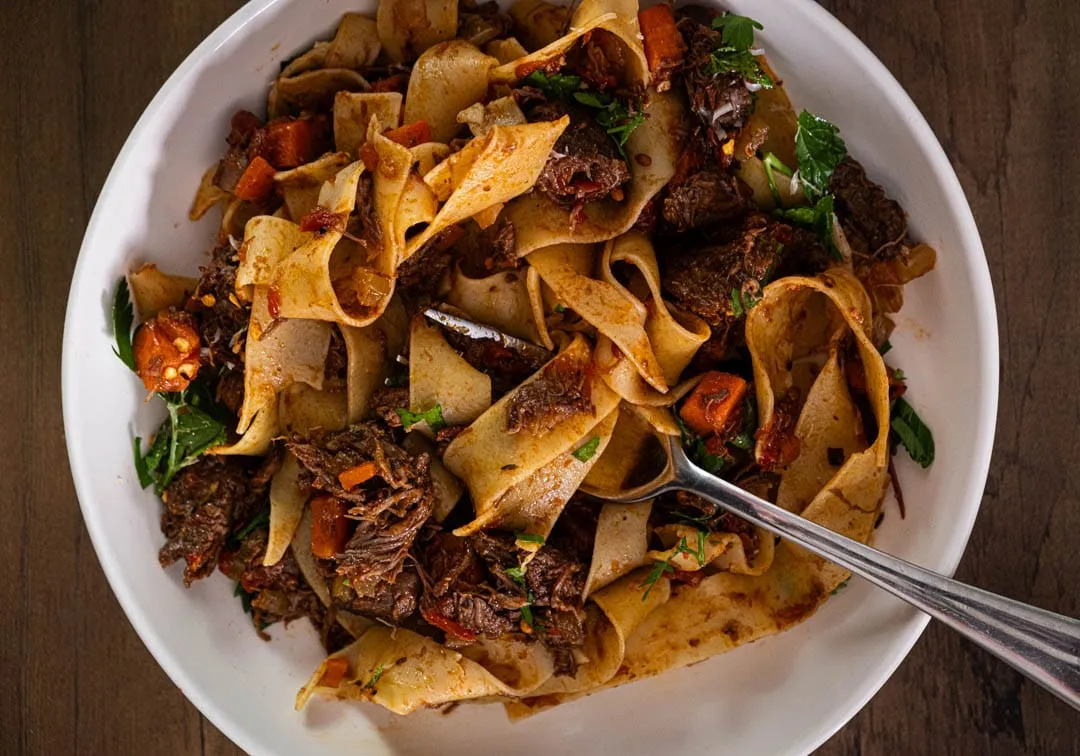
Slow-Cooked Beef Ragu with Pappardelle Pasta
The slow-cooked ragu that says 'I've been thinking about you all day.' Chuck roast, red wine, and pappardelle worth every minute.
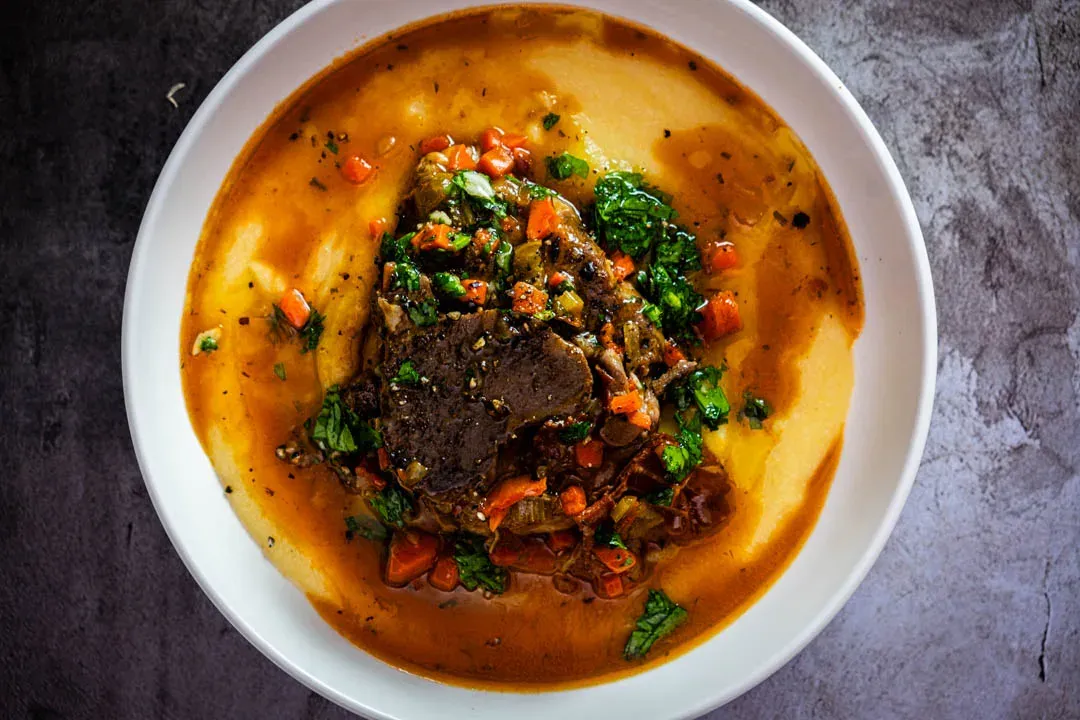
Pork Osso Buco with Creamy Polenta
Fall-apart pork shanks, white wine, creamy polenta, bright gremolata. The kind of dinner that turns a Tuesday into something worth talking about.
Victor Vu
Victor is a Montreal home cook with a decade of experience developing date night recipes. Every dish is tested at least three times before publishing.
About the author →Frequently Asked Questions
Can I buy clarified butter or ghee instead of making it?
Both are available at most grocery stores. Ghee is easier to find, usually in the international foods or natural foods aisle. Clarified butter exists but is less common. Buying is perfectly fine for regular cooking. Making your own costs less per batch, gives fresher results, and takes about 20 minutes of actual attention. Plus, explaining that you clarified your own butter is a better answer than pointing at a jar from the store.
Does ghee taste different from clarified butter?
Yes, and the difference is real enough to matter. Clarified butter tastes like pure butter at high heat, which is exactly what it is. Ghee has a nutty, faintly caramelized quality from the browned milk solids. For neutral applications like dipping sauces or basting fish, clarified butter is the right call. For roasted vegetables or dishes where you want more complexity in the fat itself, ghee.
Can I use ghee in place of butter in baking?
Not as a straight swap. Regular butter contains water and milk solids that affect how baked goods set and brown. Ghee is pure fat, so it behaves differently in structure-dependent recipes like cakes or cookies. Some bakers use it in denser recipes like shortbread or brownies with fine results, but it is not interchangeable with cold butter in most baking contexts.
Is ghee healthier than regular butter?
Nutritionally they are close: both are primarily saturated fat. The main practical difference is that ghee is essentially lactose-free, because the milk solids are removed during processing. For people with dairy sensitivities, ghee is often better tolerated than butter. Neither is a health food, and neither needs to be. The goal is flavor and cooking performance, not substituting one fat for another in a wellness calculation.