Pork Osso Buco with Creamy Polenta
Fall-apart pork shanks, white wine, creamy polenta, bright gremolata. The kind of dinner that turns a Tuesday into something worth talking about.

Prep
25 min
Cook
3h 30 min
Total
3h 55 min
Difficulty
Easy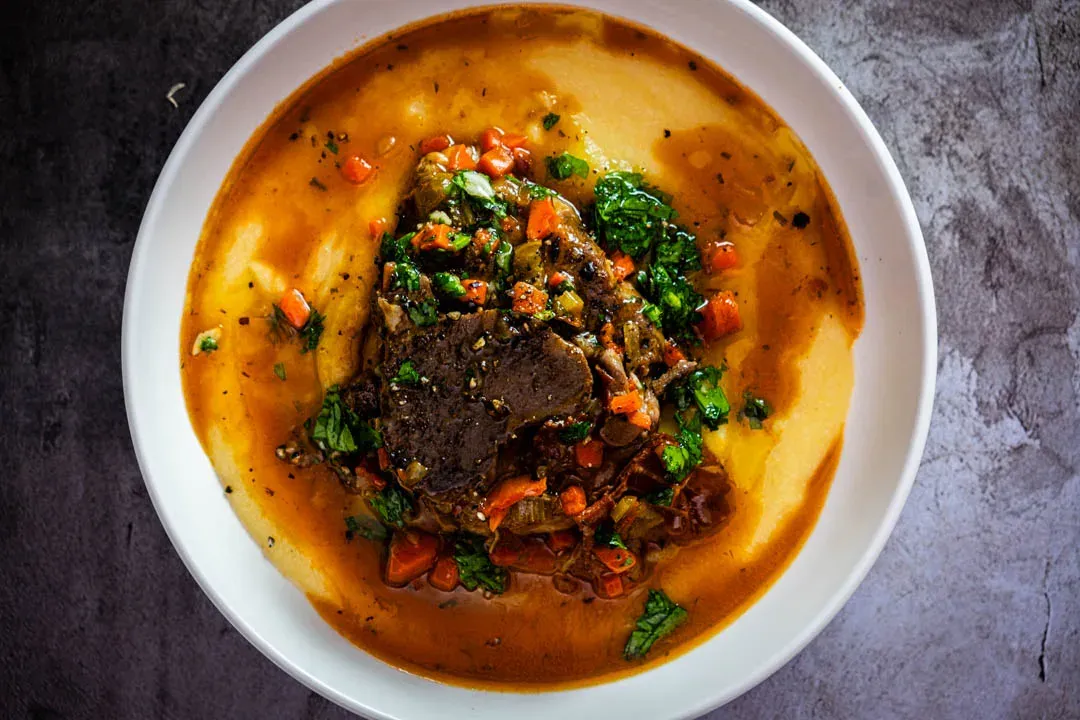
“Pork osso buco is an Italian braise where thick-cut pork shanks are seared, then slow-cooked for three and a half hours in white wine and chicken broth until the meat falls off the bone. Served over creamy polenta and topped with a bright gremolata of parsley, lemon zest, and garlic, it balances richness with fresh citrus notes.”
The first time I made osso buco, I was shamelessly attempting to recreate a move I had witnessed at my Italian friend’s house. His mother had made it the first night she cooked for her husband. She said it made him fall in love with her. Fast forward to me, standing in a Montreal kitchen, trying to pull an Italian nonna’s signature dish on an actual Italian woman. She walked through the door, stopped, breathed in the smell filling the apartment, and said, “You made osso buco?” I still do not know whether she was more impressed or simply amused at the audacity. Probably both. But it worked. This pork osso buco recipe is the one I have been making ever since.
Why This Dish Works
The classic Milanese recipe calls for veal shanks. Nobody is going to argue with Milan. But pork shanks bring their own argument to the table: they are more affordable, more widely available at most butchers, and after three and a half hours in a Dutch oven with white wine, vegetables, and broth, the difference between veal and pork becomes a matter of preference rather than quality. The name “osso buco” translates literally to “bone with a hole” in Italian, referring to the marrow-filled bone at the center of the shank. That marrow melts into the braising liquid during the long cook, contributing a luxurious depth that no shortcut can replicate. Whether you use veal or pork, the bone is doing half the work.
Where you source your shanks matters. In Montreal, butcher shops like Boucherie Lawrence or Boucherie Viandes Forget carry pork shanks regularly. Ask your butcher to cut them 2 to 3 inches thick for the best results. Pancetta adds depth to the soffritto, but a good slab bacon works in a pinch. For the wine, use something you would actually drink. A dry Pinot Grigio or Sauvignon Blanc both work perfectly. Avoid anything labeled “cooking wine”: if you would not pour it in a glass, do not cook with it. If you enjoy slow-cooked Italian mains, you will also want to try our beef ragu pappardelle, another long-braise dish that repays patience with extraordinary depth of flavor.
The Sear Matters
Every braised dish begins with a sear, and this one is non-negotiable. Patting the pork shanks bone-dry before they hit the pan is the difference between a deep golden crust and sad, steamed gray meat. Dry surface, hot fat, patience: those are your three tools. Use a heavy-bottomed Dutch oven or braising pot. Heat it over high until the butter melts and begins to foam. (Swapping in clarified butter or ghee here gives you more heat tolerance and a nuttier depth.) The shanks go in when the pan is very hot. Let them sear undisturbed for 3 to 4 minutes per side. You will be tempted to move them. Do not. The crust releases naturally when it is ready. That golden-brown exterior is the Maillard reaction at work: hundreds of flavor compounds forming in the time it takes to sip half a glass of wine.
Once the shanks are set aside, keep the heat low and slow for the braise itself. Three to three and a half hours at a gentle simmer transforms the pork from tough and chewy to fork-tender, collapsing meat that pulls away from the bone with the lightest pressure. The connective tissue breaks down into gelatin, giving the finished sauce a glossy, sticky richness that coats the polenta like a silk scarf. Check the liquid every 30 minutes and add a splash more chicken broth if it reduces too much. You want enough sauce to spoon generously at the table.
Gremolata and Timing
No discussion of osso buco is complete without gremolata, and no osso buco is complete without it on the plate. This simple condiment, minced parsley, lemon zest, and raw garlic, does something that no amount of salt or technique can replicate: it cuts through the deep richness of the braise with pure, herbal brightness. Make it fresh. Not the morning before, not two hours ahead: the day of serving, as close to plating as possible. Raw garlic loses its punch and parsley wilts into sadness within a few hours. Freshly made gremolata has a vivid, almost electric quality against the slow-cooked meat. It is the contrast that makes the whole dish sing.
Timing the polenta is the other piece of the puzzle. Start it about 50 minutes before the pork finishes. It needs time to cook down, thicken, and become properly creamy. The finishing move matters: a generous knob of butter and freshly grated Parmigiano-Reggiano stirred in at the end. This is not optional. Polenta without fat is porridge. Polenta with butter and Parmesan is a vehicle for something exceptional.
Making It a Date Night
Osso buco is not a weeknight dinner. It is a statement. You are saying, with four hours of your afternoon, that you cared enough to make something that cannot be rushed. The slow braise fills the apartment with a smell that builds anticipation for hours before the meal begins. Your date walks in not to a finished plate but to a scent that promises something serious is happening in the kitchen.
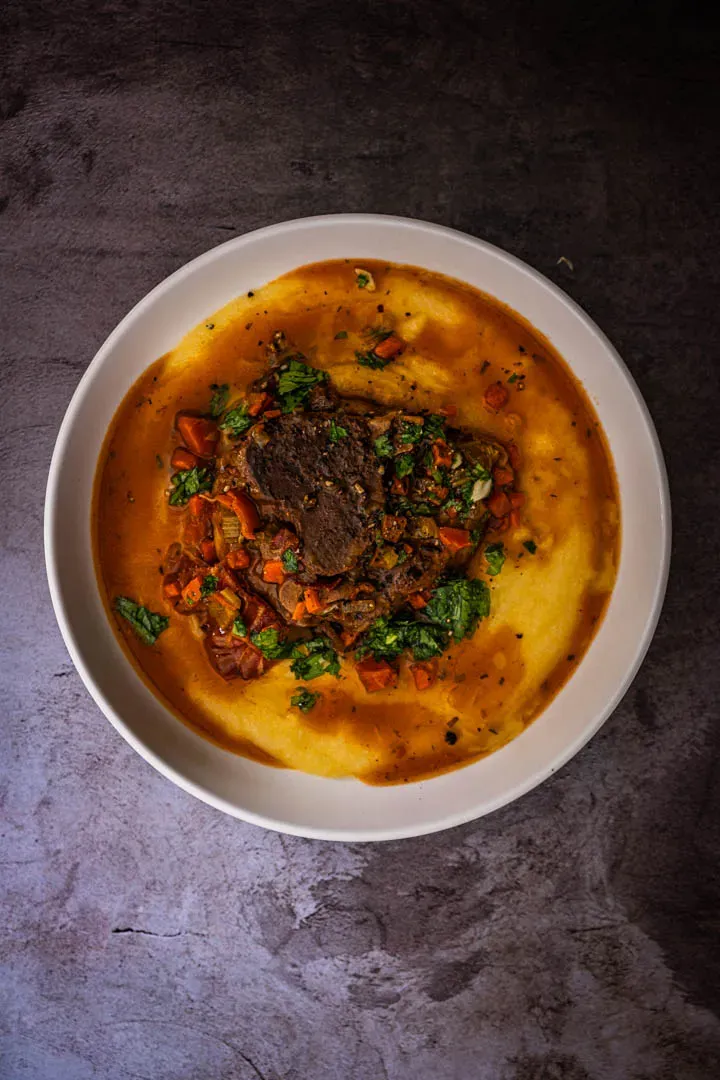
Set the vibe before the cooking even starts. Put on the Italian Dinner Party playlist on Spotify: Dean Martin, classic Italian songs, warm modern Italian pop. Open a bottle of Barbera d’Asti or a good Pinot Grigio while the braise works. Check the pot together every half hour. Make the gremolata side by side. Time the polenta so everything finishes together. The move is this: serve in shallow bowls. Polenta first, then the shank placed on top, then the braising vegetables and sauce spooned generously over everything. Crown the whole thing with gremolata. Bring both bowls to the table at the same time. Sit down. Pause before you both dig in. Let the moment land. That is what this dish is built for.
Why it works: this is a meal that involves your date in the process without asking them to do anything complicated. The apartment smells incredible. The food takes care of itself. You look like someone who has done this a hundred times. For dessert, our lemon posset brulee is the perfect bright, cool close to all that braised richness, and it can be made two days ahead so there is nothing left to do but torch the sugar.
What to Serve Alongside
If you want to start with something before the braise, our cacio e pepe makes an excellent first course. Three ingredients, pure technique, and the kind of dish that says you know what you are doing without needing to announce it. Keep portions small since the osso buco is the star.
For wine, a dry Pinot Grigio works if you want to echo the wine in the braise, but a medium-bodied Barbera d’Asti pairs beautifully with the richness of the sauce. Pour the same wine you cook with during the braise, then switch to the red at the table. It gives the evening a natural arc.
The Commitment Dish
There is a reason my friend’s mother made osso buco the night she met her husband. It is a dish that says something without being loud about it. You spent the afternoon on this. You chose the shanks, built the soffritto, monitored the braise, timed the polenta, chopped the gremolata fresh. None of it is difficult. All of it takes care. That is the message: I cared enough to do this for you. Four hours in the kitchen, two bowls on the table, and one meal neither of you will forget.
Pork Osso Buco with Creamy Polenta
Instructions
Pat the pork shanks dry with paper towels and season generously on all sides with salt and black pepper. Heat the olive oil and butter in a heavy-bottomed pot or Dutch oven over high heat. When the butter is melted and the pan is very hot, add the pork shanks. Sear on all sides until deeply golden brown, about 3 to 4 minutes per side. Remove the shanks and set aside on a plate.
Reduce heat to medium. Add the diced pancetta or bacon to the same pot and cook until crispy, about 3 to 4 minutes. Add the diced onion, celery, carrot, and 1/4 tsp salt. Cook, stirring occasionally, until the vegetables are softened and beginning to caramelize, about 5 to 7 minutes.
Stir in the tomato paste and cook for 2 minutes, stirring constantly, until it darkens and becomes more concentrated. Sprinkle in the flour and stir for another 2 minutes to build the base that will thicken the sauce.
Pour in the white wine and use a wooden spoon to scrape up all the browned bits from the bottom of the pot. Let the wine simmer until reduced by about half, about 3 to 4 minutes.
Add the bay leaf, dried thyme, dried rosemary, and chicken broth. Stir to combine and bring to a gentle simmer.
Return the seared pork shanks to the pot, nestling them into the liquid so it comes about halfway up the shanks. Add more broth if needed. Bring to a gentle simmer, reduce heat to low, cover the pot, and braise for 3 to 3.5 hours. Check every 30 minutes and add more broth if the liquid reduces too much. The meat is done when it pulls away from the bone with almost no resistance.
While the pork braises, prepare the gremolata: finely chop 1/4 cup fresh flat-leaf parsley, zest one lemon, and mince 1 small garlic clove. Combine in a small bowl and set aside. Prepare this fresh the day of serving for the brightest flavor.
About 50 minutes before the pork is done, prepare the creamy polenta: bring 2 cups salted water and 1 cup chicken broth to a boil. Whisk in 1/2 cup coarse polenta, reduce heat to low, and stir frequently for 35 to 45 minutes until thick and creamy. Finish by stirring in 2 tbsp butter and 1/4 cup grated Parmigiano-Reggiano.
Spoon the creamy polenta into shallow bowls. Place a pork shank on top of each portion and ladle the braising sauce and vegetables generously over the meat. Top with a heaping spoonful of gremolata and serve immediately.
Date Night Tips
Wine Pairing
A dry Pinot Grigio or a medium-bodied Barbera d'Asti pairs beautifully with the richness of the braising sauce
Music
The Italian Dinner Party playlist on Spotify: Dean Martin, classic Italian songs, and warm modern Italian pop
Plating
Ladle polenta into a shallow bowl, center the shank, spoon the braising sauce generously over the top, and crown with a heap of bright green gremolata
Enjoy your meal!
The Official Recipe
Pork Osso Buco with Creamy Polenta
Nutrition(Per serving)
620 kcal
Calories
28g
Fat
42g
Carbs
52g
Protein
Ingredients
For the Pork Osso Buco
For Serving
Instructions
Pat the pork shanks dry with paper towels and season generously on all sides with salt and black pepper. Heat the olive oil and butter in a heavy-bottomed pot or Dutch oven over high heat. When the butter is melted and the pan is very hot, add the pork shanks. Sear on all sides until deeply golden brown, about 3 to 4 minutes per side. Remove the shanks and set aside on a plate.
Reduce heat to medium. Add the diced pancetta or bacon to the same pot and cook until crispy, about 3 to 4 minutes. Add the diced onion, celery, carrot, and 1/4 tsp salt. Cook, stirring occasionally, until the vegetables are softened and beginning to caramelize, about 5 to 7 minutes.
Stir in the tomato paste and cook for 2 minutes, stirring constantly, until it darkens and becomes more concentrated. Sprinkle in the flour and stir for another 2 minutes to build the base that will thicken the sauce.
Pour in the white wine and use a wooden spoon to scrape up all the browned bits from the bottom of the pot. Let the wine simmer until reduced by about half, about 3 to 4 minutes.
Add the bay leaf, dried thyme, dried rosemary, and chicken broth. Stir to combine and bring to a gentle simmer.
Return the seared pork shanks to the pot, nestling them into the liquid so it comes about halfway up the shanks. Add more broth if needed. Bring to a gentle simmer, reduce heat to low, cover the pot, and braise for 3 to 3.5 hours. Check every 30 minutes and add more broth if the liquid reduces too much. The meat is done when it pulls away from the bone with almost no resistance.
While the pork braises, prepare the gremolata: finely chop 1/4 cup fresh flat-leaf parsley, zest one lemon, and mince 1 small garlic clove. Combine in a small bowl and set aside. Prepare this fresh the day of serving for the brightest flavor.
About 50 minutes before the pork is done, prepare the creamy polenta: bring 2 cups salted water and 1 cup chicken broth to a boil. Whisk in 1/2 cup coarse polenta, reduce heat to low, and stir frequently for 35 to 45 minutes until thick and creamy. Finish by stirring in 2 tbsp butter and 1/4 cup grated Parmigiano-Reggiano.
Spoon the creamy polenta into shallow bowls. Place a pork shank on top of each portion and ladle the braising sauce and vegetables generously over the meat. Top with a heaping spoonful of gremolata and serve immediately.
Victor Vu
Victor is a Montreal home cook with a decade of experience developing date night recipes. Every dish is tested at least three times before publishing.
About the author →Frequently Asked Questions
Can I use veal shanks instead of pork?
Traditional Italian osso buco uses veal shanks, which have a slightly more delicate flavor but follow the same braising time and technique. Pork shanks are more affordable, easier to source at most butchers, and produce an equally succulent result after 3 to 3.5 hours of slow braising in white wine and broth.
Can I make pork osso buco ahead of time?
Braised pork osso buco actually improves overnight as the flavors meld and deepen in the fridge. Make it up to two days in advance and reheat gently on the stovetop with a splash of chicken broth. Prepare fresh polenta and gremolata on serving day, since both lose their texture and brightness when made ahead.
What if I do not have a Dutch oven?
Any heavy-bottomed pot with a tight-fitting lid works well for braising pork shanks. You can also sear in an oven-safe skillet on the stovetop, then transfer everything to a covered roasting pan and braise at 325°F for the same 3 to 3.5 hours. Even heat distribution and steam retention are the priorities.
My sauce is too thin. How do I thicken it?
Remove the pork shanks and simmer the sauce uncovered over medium heat for 10 to 15 minutes until it reduces and concentrates. For a faster fix, whisk 1 tsp cornstarch with 1 tbsp cold water and stir the slurry into the simmering liquid for 2 minutes. Either method thickens the sauce reliably.
Can I skip the gremolata?
The dish loses something essential without gremolata. Fresh parsley, lemon zest, and raw garlic cut through the richness of the long braise and lift every bite with brightness. It takes five minutes to prepare and completely transforms the plate. Make it fresh on serving day so the flavors stay vivid and punchy.
You might also like
Continue your culinary journey
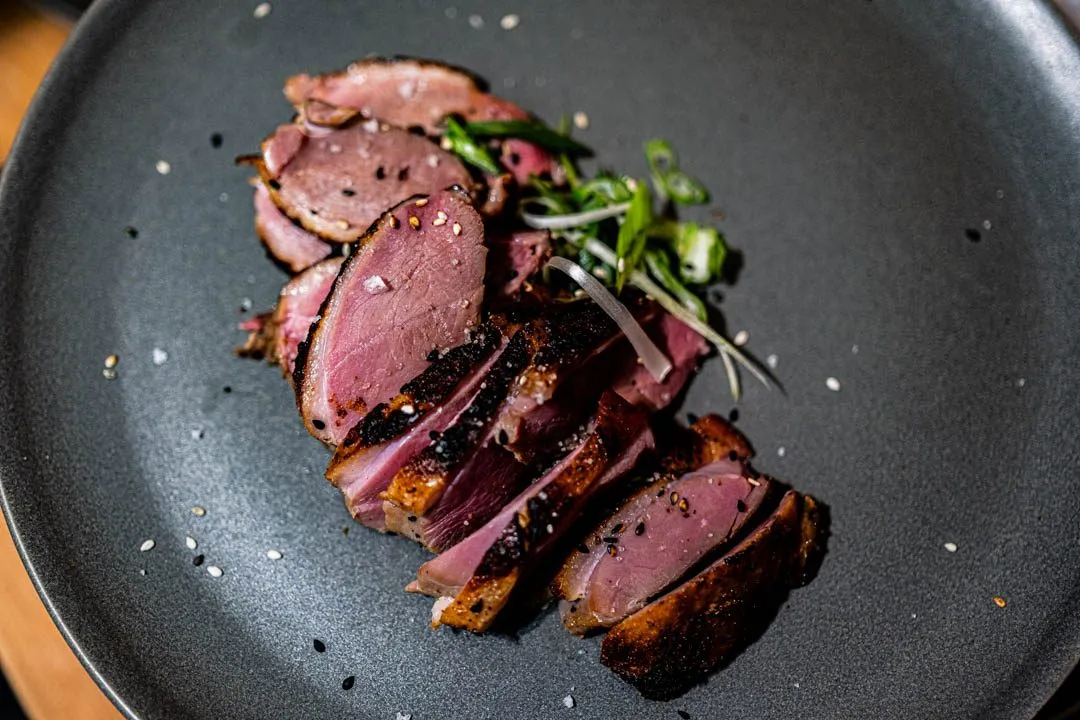
3-Day Miso Duck Breast (Crisp Skin)
Miso-cured duck breast with shatter-crisp skin and a Japanese-French glaze. Three days of patience, one unforgettable bite. The ultimate date night flex.
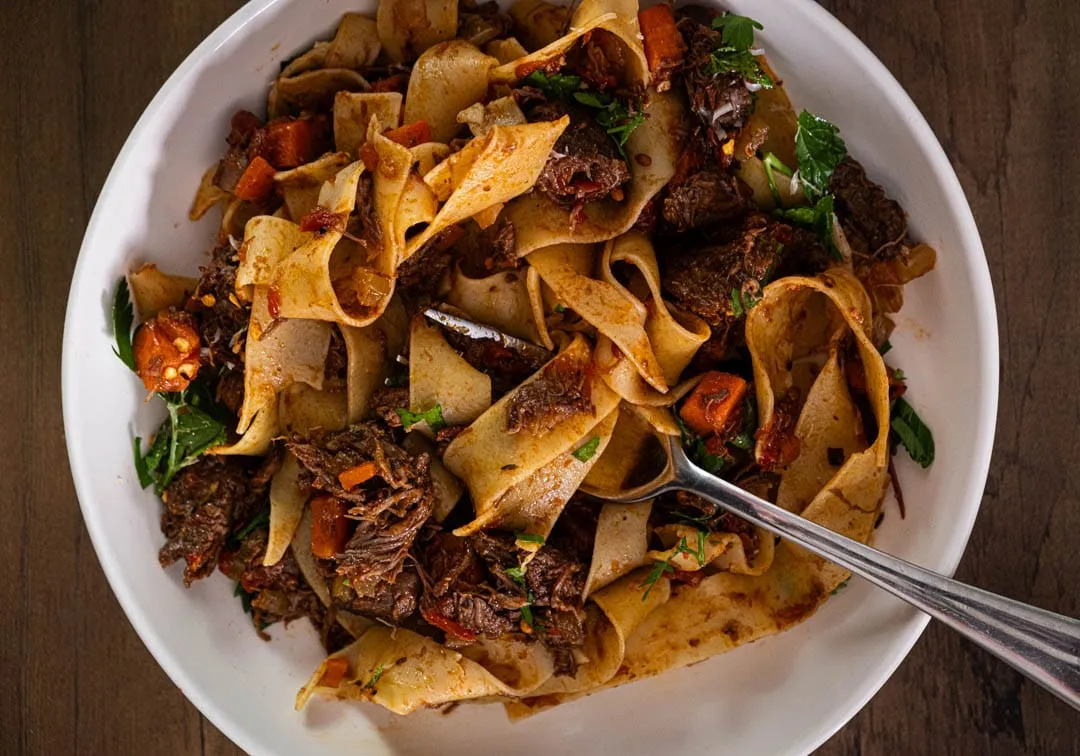
Slow-Cooked Beef Ragu with Pappardelle Pasta
The slow-cooked ragu that says 'I've been thinking about you all day.' Chuck roast, red wine, and pappardelle worth every minute.
Bold Spicy Miso Ramen (Restaurant-Style)
Spicy, creamy miso ramen with ground pork and a garlic-togarashi oil that makes every spoonful dangerous. Restaurant-quality at home in 75 minutes.