Why You Shouldn't Wash Chicken
Don't wash raw chicken. Rinsing spreads harmful bacteria up to 3 feet across your kitchen surfaces. Here is what the food science says and what to do instead.

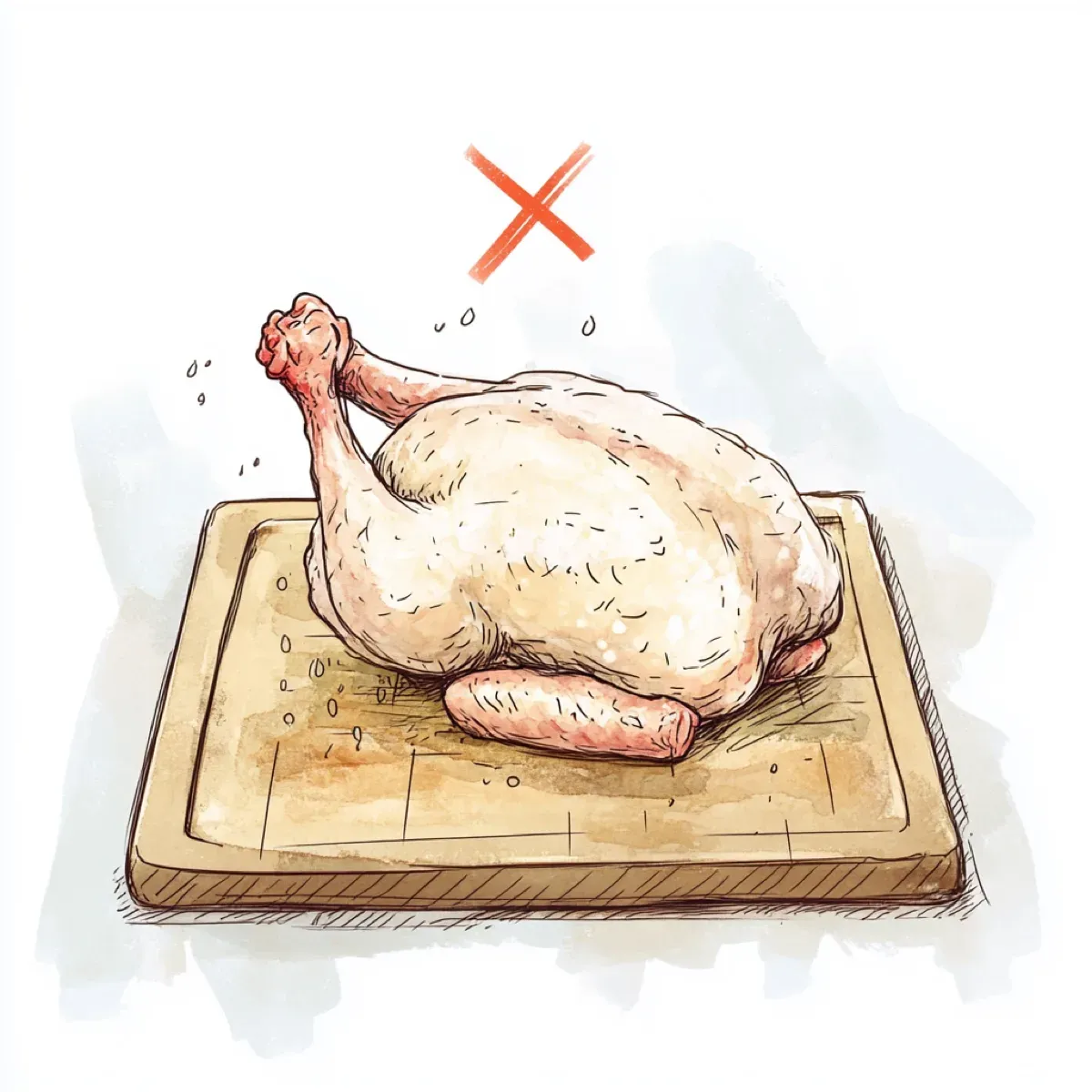
There is a kitchen habit so widespread, so passed-down, so confidently practiced that questioning it feels almost rude. You probably learned it from a parent. They learned it from their parent. It has lived in kitchens for generations, warmly defended and completely wrong.
Stop washing your raw chicken.
Not because it is unhygienic in some abstract sense. Because the water does not remove bacteria. It catapults them across your kitchen, onto surfaces you will touch again, onto food you will eat later, onto the faucet handles you will grab three more times before dinner is done.
Here is the science, the fix, and why getting this right actually matters when you are cooking for someone.
The splash effect: what happens when water hits raw chicken
The moment running water contacts raw chicken, something called aerosolization kicks in. Tiny droplets form and launch outward. Not in a dramatic geyser; you cannot even see it happening. But those droplets carry Salmonella and Campylobacter up to three feet in every direction, landing on your countertop, your cutting board, your dish towel, nearby produce, your clothes, even your face.
The intention behind washing is perfectly understandable. You want the chicken cleaner before you cook it. Many people learned this from family, and certain cultural cooking traditions reinforce the habit. The goal is good. The result is the opposite.
What the research has concluded
A USDA study found detectable bacteria on 60 percent of sinks tested after participants washed raw chicken, with contamination on surrounding surfaces at distances up to three feet. In the same study, many participants thought they had cleaned up properly. They had not.
This is not a close call or a “some experts say” situation. Decades of food safety research from the USDA, CDC, and food science programs at universities across the world have reached the same conclusion: washing raw chicken does not reduce bacterial contamination in any useful way. It reliably makes your kitchen more contaminated.
The recommendation from every major health authority is consistent. Do not wash. Cook properly. Cooking to an internal temperature of 165°F kills all harmful bacteria, which makes the rinse both unnecessary and counterproductive. The science settled this. The habit just has not caught up yet.
What to do instead: proper chicken handling
Good news: the safe approach is actually simpler than the habit it replaces.
Keep the packaging sealed until you are ready to cook. No early unwrapping, no dripping across the counter. When you are ready, transfer the chicken directly from its packaging to your cutting board or pan.
Prep everything else first. Chop your vegetables, measure your seasonings, get your pan ready, before you touch the chicken. Chicken should be the last thing you handle before it hits heat.
Use a dedicated plastic cutting board for raw meat, one that goes straight into the dishwasher when you are done. Not a quick rinse: the dishwasher.
Pat the chicken dry with paper towels instead of rinsing. Here is a quiet bonus: dry chicken sears significantly better than wet chicken. The moisture that remains on the surface after rinsing steams the meat instead of browning it. Patting dry gets you crispier skin and better color, without sending bacteria airborne. Toss the paper towels directly into the trash.
Wash your hands with soap and warm water for 20 seconds immediately after handling raw chicken. This step does more to protect you than anything you could do to the chicken itself.
Sanitize every surface the raw chicken touched: cutting board, knife, countertop, and especially the faucet handles. Hot soapy water works. A bleach solution (one tablespoon per gallon of water) works better. You can also run plastic cutting boards through the dishwasher for a thorough sanitize.
The number that does all the work
165°F. That is it. That is the internal temperature at which every harmful bacterium on raw chicken is eliminated.
Use an instant-read thermometer in the thickest part of the meat, away from the bone. Check multiple pieces if you are cooking more than one. Let the chicken rest for three minutes after it hits temperature; the internal temp keeps climbing slightly and finishes the job. A good instant-read thermometer costs under twenty dollars and is genuinely one of the most useful things in a home kitchen.
This is exactly why washing is unnecessary. Proper cooking eliminates any surface bacteria completely. Washing only adds risk without providing any benefit.
Clearing up common concerns
That liquid in the packaging is not blood. It is myoglobin, a protein in muscle tissue that mixes with water during processing. The slightly slimy surface texture is normal protein and moisture. Both disappear completely during cooking. Pat dry with paper towels and move on. The texture normalizes the moment heat hits it.
The family tradition of washing is rooted in good intentions. Without the controlled food safety studies we have today, rinsing felt logical. It looked like it was doing something. Many food safety practices have changed as we have learned more, and previous generations simply did not have the research we have now. Updating the practice to match current evidence is not disrespecting where that tradition came from; it is honoring the underlying goal, which was always to serve safe food.
Organic and free-range chicken carries the same bacterial risk. Those labels describe farming practices, not contamination levels. All raw chicken can contain harmful bacteria, regardless of quality or price. The expensive chicken gets the same rules as the regular chicken: no washing, cook to 165°F.
Preventing cross-contamination in your kitchen
Avoiding the rinse is half the battle. The other half is not letting raw chicken touch anything that will come in contact with other food.
A color-coded cutting board system makes this automatic: red for raw meat, green for produce, blue for seafood, white for cooked food. It removes the guesswork entirely. Even if you forget which board you used for what, the colors keep your prep surfaces clean.
The simpler version is the one-way rule: raw chicken travels from its packaging to the pan or cutting board and nowhere else. It never touches utensils, containers, or surfaces that will contact other food. One direction, no detours.
For sanitizing after prep, you have three solid options. Hot soapy water is the classic and it works well. A sanitizer solution of one tablespoon bleach per gallon of water is more thorough. And for plastic cutting boards, the dishwasher handles it all.
Cooking chicken that is actually worth eating
Now that we have cleared out the habit that was never helping, here is what actually makes a difference.
For chicken breasts, pound them to an even thickness before cooking so the thinner and thicker parts finish at the same time. Hit exactly 165°F and pull them off the heat immediately. The margin between juicy and dry is genuinely narrow, maybe ten degrees. A five-minute rest before slicing lets the juices settle back into the meat. The same precision serves fish well: our Quinoa-Crusted Salmon uses careful temperature monitoring for the same reason. If precise temperature control appeals to you, our guide to sous vide cooking for date night takes the guesswork out of hitting the right internal temperature every time.
For chicken thighs, their higher fat content gives you more room to work with. They stay juicy at 170°F and beyond, making them ideal for braises, slow roasts, and anything where you want deeply caramelized, sticky results. They render fat beautifully for crispier skin, and they forgive a few extra minutes of heat in a way breasts never will.
For a whole bird, truss it properly and monitor temperature at two points: the thigh joint should hit 165°F, and the breast can come off at 160°F since it will continue climbing to 165°F during the rest.
Common mistakes to avoid
The most common mistake is the one this entire article addresses: washing the chicken. Pat dry with paper towels and dispose of them immediately. That handles the moisture without the bacterial broadcast.
Using the same cutting board for raw chicken and other ingredients is the second biggest offender. Keep separate boards, or wash and sanitize thoroughly between uses. There is no shortcut here.
Skipping the thermometer rounds out the list. Guessing doneness by color or feel is unreliable. A thermometer is the only way to know your chicken is safe without overcooking it into leather.
Why this matters when you are cooking for someone
Knowing the right way to handle raw chicken is one of those small things that adds up. When someone is in your kitchen watching you cook, they notice the details. You pat the chicken dry instead of rinsing it. You use a dedicated cutting board. You reach for the thermometer without being asked. Following evidence-based food safety shows you think critically, prioritize your guest’s wellbeing, and stay informed about cooking best practices.
None of it is performative. It is just what you do when you know what you are doing.
If it comes up, you can say it plainly: “I used to wash chicken too, but the research shows it actually spreads more bacteria. Cooking to 165°F kills everything, so washing just adds risk.” Most people are genuinely interested. Nobody argues with the data. And the chicken will be better for it too: crispier skin, better browning, and a meal that goes exactly the way you planned.
That kind of quiet competence sets the right tone for a date night.
Victor Vu
Victor is a Montreal home cook with a decade of experience developing date night recipes. Every dish is tested at least three times before publishing.
About the author →Frequently Asked Questions
What if the chicken packaging says to rinse before cooking?
Packaging instructions sometimes lag years behind current food safety guidelines. The USDA and CDC are both clear on this: do not wash raw chicken. Cooking to an internal temperature of 165°F is the only reliable method to eliminate Salmonella and Campylobacter. The package is wrong. Science wins.
How do I sanitize my sink after handling raw chicken?
Spray the sink and surrounding surfaces with a sanitizing solution: one tablespoon of bleach per gallon of water. Let it sit for a full minute, then rinse clean. Hot soapy water also works well. And don't forget the faucet handles, because you definitely touched those with chicken hands.
Can I wash chicken safely if I am very careful about splashing?
Even a gentle, low-pressure rinse creates microscopic droplets that carry Salmonella and Campylobacter up to three feet from the sink. You cannot see them and you cannot control them. Cooking to 165°F eliminates all surface bacteria reliably, which makes rinsing both pointless and risky regardless of technique.
Is brining chicken the same as washing it?
Completely different situation. Brining means submerging chicken in a salt water solution inside a sealed container in the fridge: contained, controlled, and safe. Nothing is splashing anywhere. Just sanitize the container after use and never brine in an open sink. Brining is strategy. Washing is chaos.
My date washes chicken before cooking. Should I say something?
Tread lightly, because nobody wants to be corrected in their own kitchen. Frame it as something you recently learned: 'I used to do that too, but apparently rinsing spreads more bacteria than it removes.' Most people appreciate the heads-up when it arrives without judgment. Lead with curiosity, not correction.