Quinoa-Crusted Salmon, Miso Sauce
The quinoa crust shatters like tempura, the Nikkei miso glaze sticks to every flake, and it takes 40 minutes. A recipe worth making for a date night.

Prep
20 min
Cook
20 min
Total
40 min
Difficulty
Medium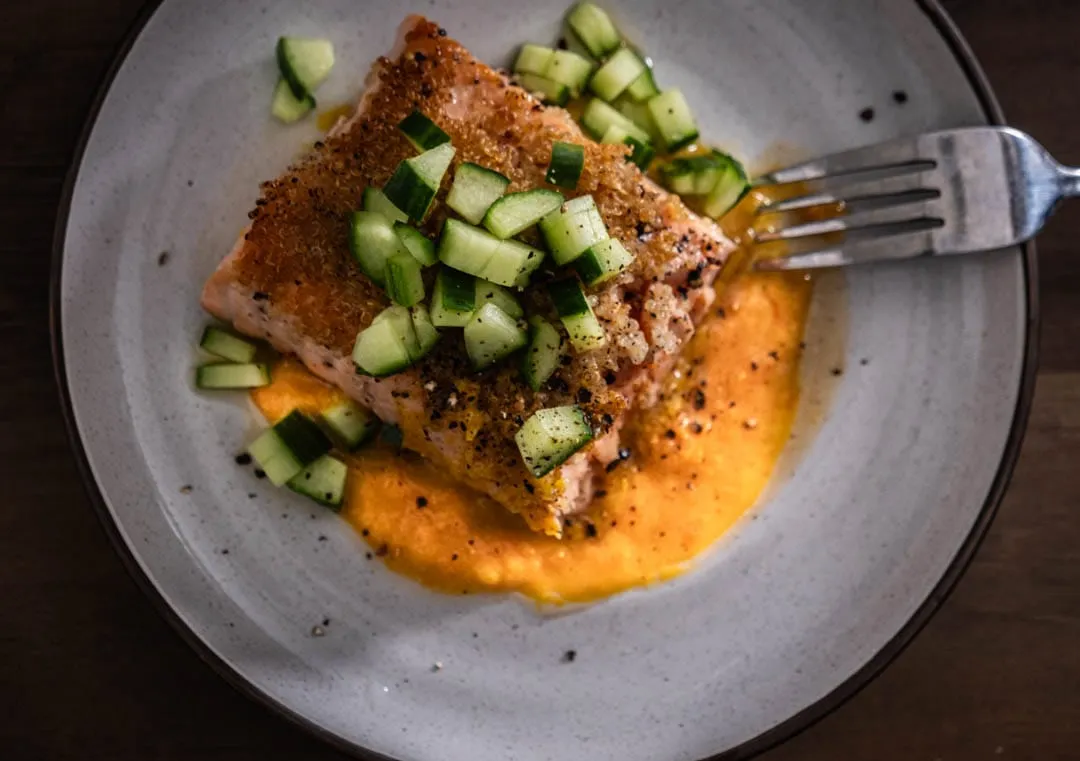
“Quinoa-crusted salmon is a Nikkei fusion dish that presses cooked quinoa onto salmon fillets and sears them until the crust turns golden and crunchy. The accompanying spicy orange miso sauce blends white miso, aji amarillo paste, orange juice, mirin, and sake. This Peruvian-Japanese combination delivers umami, citrus, and gentle heat in one plate.”
Your date puts their phone face-down on the table. That is how you know. Quinoa-crusted salmon with spicy orange miso sauce is the kind of dish that does that. It looks like something from a restaurant with a waiting list, it takes 40 minutes start to finish, and the sauce alone will make people ask you for the recipe before they finish their first bite.
This is Nikkei cooking: the Japanese-Peruvian fusion that came out of Lima in the late 1800s and has been quietly one of the world’s best culinary ideas ever since. Crispy crust, seared fish, a sauce with actual complexity. Not complicated. Just very, very good.
What Nikkei cooking actually is
When Japanese immigrants arrived in Peru beginning in 1899, they cooked with what was around them. Japanese technique. Peruvian ingredients. The result was not a compromise; it was something better than either tradition would have produced on its own. Restaurants like Nobu and Lima’s Maido brought Nikkei to international attention, but the spirit has always been pragmatic: take what you have, apply what you know, and do not be precious about it.
That is exactly the attitude behind this recipe. The miso and mirin are Japanese. The aji amarillo is unmistakably Andean. Aji amarillo is the backbone of Peruvian cooking in roughly the same way miso is the backbone of Japanese cooking. It is not a condiment you add for heat; it is a flavor the dish is built around. Fruity, floral, warm, with a heat level somewhere between a jalapeño and a habanero. Enough to get your attention without taking over the room. There is no real substitute, which is why going out of your way to find the real thing is worth the hunt. Latin grocery stores stock it. So does the internet.
The sauce that does all the heavy lifting
Six ingredients. Every single taste receptor in your mouth gets addressed. The aji amarillo paste brings fruity heat that builds slowly, not a punch but a warm and escalating hum. White miso adds fermented depth, the kind of salty complexity that makes salmon taste more like itself. Orange and lime juice cut through the richness, keeping the whole thing bright and awake.
Mirin and sake round out the edges with subtle sweetness. Whisk everything together cold before you heat it; that way the flavors settle into each other and you are not cooking off the citrus brightness when you warm the sauce at the end. In the finished dish, the sauce does three things at once: heat, a subtle fruitiness that pairs with the orange juice in a way that feels almost inevitable, and a golden color that makes the plate look like something a restaurant spent years developing. Six ingredients, and it never once shows the effort.
The quinoa crust: what makes it work
Quinoa as a crust is one of those ideas that sounds like a health-food compromise and then surprises you completely. It has natural crunch, a quiet nuttiness, and once it sears, it creates a shell that audibly cracks when your fork goes through it. That sound is the whole point.
Start with properly cooked and cooled quinoa: individual grains, not a wet clump. Season before pressing. Press firmly, covering the full surface of the fillet in an even layer about a quarter-inch thick. Then put the fish in the fridge for 10 minutes. This step is not optional. The cold firms the bond between the quinoa and the salmon’s surface, and skipping it is the reason people end up with half their crust in the pan instead of on the fish.
The technique also works on halibut and sea bass. Salmon is the right fish for this crust, though. The fat keeps it moist through a hard sear, and the richness of the flesh plays against the nutty quinoa instead of getting buried under it. Once you have it in your hands, it becomes the move you reach for whenever dinner needs to impress.
How to sear quinoa-crusted salmon
Heat canola oil in your largest pan until it shimmers. The high smoke point matters here: you need the pan hot enough to instantly crisp the quinoa without burning it. Place the fillets quinoa-side down and then do the thing that is genuinely hard: do not touch them.
Four to five minutes of uninterrupted contact is what turns soft cooked quinoa into something golden and crunchy. Listen while it cooks. A steady, consistent sizzle means everything is fine. If the sound drops off, the pan has lost heat and the crust will absorb oil instead of crisping. If it goes furious and splattery, turn the flame down.
One flip. That is it. Two to three minutes on the second side. For medium-rare, which is where quality salmon wants to be, pull the fillets when the center is still slightly translucent. Residual heat carries them the rest of the way while they rest. The salmon does not need your help at this point. Trust it.
Plating this one properly
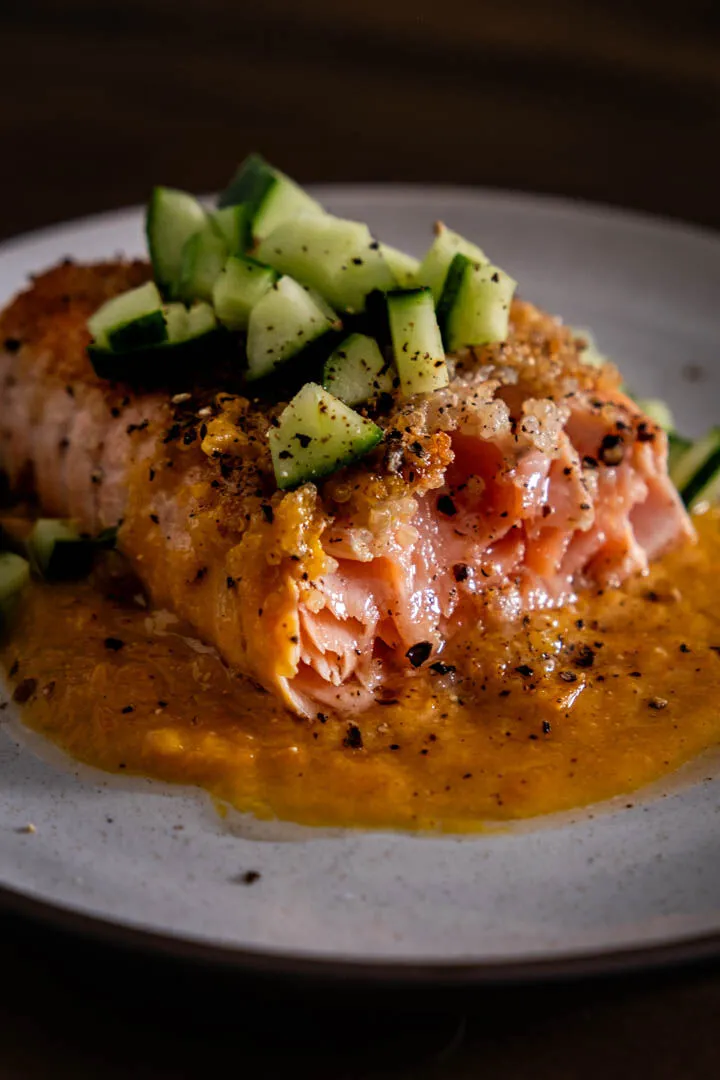
Tilt each fillet slightly off-center on a warm plate, quinoa crust facing up. Drizzle the sauce in a loose, confident arc, letting some pool beside the fish. Scatter the cucumber across and around the salmon. It is not decoration; the coolness and crunch of fresh cucumber against the warm, spicy sauce is a deliberate contrast that makes every bite more interesting.
A small mound of jasmine rice alongside handles the rest, or serve it with our Vietnamese pickled vegetables for a bright, tangy crunch that cuts right through the rich miso sauce. For a lighter side that keeps the whole meal vegetable-forward, the Brussels sprouts salad with its fish sauce vinaigrette stays in the same flavor world. The whole plate should look effortless. And after 40 minutes of work, it will.
Variations and what to cook next
The base recipe is a starting point. Swap the salmon for seared tuna or halibut. Try crushed macadamia nuts mixed with sesame seeds instead of quinoa for a different kind of crust. A small drizzle of toasted sesame oil into the sauce adds a layer of nuttiness that plays well with the miso.
For more dinner recipes that bring serious flavor without a culinary school background, the collection is worth a look. If you want something that goes in a completely different direction, the cacio e pepe is five ingredients and zero compromise, or the beef ragu pappardelle is what you make when you want the whole apartment to smell incredible for three hours before anyone sits down to eat. This salmon crosses borders without asking permission. Make it once and you will see why.
Quinoa-Crusted Salmon, Miso Sauce
Instructions
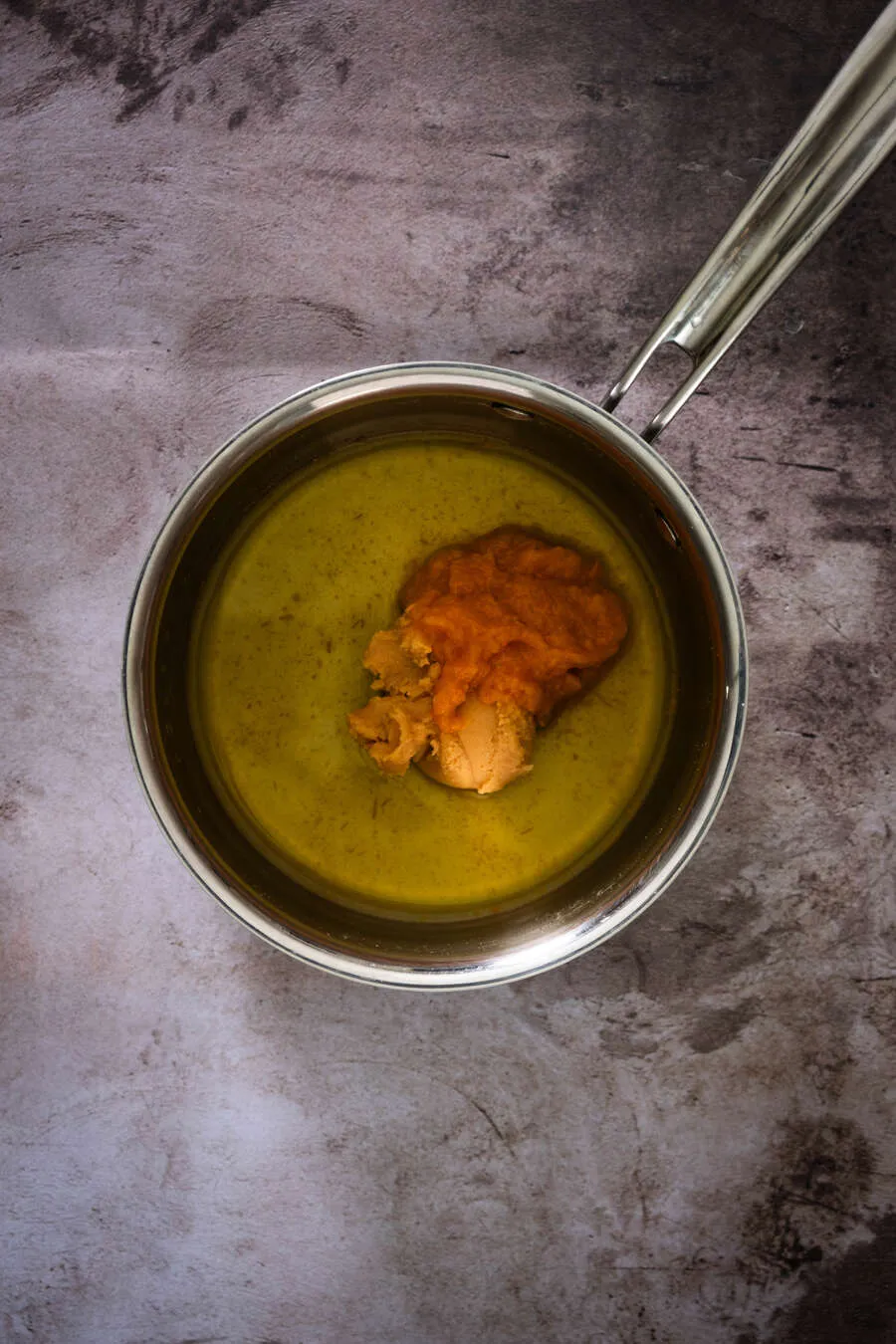
Prepare the Sauce: Whisk together mirin, sake, aji amarillo paste, white miso, fresh orange juice, and lime juice until smooth. Set aside.
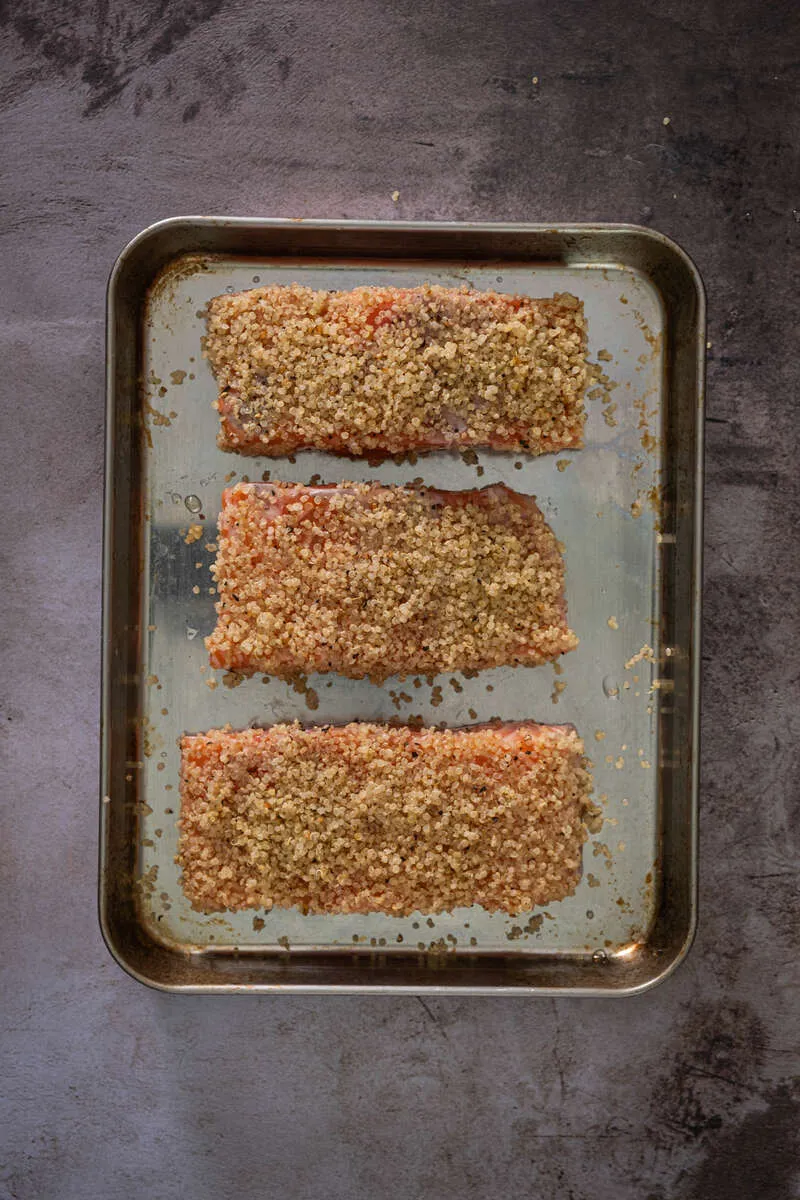
Prepare the Quinoa Crust: Season cooked quinoa with salt and black pepper. Press quinoa evenly onto one side of each salmon fillet.
Cook the Salmon: Heat canola oil in a large pan over medium-high heat. Place salmon fillets quinoa-side down. Sear until crust is golden and crispy, about 4-5 minutes. Flip and cook the other side for 2-3 minutes until cooked through.
Warm the Sauce: Transfer sauce to a small saucepan. Heat over medium heat until warmed through, stirring occasionally.
Plate and Serve: Arrange salmon fillets on plates. Drizzle generously with spicy orange miso sauce and garnish with diced cucumber. Serve immediately.
Date Night Tips
Wine Pairing
A Burgundy Chardonnay or a dry Rosé pairs wonderfully with salmon
Music
Norah Jones or Diana Krall for a relaxed, intimate mood
Plating
Place salmon skin-side down on a bed of greens for a restaurant-worthy presentation
Enjoy your meal!
The Official Recipe
Quinoa-Crusted Salmon, Miso Sauce
Nutrition(Per serving)
400 kcal
Calories
20g
Fat
18g
Carbs
36g
Protein
Ingredients
Spicy Orange Miso Sauce
Salmon and Quinoa Crust
Instructions
Prepare the Sauce: Whisk together mirin, sake, aji amarillo paste, white miso, fresh orange juice, and lime juice until smooth. Set aside.
Prepare the Quinoa Crust: Season cooked quinoa with salt and black pepper. Press quinoa evenly onto one side of each salmon fillet.
Cook the Salmon: Heat canola oil in a large pan over medium-high heat. Place salmon fillets quinoa-side down. Sear until crust is golden and crispy, about 4-5 minutes. Flip and cook the other side for 2-3 minutes until cooked through.
Warm the Sauce: Transfer sauce to a small saucepan. Heat over medium heat until warmed through, stirring occasionally.
Plate and Serve: Arrange salmon fillets on plates. Drizzle generously with spicy orange miso sauce and garnish with diced cucumber. Serve immediately.
Victor Vu
Victor is a Montreal home cook with a decade of experience developing date night recipes. Every dish is tested at least three times before publishing.
About the author →Frequently Asked Questions
What is aji amarillo paste and where can I find it?
Aji amarillo is the Peruvian yellow chili behind ceviche, causa, and most of Peru's greatest dishes. The paste comes in jars at Latin American grocery stores or online. Its flavor sits between fruity, floral, and gently ferocious, and nothing else replicates it. Worth the hunt.
Can I substitute the aji amarillo paste?
Mixing equal parts sriracha and apricot jam approximates the sweet-spicy profile of aji amarillo paste, but the floral depth of the original is simply not there. It works as a backup plan when you cannot source the real thing, just know the sauce will be less nuanced in its heat.
How do I keep the quinoa crust from falling off?
Press the quinoa firmly onto the fillet and refrigerate for 10 minutes before cooking. Cold tightens the bond between grain and fish surprisingly well. Place salmon quinoa-side down in the hot pan and do not touch it. The crust releases itself once crispy; rushing it means leaving it behind.
What type of salmon works best for this recipe?
Center-cut fillets of Atlantic or sockeye salmon are the right call. Even thickness means the crust and fish finish cooking at the same time. Wild-caught has more flavor backbone and handles the bold miso sauce without getting lost. Skip thin tail pieces; they overcook before the quinoa crisps.
Can I bake the salmon instead of pan-searing?
Baking quinoa-crusted salmon at 425°F for 12 to 15 minutes on a lined sheet, then 2 minutes under the broiler for color, produces a solid result. The crust will not be quite as crispy as a hot pan delivers, but it is still a very impressive plate with considerably less cleanup.
What should I serve alongside this salmon?
Steamed jasmine rice and sauteed bok choy are natural partners, both rooted in the same Nikkei world as the dish. Edamame or a seaweed salad also work well. The cucumber garnish already handles the fresh-and-cool department, so sides just need to stay simple and let the salmon lead.
You might also like
Continue your culinary journey
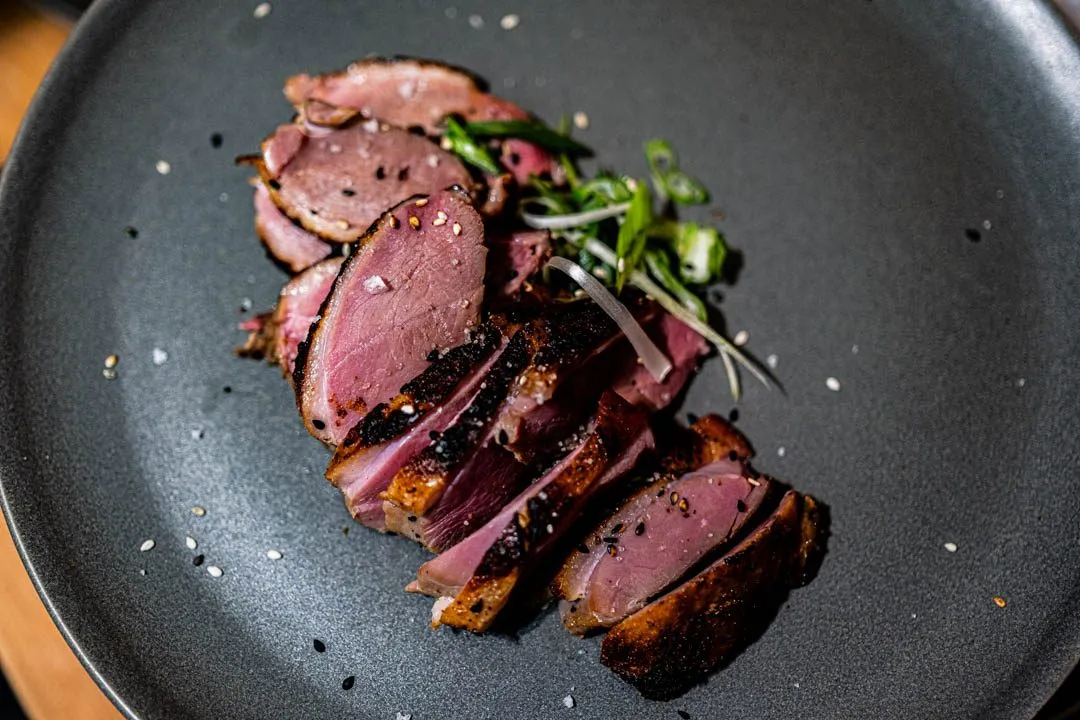
3-Day Miso Duck Breast (Crisp Skin)
Miso-cured duck breast with shatter-crisp skin and a Japanese-French glaze. Three days of patience, one unforgettable bite. The ultimate date night flex.
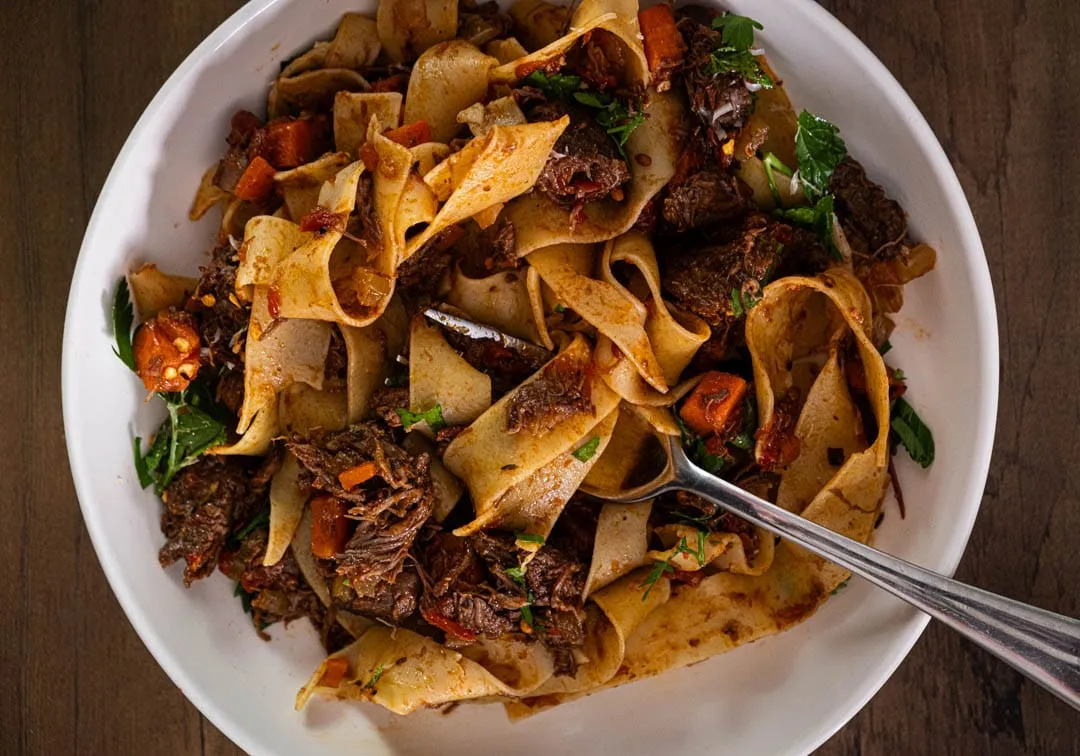
Slow-Cooked Beef Ragu with Pappardelle Pasta
The slow-cooked ragu that says 'I've been thinking about you all day.' Chuck roast, red wine, and pappardelle worth every minute.
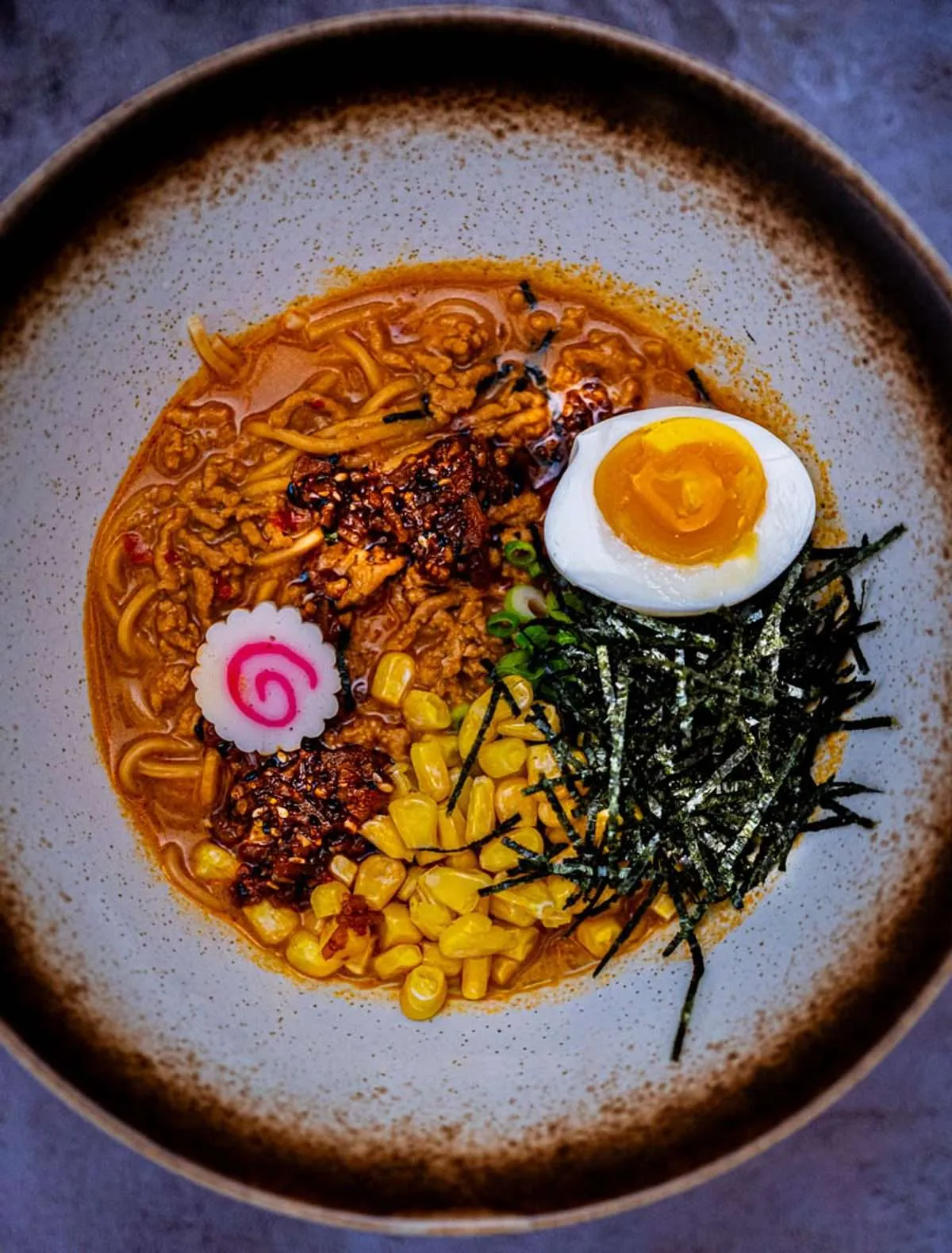
Bold Spicy Miso Ramen (Restaurant-Style)
Spicy, creamy miso ramen with ground pork and a garlic-togarashi oil that makes every spoonful dangerous. Restaurant-quality at home in 75 minutes.