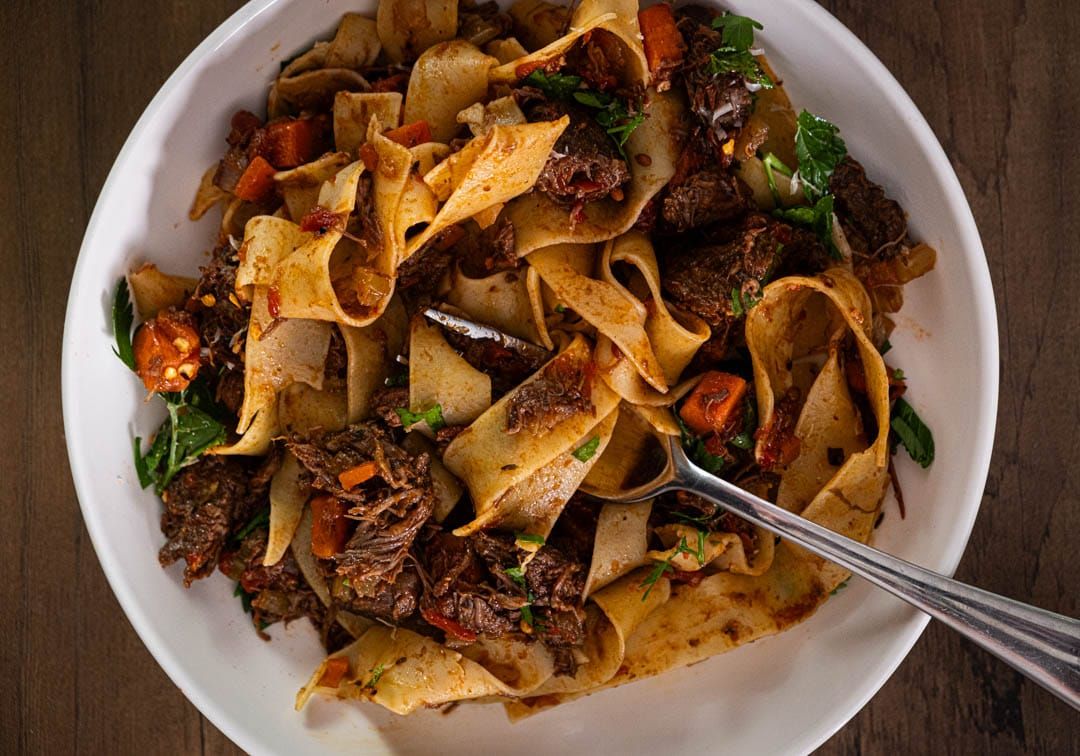
Slow-Cooked Beef Ragu with Pappardelle Pasta
Slow-cooked beef ragu with fork-tender chuck braised in tomatoes and red wine, served over wide pappardelle ribbons.
Beef ragu with pappardelle is the kind of dish that fills your entire home with warmth long before it reaches the table. This slow-cooked beef ragu transforms humble chuck roast into fork-tender, deeply savory strands of meat suspended in a rich tomato sauce, then drapes it all over wide ribbons of pappardelle pasta. It is comfort food at its most refined, and the long cooking time does nearly all of the work for you.
What Makes a Great Beef Ragu
The defining characteristic of an exceptional ragu is patience. Unlike a quick tomato sauce that comes together in twenty minutes, beef ragu demands two to three hours of gentle simmering. During that time, collagen in the chuck roast slowly dissolves into gelatin, creating a sauce with a body and richness that no shortcut can replicate. The meat fibers relax and separate, yielding effortlessly to a fork until they practically melt into the surrounding liquid.
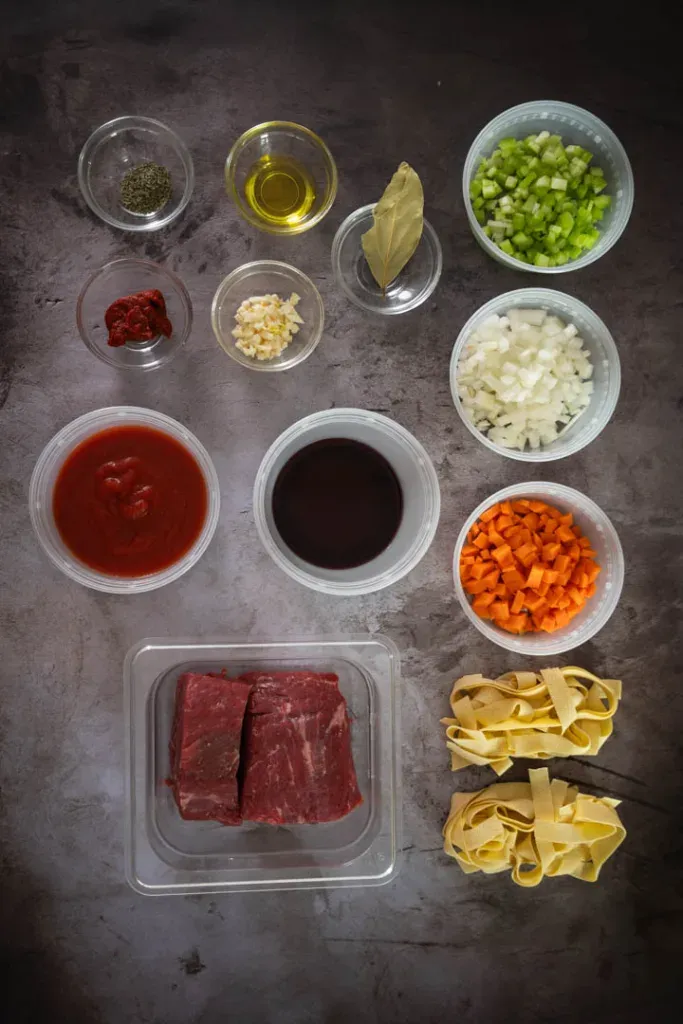
A proper soffritto — the aromatic base of onion, carrot, and celery sauteed in olive oil — provides the foundational flavor layer. These three vegetables, cooked until soft and fragrant, contribute a natural sweetness and complexity that balances the acidity of the tomatoes and the mineral depth of the red wine.
The Importance of the Sear
Searing the beef before braising is a non-negotiable step. When meat hits a screaming hot pan, the Maillard reaction creates hundreds of new flavor compounds on the surface — deep, caramelized, slightly bitter notes that give the finished ragu its characteristic complexity. Without the sear, the sauce tastes flat and one-dimensional no matter how long you cook it.
Pat the beef completely dry before it goes into the pot. Moisture on the surface creates steam instead of browning, and steam is the enemy of caramelization. Use high heat and resist the temptation to move the meat around. Let each side develop a dark, golden-brown crust before turning. The fond — those brown bits stuck to the bottom of the pot — is pure concentrated flavor that the vegetables and liquid will dissolve and distribute throughout the sauce.
Building Layers of Flavor
After the beef is set aside and the vegetables are softened, the deglazing step is where the sauce begins to take shape. Red wine hits the hot pan and immediately lifts every bit of fond from the bottom, dissolving those caramelized meat juices into the liquid. A dry, full-bodied red like Merlot or Cabernet Sauvignon adds tannins and fruit that complement the beef without overwhelming it.
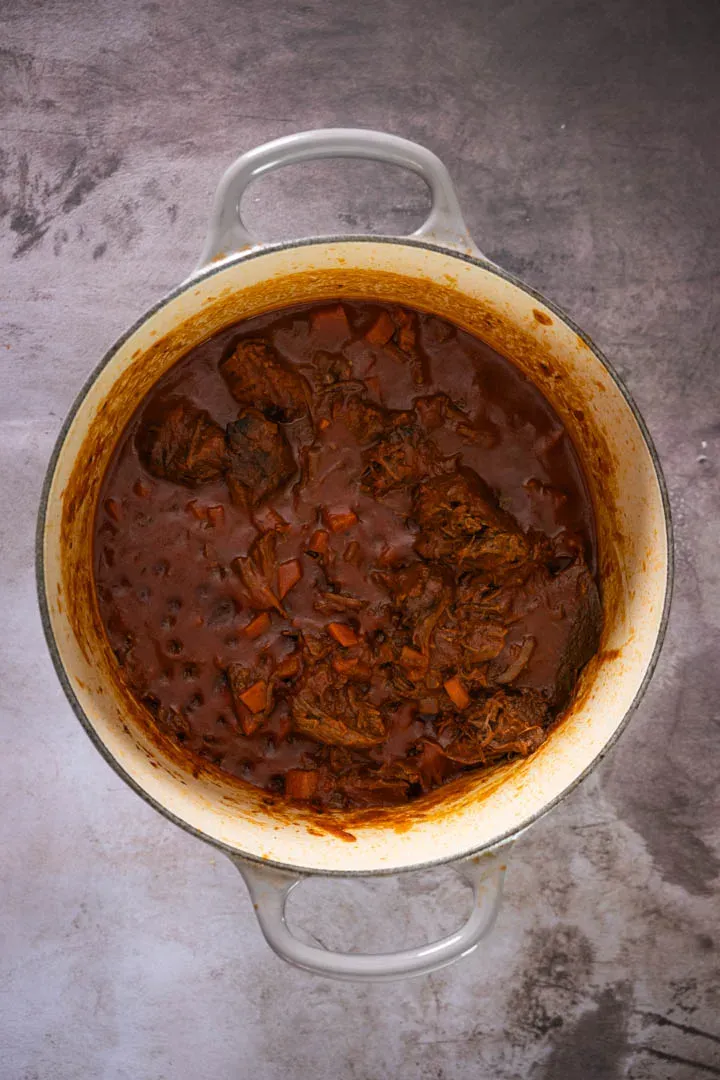
Crushed tomatoes and tomato paste provide acidity and body. The paste, in particular, is a concentrated source of umami that deepens the savory backbone of the sauce. Thyme and bay leaf contribute herbal notes that weave through the background, adding aromatic complexity without calling attention to themselves. The combination of these elements, simmered together for hours, produces a sauce with a depth of flavor that no single ingredient could achieve alone.
Why Pappardelle Is the Perfect Pairing
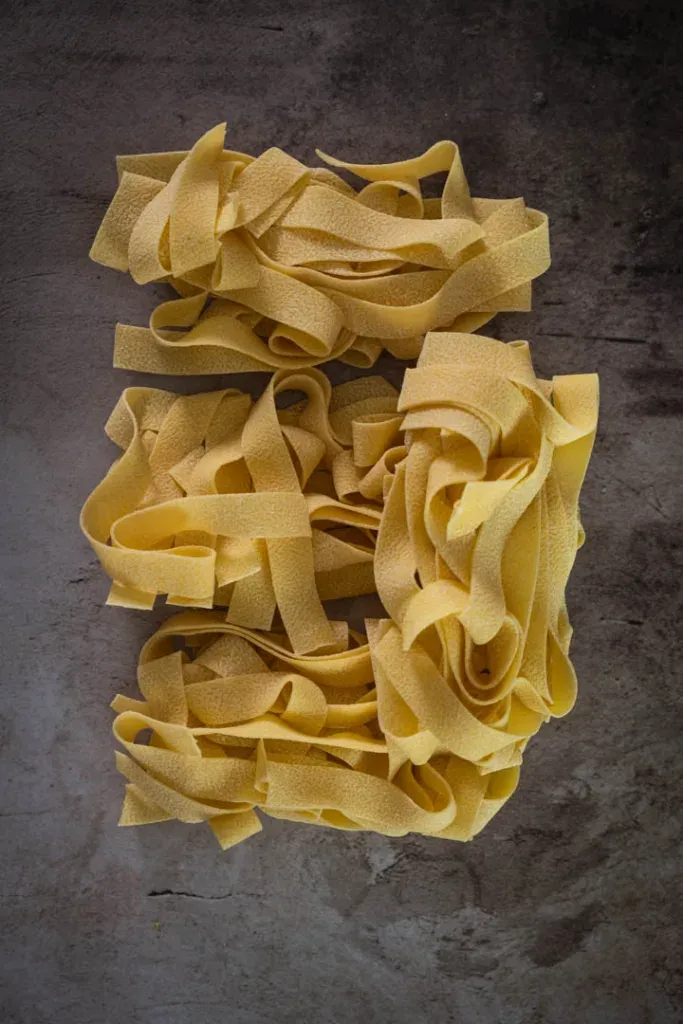
Wide, flat pappardelle ribbons are the ideal vehicle for a chunky, meaty ragu. Their broad surface area catches and holds sauce in a way that thinner pastas cannot match. Each bite delivers a generous ratio of sauce to noodle, and the slightly rough texture of dried pappardelle grips the ragu even more effectively than fresh egg pasta.
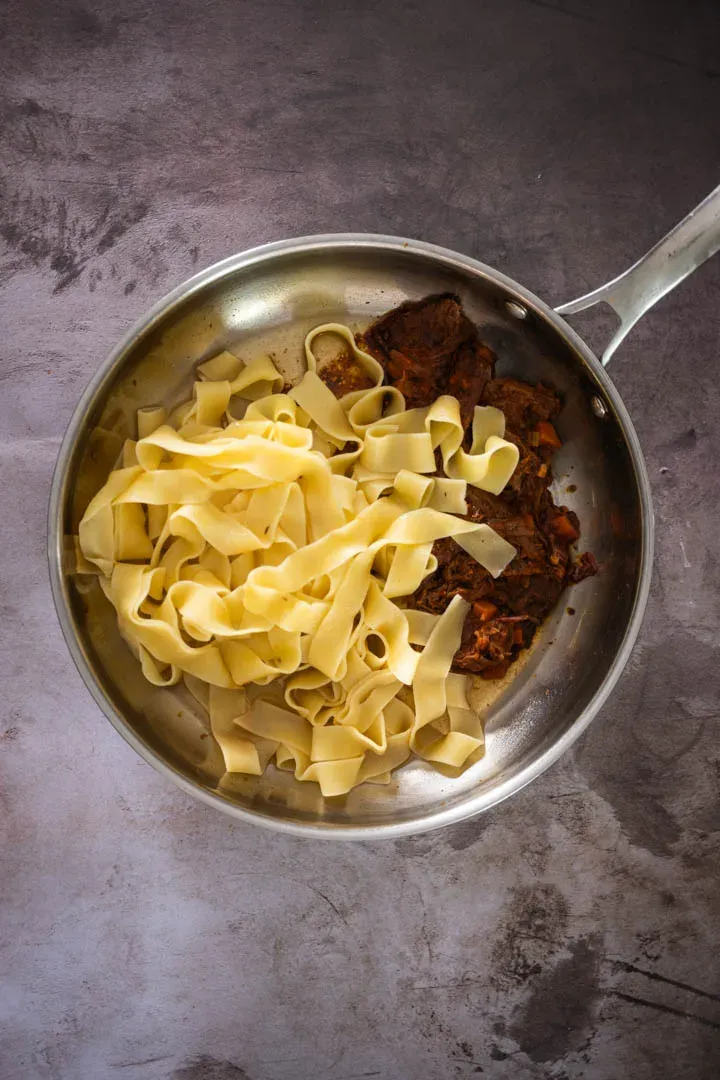
Cook the pappardelle one minute shy of the package instructions. This slight undercooking means the pasta finishes absorbing liquid inside the sauce itself, which achieves two things: the noodles take on the flavor of the ragu from the inside out, and the starch they release thickens the sauce into a coating that clings to every ribbon. Tossing the pasta in the sauce with a generous splash of pasta water is the final step that transforms separate components into a unified dish.
Make-Ahead and Meal Prep
Beef ragu is one of the most rewarding dishes to cook in advance. The sauce tastes even better the next day after the flavors have had time to meld and intensify in the refrigerator. Cook the ragu on a Sunday, store it in the fridge, and you have the base for two or three effortless weeknight dinners throughout the week.
The sauce freezes beautifully for up to three months. Portion it into individual containers so you can thaw exactly what you need. When you are ready to serve, reheat the ragu gently on the stovetop, cook fresh pappardelle, and dinner is on the table in fifteen minutes. This makes it one of the most practical dinner recipes in any home cook’s repertoire.
Finishing Touches
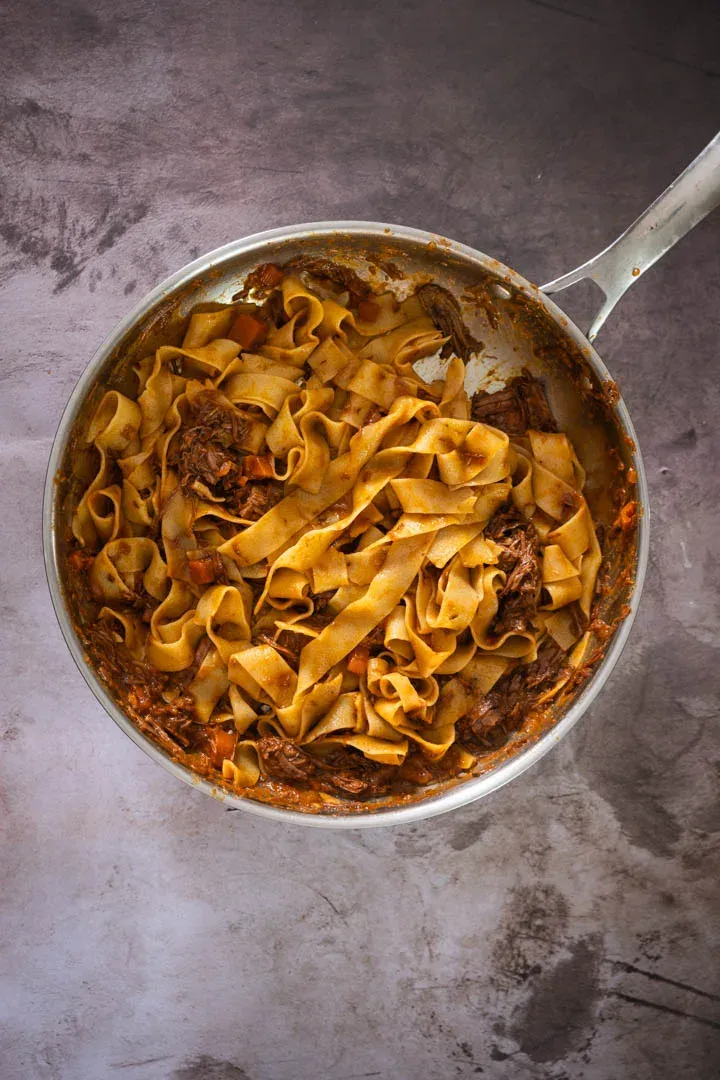
Freshly grated Parmigiano-Reggiano is the only garnish this dish truly needs. Its salty, crystalline crunch contrasts beautifully with the soft, yielding texture of the shredded beef and tender pasta. A scattering of finely chopped fresh parsley adds a bright, clean note that lifts the richness of the sauce.
Serve the ragu in warm bowls with crusty bread on the side for soaking up every last drop of sauce. A simple green salad dressed with red wine vinaigrette provides a crisp counterpoint to the hearty pasta. For a complete Italian evening, start with a light appetizer and finish with something sweet like lemon posset brulee for dessert.
Tips for the Best Results
Use a heavy-bottomed pot like a Dutch oven for even heat distribution during the long simmer. Thin-bottomed pots create hot spots that can scorch the sauce on the bottom. Keep the heat as low as possible — you want the gentlest simmer, with barely a bubble breaking the surface every few seconds.
Check the ragu periodically during cooking and add a splash of water if the liquid level drops too low. The sauce should reduce and concentrate, but it should never dry out completely. By the time the beef is ready to shred, the sauce should have a thick, spoonable consistency that coats a spoon without running off.
This beef ragu pappardelle is the definition of slow food done right. The investment of time pays dividends in flavor, texture, and the deep satisfaction of a dish that simply cannot be rushed. If you love bold Italian flavors, try cacio e pepe for a faster weeknight option that delivers equally impressive results with just five ingredients.
Slow-Cooked Beef Ragu with Pappardelle Pasta
Instructions
Prepare and Sear the Beef
-
Pat beef dry and season generously with salt and pepper. Heat 1 tablespoon olive oil in a heavy-bottomed pot over high heat. Sear beef pieces until golden-brown on all sides, then set aside.
Saute the Vegetables
-
Add remaining olive oil to pot. Saute garlic, onion, carrots, and celery until softened and fragrant, approximately 5 minutes.
Build and Simmer the Ragu
-
Add crushed tomatoes, tomato paste, red wine, water, thyme, and bay leaf. Return seared beef to pot. Bring to a gentle simmer, reduce heat to low, cover, and cook for about 2 hours until beef is fork-tender.
Shred the Beef
-
Remove beef from pot and shred using two forks. Return shredded beef to sauce and simmer uncovered for 30 minutes to thicken.
Cook the Pappardelle
-
Bring a large pot of salted water to a boil. Cook pappardelle according to package instructions, reducing cooking time by one minute for al dente texture.
Combine
-
Heat ragu in a large pan. Transfer cooked pasta directly to sauce with about 3/4 cup pasta water using tongs. Toss until sauce coats all pasta ribbons.
Serve
-
Plate pasta and sprinkle generously with Parmesan. Garnish with fresh parsley. Serve immediately.
Ingredients
Nutrition(Per serving)
580 kcal
Calories
18g
Fat
62g
Carbs
38g
Protein
Date Night Tips
Wine Pairing
A bold Barolo or Chianti Classico stands up to the rich ragu
Set the Mood
Dean Martin's Italian classics or Andrea Bocelli
Plating Tip
Spoon ragu in the center of wide pappardelle ribbons and finish with fresh parsley

Victor Vu
Victor creates date night recipes designed to impress. Based in Montreal, he believes great food brings people closer together.
About the author →Frequently Asked Questions
What is the best cut of beef for ragu?
Chuck roast is the ideal choice for beef ragu. Its generous marbling of fat and connective tissue breaks down during the long, slow braise, producing meat that shreds effortlessly into silky strands. Brisket and short ribs also work well, though cooking times may need slight adjustment.
Can I make beef ragu in a slow cooker?
Yes. After searing the beef and sauteing the vegetables on the stovetop, transfer everything to a slow cooker. Cook on low for 7-8 hours or high for 4-5 hours until the beef is fork-tender. Shred and return to the sauce as directed.
Is red wine necessary for beef ragu?
Red wine adds depth and acidity that elevates the sauce, but it is not essential. Substitute an equal amount of beef broth with a splash of red wine vinegar for a similar flavor profile. The key is maintaining that balance of savory richness and subtle tang.
Can I freeze leftover beef ragu?
Absolutely. Beef ragu freezes exceptionally well for up to 3 months. Let it cool completely, then store in airtight containers. The flavors actually deepen during freezing. Thaw overnight in the refrigerator and reheat gently on the stovetop with a splash of water.
Why should I finish the pasta in the sauce?
Finishing pasta directly in the sauce allows the noodles to absorb flavor while releasing starch that thickens the sauce. This creates a cohesive dish where the sauce clings to every ribbon rather than pooling at the bottom of the plate. Always reserve pasta water to adjust consistency.
Can I use a different pasta shape with beef ragu?
Pappardelle is the classic pairing because its wide, flat surface catches and holds the chunky meat sauce. Tagliatelle and fettuccine are excellent alternatives. Rigatoni works well if you prefer short pasta, as its ridges and hollow center trap the sauce effectively.
You might also like
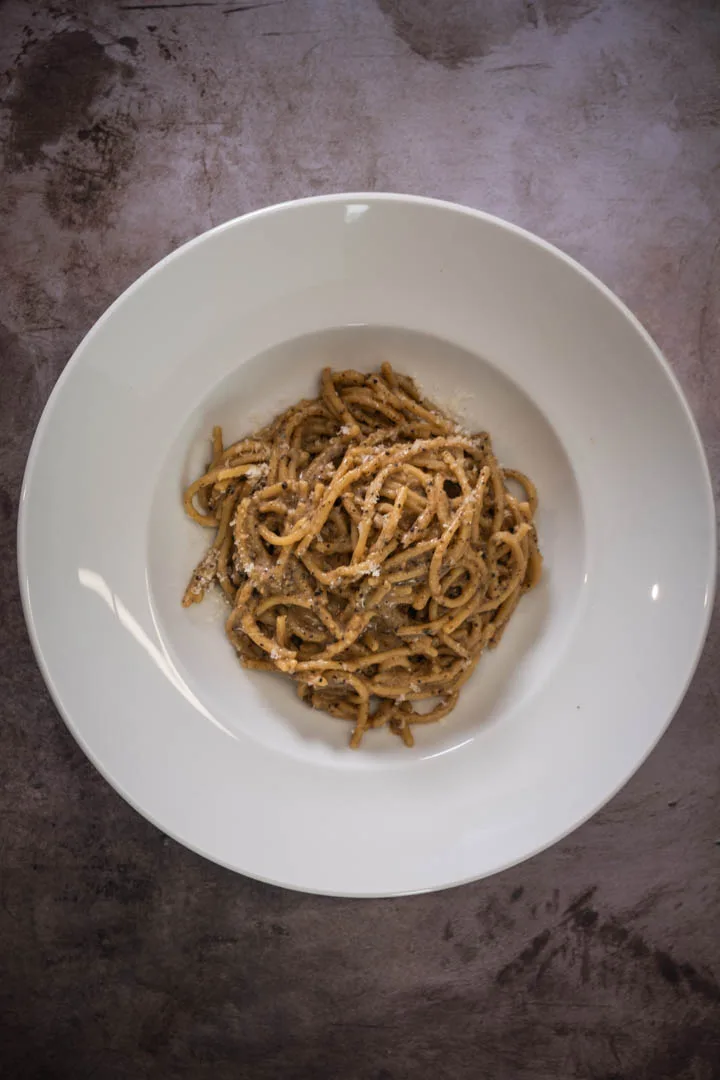
Authentic Cacio e Pepe (Roman Cheese and Pepper Pasta)
Classic Roman cacio e pepe with Pecorino Romano, toasted peppercorns, and starchy pasta water emulsion in just 5 ingredients.
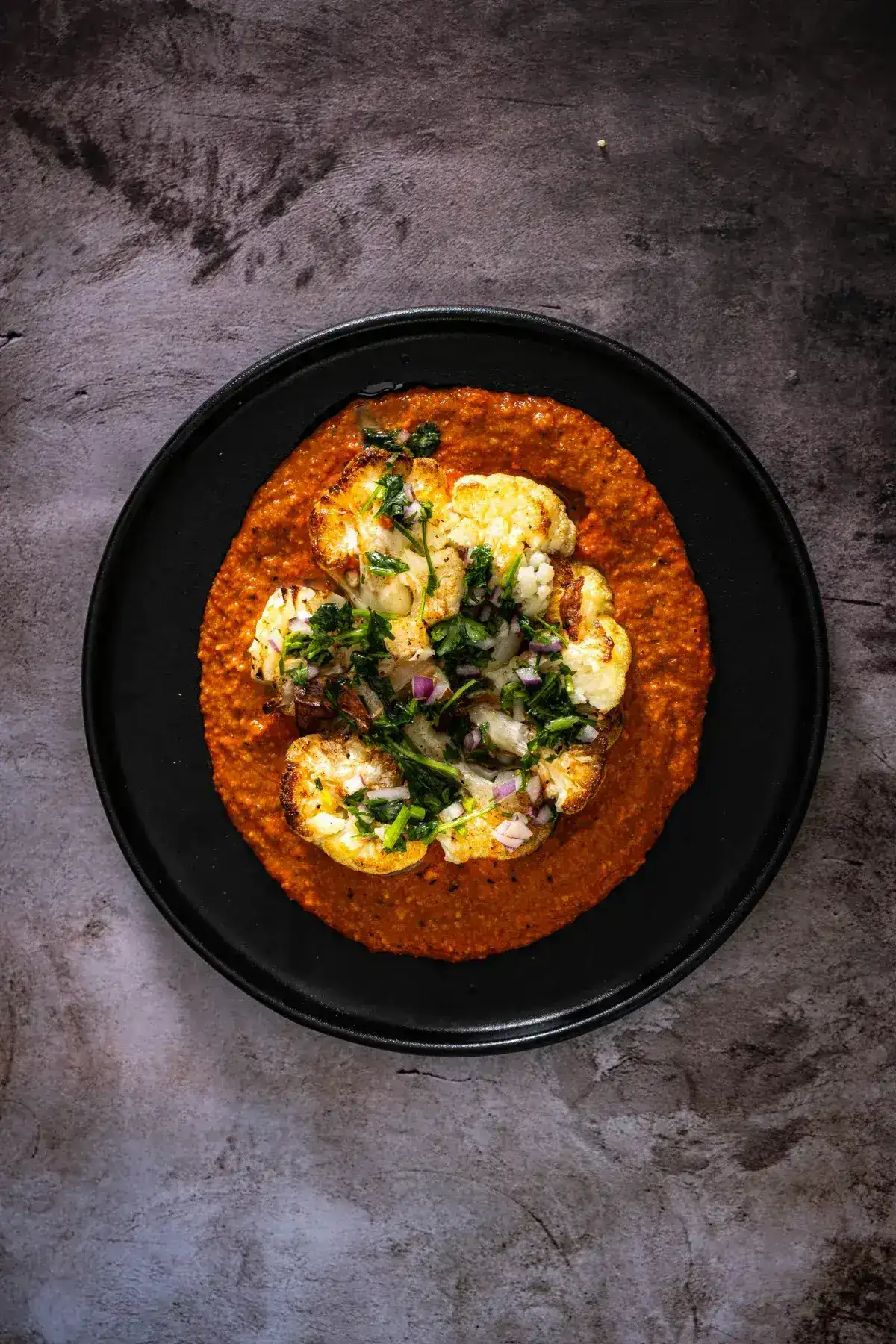
Roasted Cauliflower Steaks with Smoky Romesco Sauce
Thick-cut roasted cauliflower steaks topped with smoky Spanish romesco sauce and fresh parsley dressing. A stunning vegan main.
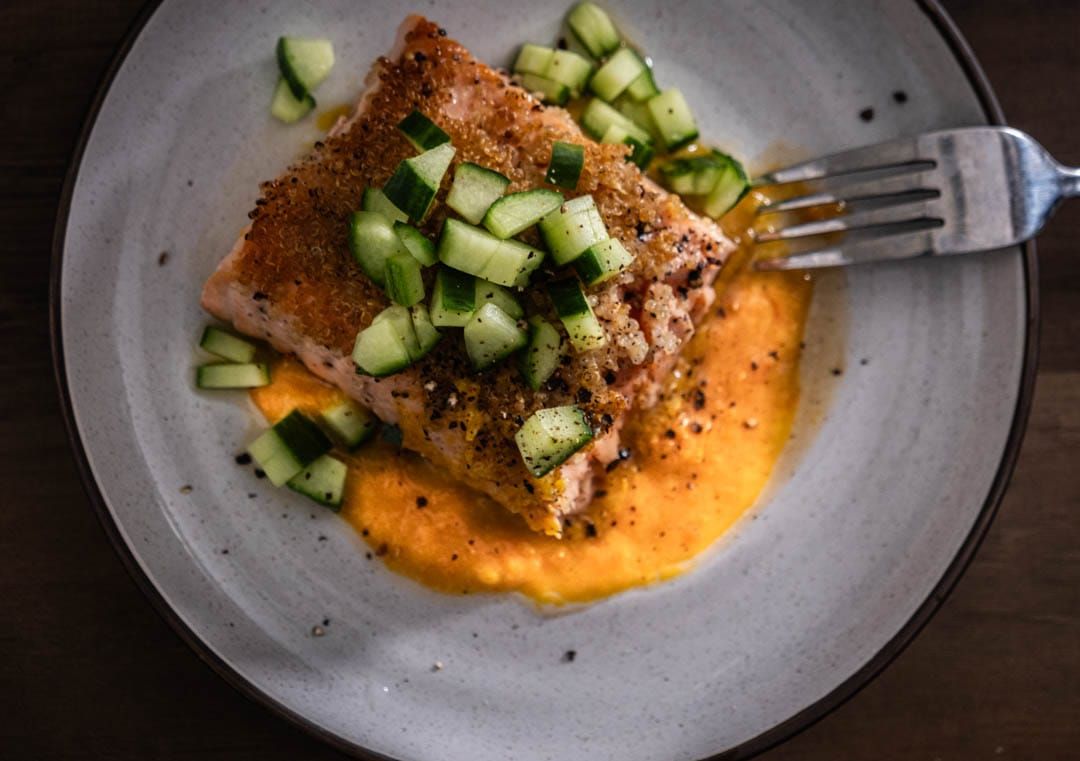
Quinoa-Crusted Salmon with Spicy Orange Miso Sauce
Quinoa-crusted salmon with spicy orange miso sauce featuring aji amarillo and citrus. A stunning Nikkei fusion dish.