Authentic Cacio e Pepe Recipe
Five ingredients. Zero cream. The Roman pasta that makes your date put their phone down mid-bite. Cheese, pepper, and pure confidence.

Prep
10 min
Cook
15 min
Total
25 min
Difficulty
Medium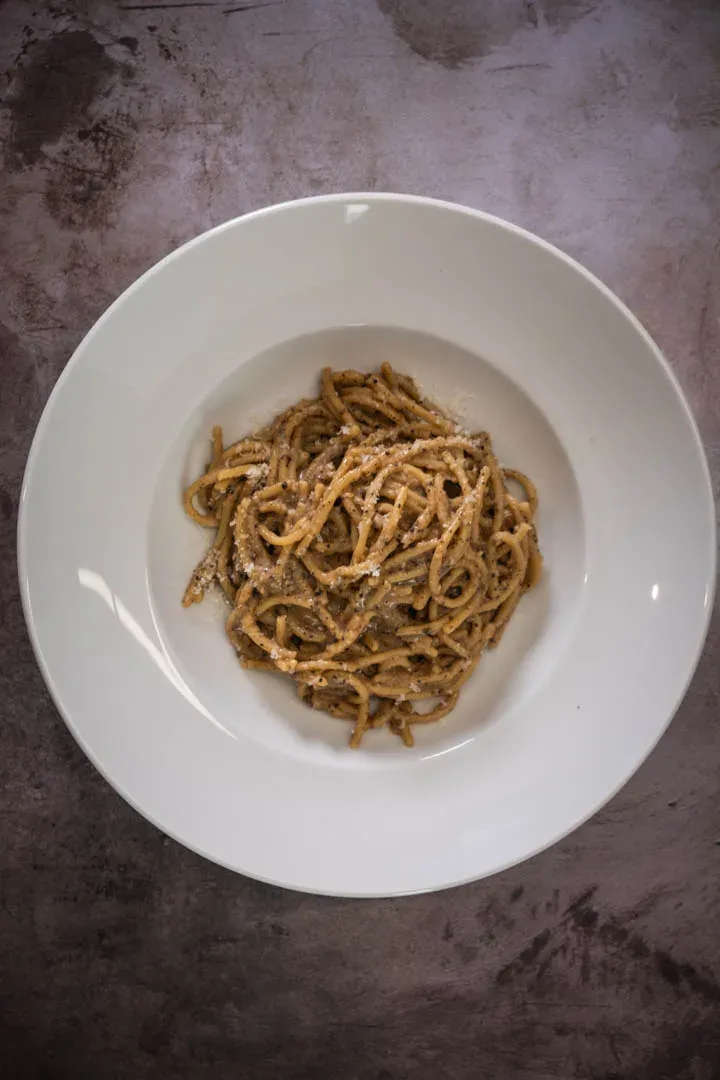
“Cacio e pepe is a Roman pasta made with just Pecorino Romano, Parmigiano-Reggiano, black pepper, and pasta water. The starchy cooking water emulsifies with the finely grated cheese to form a creamy, peppery sauce without any cream. The key technique is adding cheese off heat after a three-minute cool-down to prevent clumping.”
I made this for a first date once. Five ingredients, no safety net. My date watched me toss cheese into a pan with nothing but starchy water and a prayer, and I could see the skepticism. Then she took a bite. Phone went down. Eye contact came up. That is the entire pitch for cacio e pepe: it looks like you are doing almost nothing, and it tastes like you have been cooking your whole life.
This Roman classic asks you to trust that pasta water, Pecorino Romano, and black pepper can become a velvety sauce without cream, butter, or garlic showing up to help. The technique is honest, the ingredients are minimal, and the reward is a plate of pasta that makes a Wednesday night feel like a reservation you waited three weeks for.
Why cacio e pepe belongs on a date night
Of Rome’s three legendary pastas, cacio e pepe is the one with the most nerve. Carbonara leans on eggs and guanciale. Amatriciana brings tomato into the conversation. Cacio e pepe shows up with cheese, pepper, and starchy water, then dares you to make something extraordinary out of almost nothing.
That confidence is exactly why I love serving it on a date. The dish tells a story before anyone takes a bite. Your date sees three ingredients on the counter and wonders how dinner is going to happen. Twenty-five minutes later, you are twirling glossy, peppery spaghetti onto warm plates and the whole kitchen smells like toasted spice and aged cheese. The gap between what they expected and what they got is where the magic lives.
The sauce itself is a proper emulsion. Starch released by pasta into the cooking water acts as a natural emulsifier, coating the fat droplets in the cheese so they blend with the water instead of separating. Get the temperature right, add the cheese slowly, and you end up with something silky, stable, and clinging to every strand. Mess with the timing and you get clumps. I have been on both sides of that outcome, and trust me, the silky version is worth the patience.
Toasting pepper changes everything
Black pepper is not a garnish here. It is one of three main characters, and it needs to show up with presence. Six grams of whole peppercorns sounds modest, but once you toast them in a dry pan for about four minutes and crack them coarsely, the flavor they bring is warm, floral, and layered in a way that pre-ground pepper simply cannot match.
I use a mortar and pestle because I like the uneven texture it produces. Some pieces crack into coarse shards that deliver little bursts of heat. Others break finer and melt into the sauce. That range of texture keeps the dish interesting from the first forkful to the last, and it gives your date something to notice. “Did you toast your own pepper?” is the kind of question that leads to a second glass of wine.
Blooming the cracked pepper in hot pasta water before the spaghetti goes in builds the base of the sauce. The water absorbs the pepper’s essential oils and carries that warmth into every corner of the dish. Skipping this step means you are just sprinkling pepper on top at the end, and that is a completely different (and much less impressive) result.
The cheese blend that makes it sing
Traditionally, cacio e pepe calls for Pecorino Romano alone. I love that cheese, but solo it can be salty and aggressive, the kind of flavor that dominates rather than seduces. Adding an equal weight of Parmigiano-Reggiano brings creaminess and a nuttier depth that rounds everything out. Together, the two cheeses create a sauce that is sharp enough to be interesting and smooth enough to eat an entire bowl of without pausing.
One thing I will never compromise on: grate both cheeses yourself, right before cooking. A Microplane or fine box grater, thirty seconds of work, and you have fluffy, fresh cheese that melts into the starchy water like it was always meant to be there. Pre-grated cheese from a bag contains anti-caking agents that physically block the emulsion from forming. You can do everything else perfectly and still end up with a grainy, broken sauce because the cheese came from a resealable pouch. Do not let a shortcut ruin your evening.
Pasta water is the secret ingredient hiding in plain sight
Everyone talks about pasta water, but most people do not treat it with the respect it deserves. This cloudy, starchy liquid is the emulsifier that makes the entire sauce possible. Without it, you have melted cheese sitting on top of noodles. With it, you have a glossy, clinging coating that wraps every strand.
The trick is concentration. Cook your spaghetti in a smaller pot than you normally would. Less water means the starch released by the pasta has nowhere to hide, giving you a thicker, more powerful cooking liquid. Pull the spaghetti out three minutes before the package directions say it is done and finish cooking it directly in the pan with the pepper sauce. The pasta keeps releasing starch into the pan, reinforcing the emulsion right where you need it.
Reserve at least two full ladles of that liquid before you drain anything. Once starchy water goes down the sink, your sauce-building material goes with it, and there is no getting it back. I keep a ladle sitting in the pot as a reminder. It has saved me more than once.
The three-minute cool-down that decides everything
Here is the moment that separates a perfect cacio e pepe from a cheese disaster. After the pasta finishes cooking in the pepper sauce, you pull the pan completely off the heat and wait three full minutes. I know. Three minutes feels like an eternity when your date is sitting at the table and the pasta is calling your name. But aged cheese proteins seize up fast when they hit high heat, and once they clump into rubbery little bits, there is no rescue.
After those three minutes, the pan is warm instead of scorching. Now you add the cheese in small handfuls, tossing constantly with tongs and splashing in pasta water between each addition. The motion builds friction. The water keeps the temperature in check. The starch bridges the fat and the liquid into one cohesive, glossy sauce. Work slowly, keep tossing, and you will feel the sauce come together under your hands. It is genuinely one of the most satisfying moments in cooking.
Plating, pairing, and making the evening last
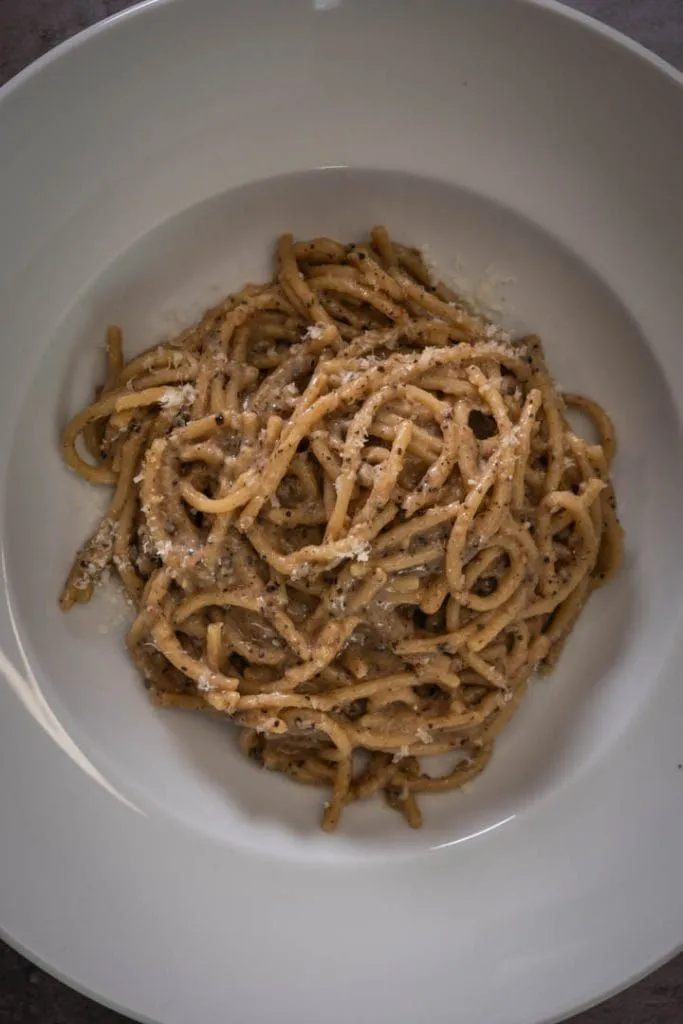
Cacio e pepe waits for no one. The emulsion starts to tighten the moment you stop moving the pasta, so plate fast and serve faster. Grab your tongs, twirl the spaghetti into a tight nest in the center of a warm bowl, and finish with a crack of fresh pepper and a light snowfall of extra Pecorino.
A crisp Frascati or dry Trebbiano is perfect alongside. The wine’s bright acidity slices through the richness of the cheese without fighting the pepper for attention. Pour generously. Put on some Stefano Bollani or Paolo Conte in the background. Let the conversation happen.
If you want to build out a full Italian evening, our penne alla vodka brings a completely different energy with its creamy blush sauce, and the beef ragu pappardelle makes a deeply satisfying second act. If you are in Montreal and want to taste what a real seasonal Italian kitchen looks like, Moccione in Villeray is worth a reservation. Browse more dinner recipes for whatever mood strikes you next.
One honest warning before you start: do not reach for cream if the sauce breaks. Cream fixes the texture but kills the clean, sharp, cheese-forward flavor that makes this dish worth making in the first place. A generous splash of hot pasta water and aggressive tossing off the heat will rescue most broken sauces. And go easy on the pepper. Toasting concentrates the heat, and six grams of whole peppercorns is genuinely enough for two servings. The goal is a dish where cheese and pepper stand as equals, not one that tastes like a pepper mill accident.
This is the pasta I keep coming back to when I want to impress someone without pretending to be someone I am not. Simple ingredients, real technique, and a plate that says more than any elaborate four-course menu ever could.
Authentic Cacio e Pepe Recipe
Instructions
Bring a large pot of generously salted water to a boil.
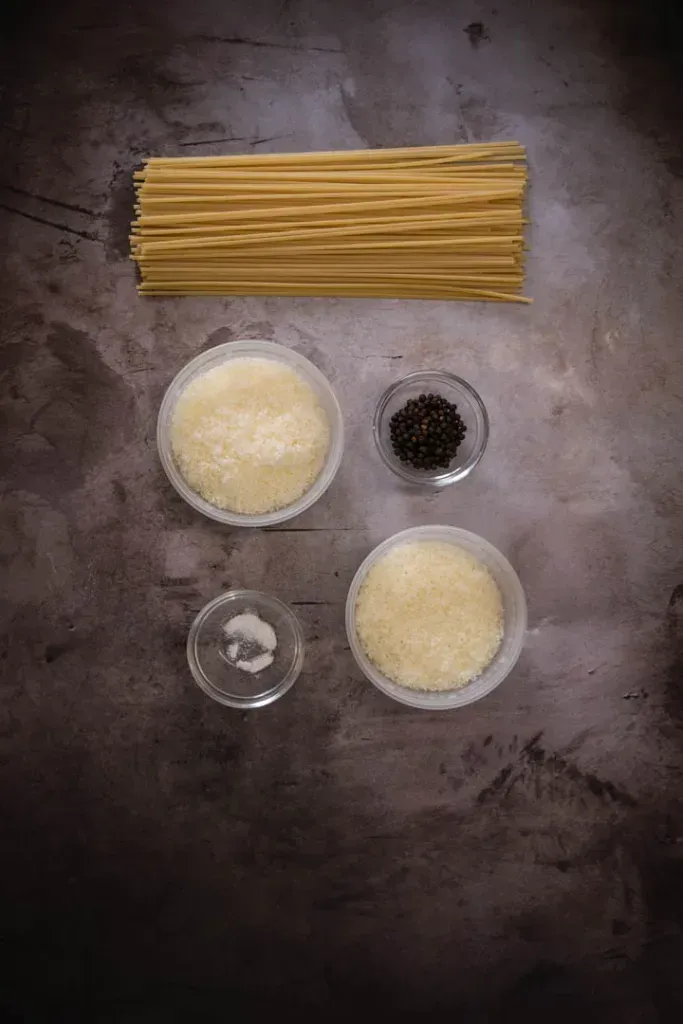
Toast whole black peppercorns in a dry pan over medium-high heat for approximately 4 minutes until fragrant.
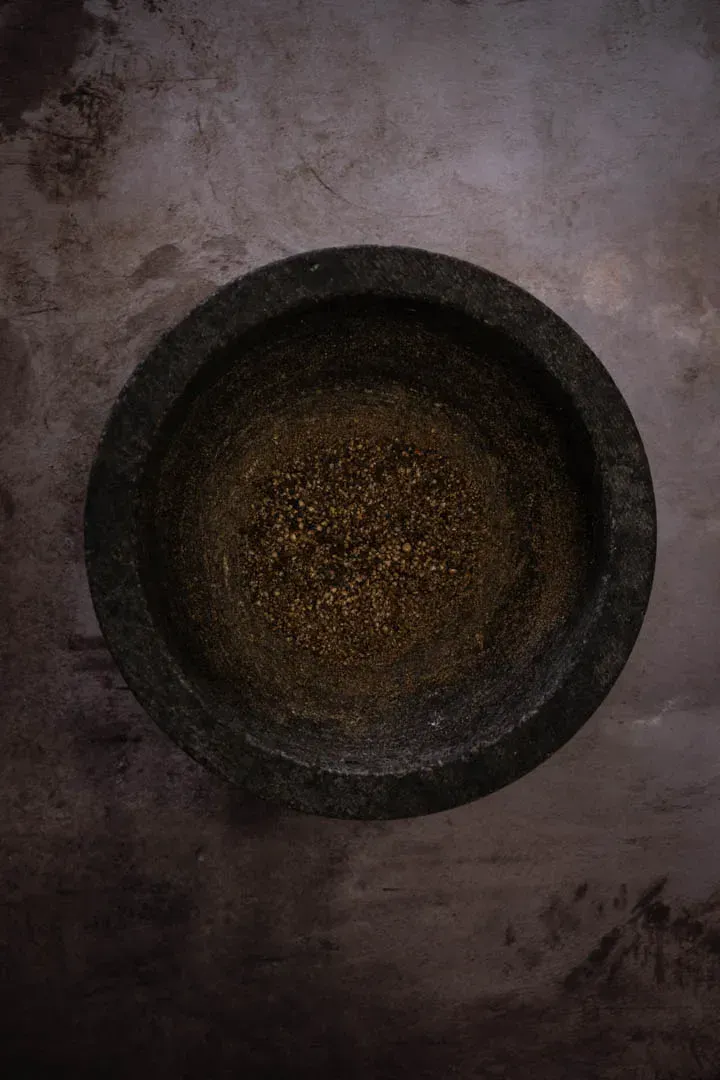
Grind toasted peppercorns coarsely using a mortar and pestle or spice grinder.
Cook spaghetti 3 minutes less than package instructions. Reserve approximately two ladles of starchy pasta water.
Add reserved pasta water to the pepper pan and simmer gently.
Transfer drained pasta directly to the pepper sauce using tongs, adding more pasta water as needed.
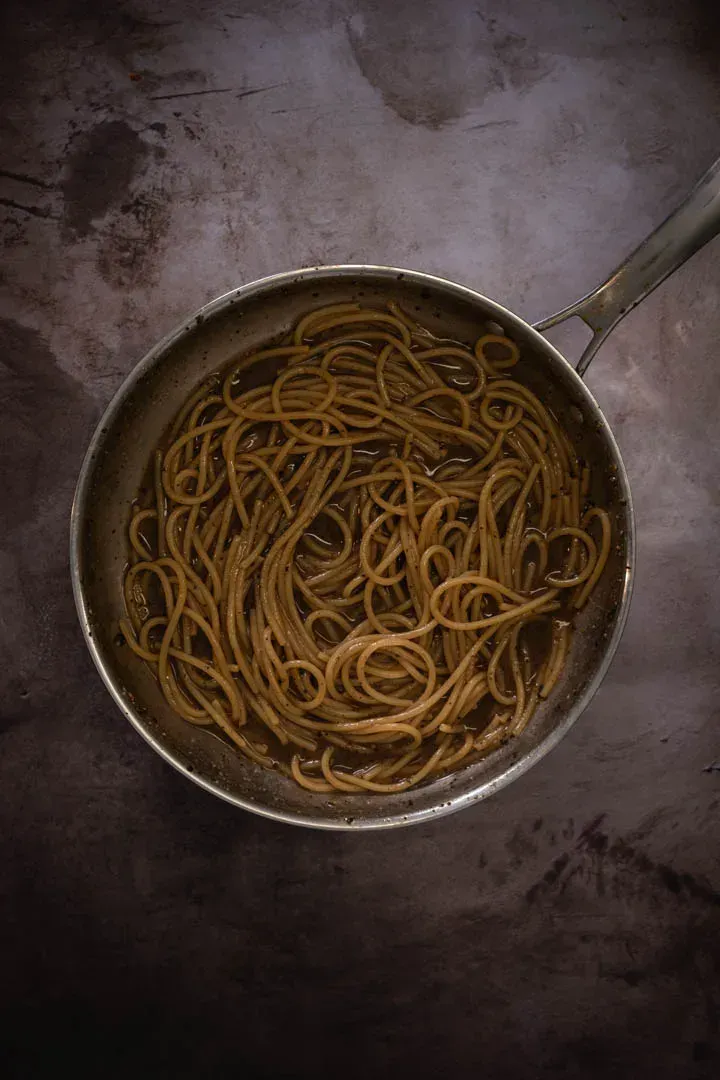
Cook over high heat while stirring constantly until pasta is fully al dente.
Remove from heat, cool for approximately 3 minutes, then gradually stir in both cheeses with small amounts of pasta water.
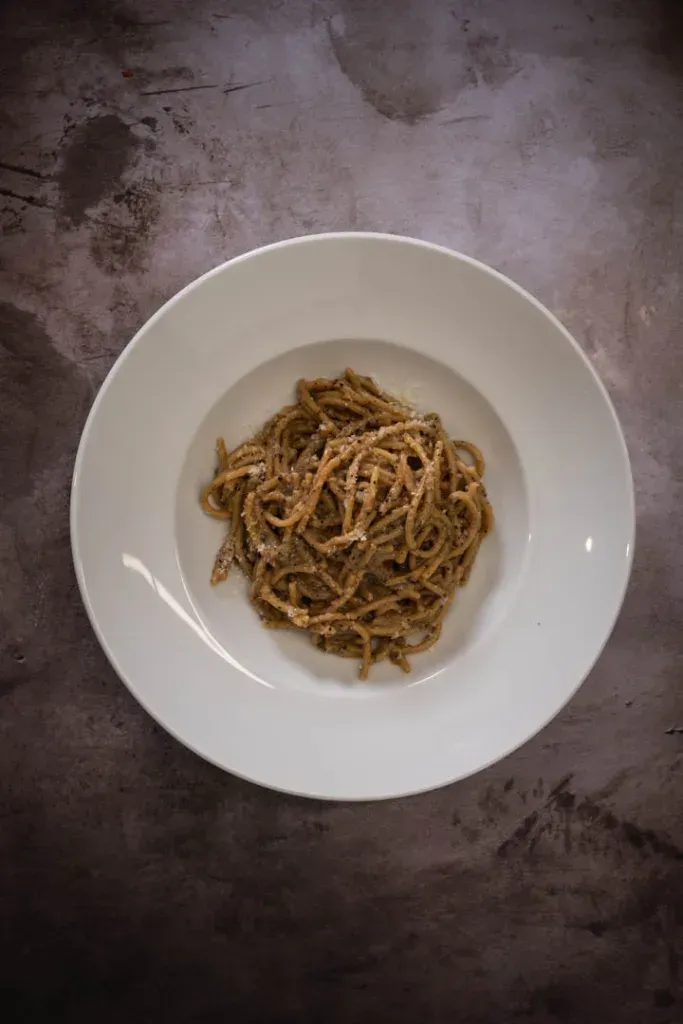
Stir vigorously to create a creamy, silky sauce that clings to every strand.
Date Night Tips
Wine Pairing
A crisp Frascati or dry Trebbiano complements the rich Pecorino
Music
Italian jazz. Try Stefano Bollani or Paolo Conte
Plating
Twirl pasta into a tight nest using tongs and serve on a warm plate
Enjoy your meal!
The Official Recipe
Authentic Cacio e Pepe Recipe
Nutrition(Per serving)
415 kcal
Calories
10g
Fat
56g
Carbs
18g
Protein
Ingredients
Instructions
Bring a large pot of generously salted water to a boil.
Toast whole black peppercorns in a dry pan over medium-high heat for approximately 4 minutes until fragrant.
Grind toasted peppercorns coarsely using a mortar and pestle or spice grinder.
Cook spaghetti 3 minutes less than package instructions. Reserve approximately two ladles of starchy pasta water.
Add reserved pasta water to the pepper pan and simmer gently.
Transfer drained pasta directly to the pepper sauce using tongs, adding more pasta water as needed.
Cook over high heat while stirring constantly until pasta is fully al dente.
Remove from heat, cool for approximately 3 minutes, then gradually stir in both cheeses with small amounts of pasta water.
Stir vigorously to create a creamy, silky sauce that clings to every strand.
Victor Vu
Victor is a Montreal home cook with a decade of experience developing date night recipes. Every dish is tested at least three times before publishing.
About the author →Frequently Asked Questions
Why is my Cacio e Pepe too dry?
Dry cacio e pepe almost always means not enough pasta water reserved. That starchy cooking liquid is the entire sauce. Scoop at least two ladles of the cloudy water before draining, then add it gradually while tossing off heat. The starch emulsifies with the cheese to create something glossy and clinging.
Can I use different pasta besides spaghetti?
Linguine and bucatini both work well for cacio e pepe. Tonnarelli is the traditional Roman choice if you can find it. Skip short pasta entirely; penne and rigatoni let the sauce pool at the bottom instead of clinging to every strand. This dish needs something long enough to twirl.
Is using both cheeses necessary?
Pecorino Romano alone is punchy, salty, and a bit aggressive. Parmigiano-Reggiano is creamy, nutty, and mellow. Together they create a sauce that is sharp enough to be interesting but smooth enough to eat a whole bowl of. The 50/50 blend is what makes the dish balanced.
Why did my cheese clump instead of forming a smooth sauce?
The pan was too hot when the cheese went in. Aged cheese proteins seize up fast under direct heat, and once clumped, there is no rescue. Pull the pan completely off the burner, wait a full three minutes, then add cheese in small handfuls while tossing with splashes of starchy pasta water.
Should I toast the peppercorns or use pre-ground pepper?
Toasting whole peppercorns for about 4 minutes wakes up their essential oils, producing warmth and a floral edge that pre-ground pepper simply cannot deliver. Cracking them coarsely by hand also gives you the uneven texture that defines authentic cacio e pepe. This is not a step to skip.
How important is the pasta water starch content?
Starchy pasta water is the emulsifier that binds cheese and fat into a creamy sauce instead of a greasy mess. Cooking spaghetti in a smaller pot concentrates the starch faster, giving you more powerful sauce-building liquid. It takes no extra effort and makes a genuinely noticeable difference in the final result.
You might also like
Continue your culinary journey
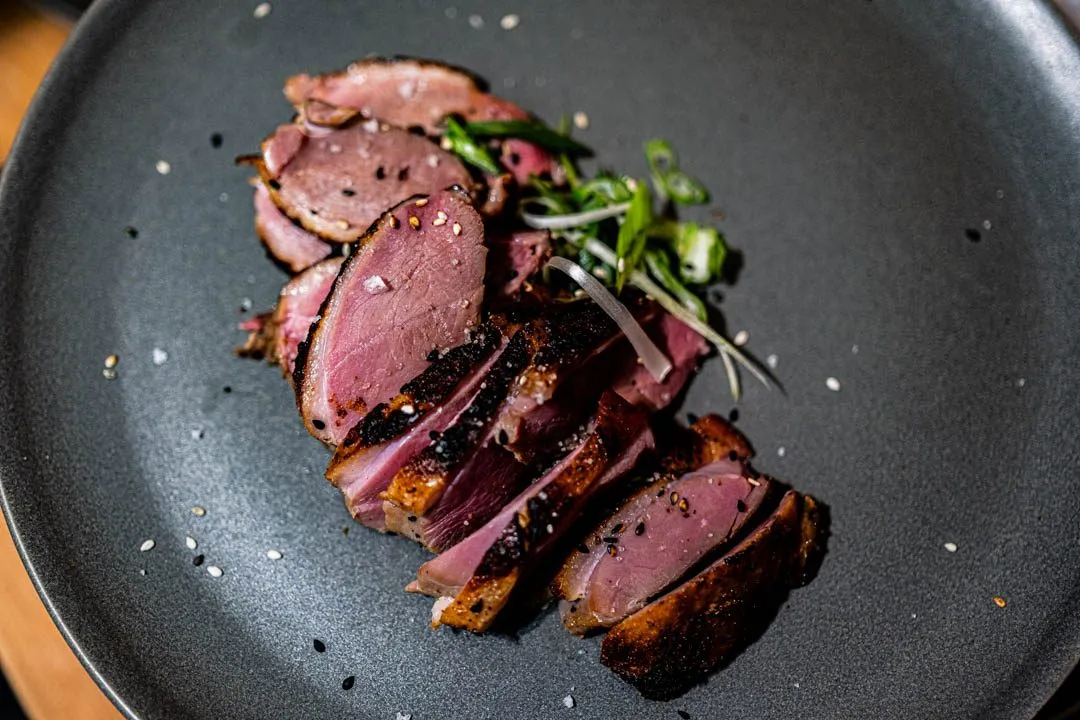
3-Day Miso Duck Breast (Crisp Skin)
Miso-cured duck breast with shatter-crisp skin and a Japanese-French glaze. Three days of patience, one unforgettable bite. The ultimate date night flex.
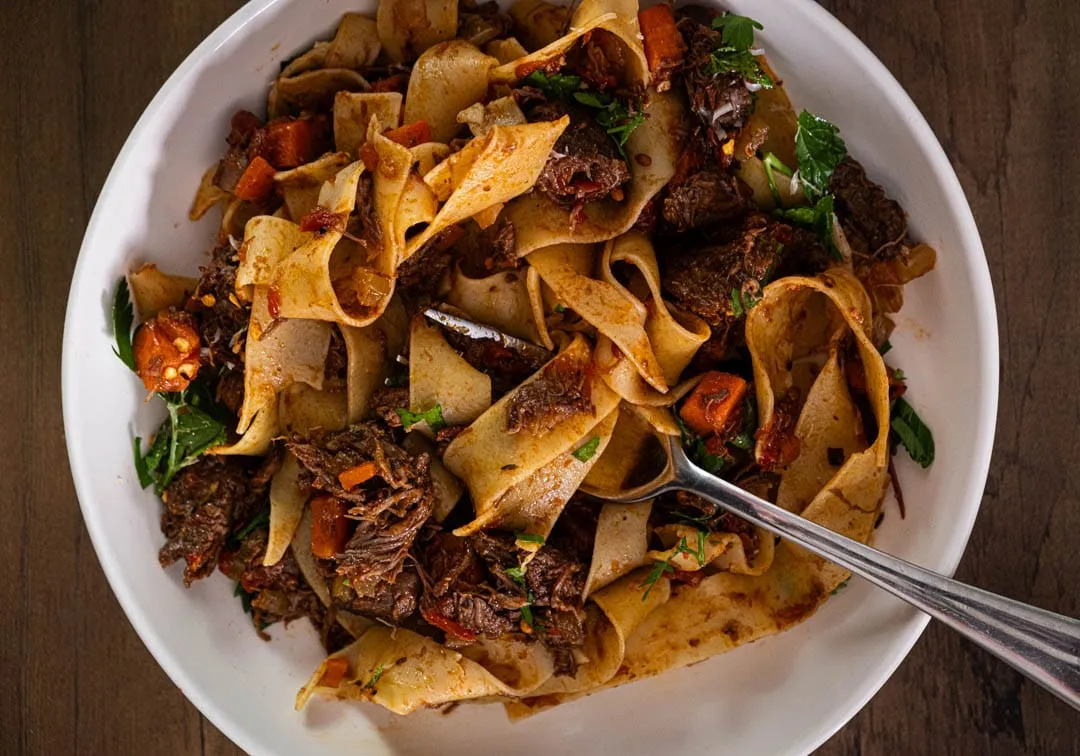
Slow-Cooked Beef Ragu with Pappardelle Pasta
The slow-cooked ragu that says 'I've been thinking about you all day.' Chuck roast, red wine, and pappardelle worth every minute.
Bold Spicy Miso Ramen (Restaurant-Style)
Spicy, creamy miso ramen with ground pork and a garlic-togarashi oil that makes every spoonful dangerous. Restaurant-quality at home in 75 minutes.