Vietnamese Pickled Vegetables (Do Chua)
Sweet, tangy, crunchy, and done in 15 minutes. The condiment that makes every dish on your table look like you planned the whole thing.

Prep
15 min
Cook
PT0M
Passive
1 day
Total
1 day 15 min
Difficulty
Easy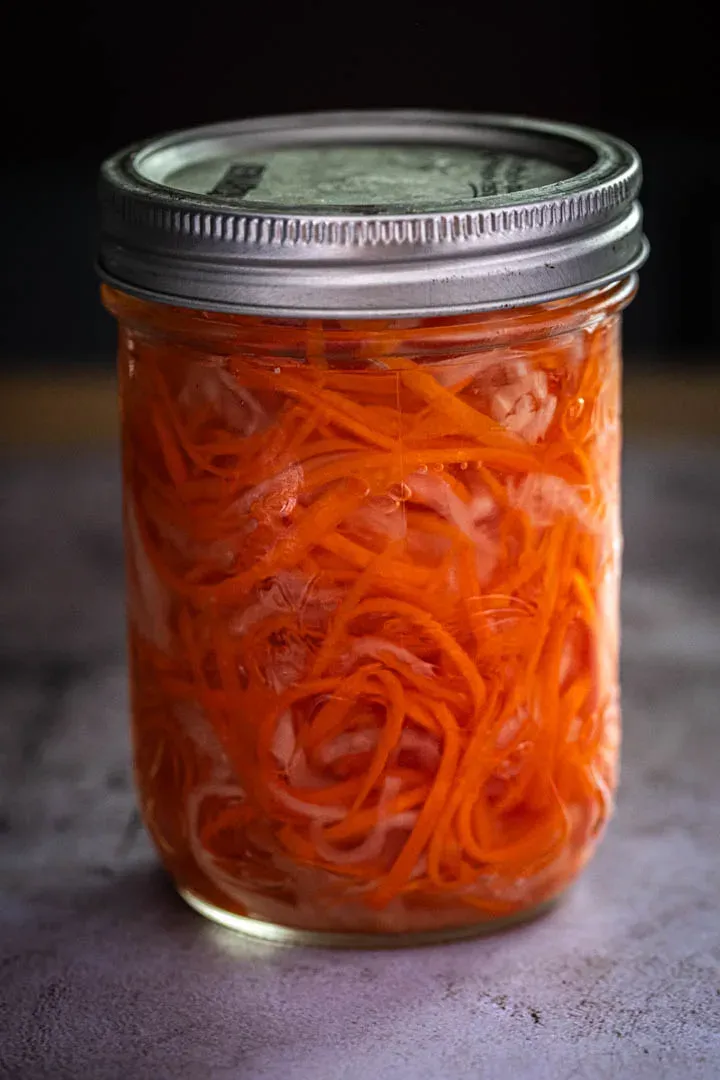
“Do chua is a Vietnamese quick pickle made by salting julienned daikon and carrots to draw out moisture, then submerging them in a sweet brine of white vinegar, water, and sugar. The salting step is essential for crisp texture, as it prevents the vegetables from turning soft in the brine. Ready overnight, it keeps refrigerated for up to three weeks.”
Growing up with a Vietnamese mom in Montreal meant our fridge always had a jar of do chua in it. Every Sunday she’d make a huge batch, and by Wednesday it was half gone. Mostly my doing. I’d pry open the jar and steal spoonfuls straight from the brine when nobody was watching, and I have zero regrets about this.
When I moved out and started cooking for dates, do chua was the first thing I figured out how to make myself. Not because it’s complicated (it isn’t), but because I quickly noticed what happened to a meal when I put a little bowl of it on the table. People who’d never had it before would take one bite, stop talking, and reach for more without thinking. That pause is worth everything. It’s the detail that makes you look like you really know what you’re doing in the kitchen, even when the main dish is just grilled chicken and rice.
Fifteen minutes of prep. A night in the fridge. A jar that makes every meal feel considered.
Why these pickles change everything
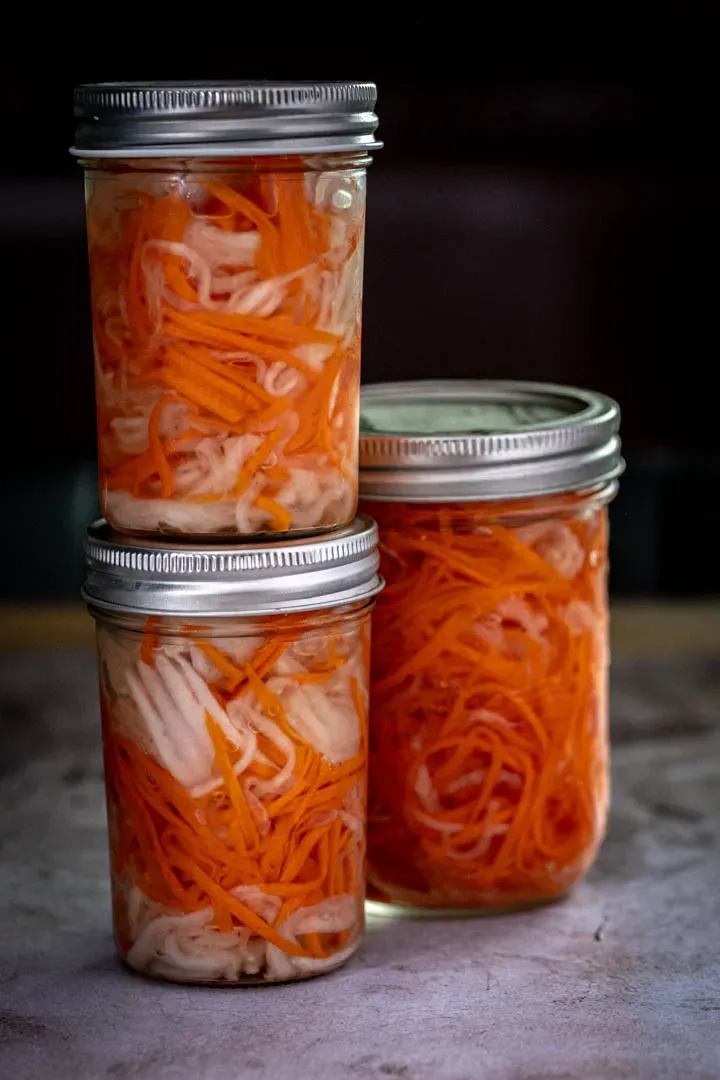
Do chua translates roughly to “sour stuff” in Vietnamese, which is both modest and completely accurate. Julienned daikon and carrots in a sweet-vinegar brine. That’s it. But calling it “just a condiment” is like calling salt “just a mineral.” Once you have a jar in the fridge, your entire cooking game shifts.
The sweet, sour, and salty balance is what makes do chua so versatile. It cuts through rich food like nothing else. Fatty pork belly, heavy braises, fried anything. One forkful of do chua resets your palate and makes the next bite feel like the first. That’s the kind of thing restaurants charge extra for, and you can make it at home in fifteen minutes. The jar lasts up to three weeks in the fridge, which means one Sunday afternoon of slicing sets you up for days of meals that taste more intentional than they have any right to.
I’ve watched people go from “what is this?” to reaching for a second helping mid-sentence. That reaction never gets old.
What you need to know before starting
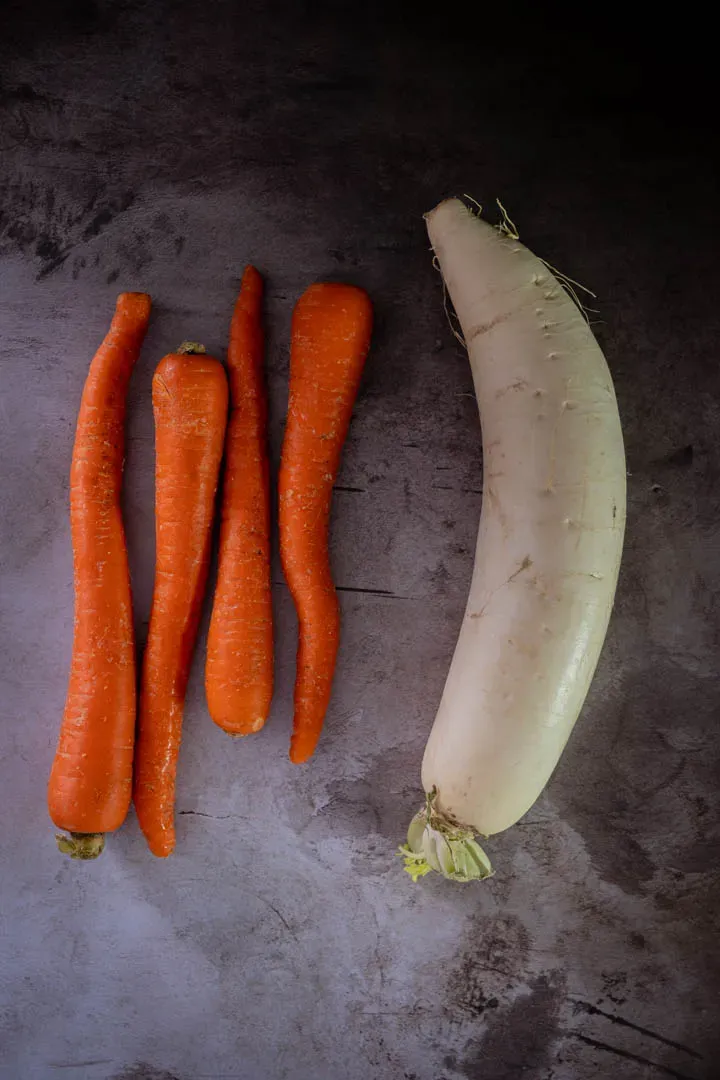
Daikon is non-negotiable. It’s the large ivory-white root you’ll find at any Asian grocery store, or at Jean-Talon Market if you’re in Montreal. The flesh is mild and faintly peppery raw, and it mellows into something almost sweet after a day in brine. More importantly, it stays crunchy. Red radishes are not a substitute: they’re too small, too sharp, and they go limp when pickled.
White vinegar only. Not rice vinegar, not apple cider. Rice vinegar is too gentle for this job. Apple cider pulls the flavor somewhere it shouldn’t go. Regular white vinegar gives you the clean, direct acidity that makes do chua taste like do chua.
For julienning, aim for consistent matchsticks about 5 cm long and 3 mm thick. A julienne peeler is the fastest route and produces beautiful, regular strips with almost no effort. A mandoline works too. If you’re using a knife, sharpen it first and take your time. Uniform pieces pickle at the same rate, which means even crunch in every bite rather than some bits that are perfect and others that went too far.
The science of the salt step
This is the step that separates good do chua from forgettable do chua. Don’t rush it.
Toss the cut vegetables with salt and leave them for 20 minutes. You’ll see water pooling at the bottom of the bowl almost immediately. That’s exactly what you want. The salt draws out excess moisture through osmosis, so the brine doesn’t get diluted later. Skip this step and the vegetables release their water into the pickling liquid. Your carefully measured vinegar-to-sugar ratio falls apart. The result is soft, waterlogged pickles that taste flat and lack any snap.
After the 20 minutes, rinse thoroughly under cold running water for a full minute, then dry completely. A salad spinner is fastest. A clean kitchen towel works too. Get them as dry as you can, because any lingering water still weakens the brine. Dry vegetables make clean pickles. Wet vegetables make excuses.
Keep the vegetables fully submerged once they’re in the jar. If pieces float above the brine, they won’t pickle evenly and can spoil faster. A small weight or a piece of parchment pressed against the surface does the trick. Always use a glass container. Plastic absorbs vinegar smell and gives it back to the pickles over time. A 1-litre mason jar is the right size for this batch. And give the jar at least overnight before you dig in. Patience here pays off: the flavor at hour 24 is good, but by day three it’s genuinely addictive.
How to use them
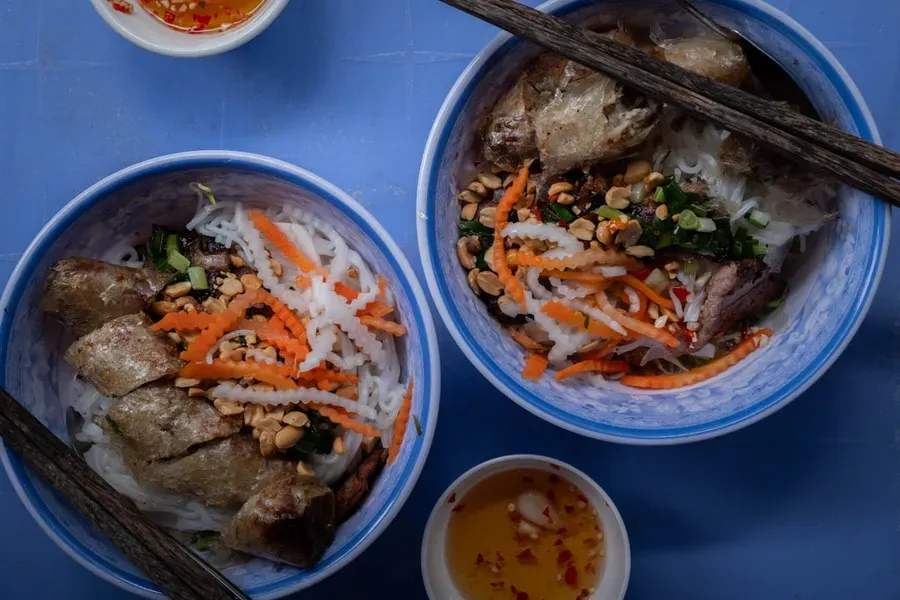
The classic pairing is banh mi: a baguette piled with Vietnamese cold cuts or pork, pate, jalapenos, cilantro, and a generous handful of do chua. If you’ve only ever eaten banh mi without homemade pickles, you’re going to feel a little cheated once you try it this way.
Rice bowls are the second obvious move. Grilled chicken, caramelized pork, or a simple fried egg over steamed rice, then a pile of do chua on the side. The acidity turns a Tuesday-night bowl into something that feels genuinely put together. Pile it alongside our quinoa-crusted salmon for a contrast that works better than you’d expect.
Tacos, surprisingly. Use do chua in place of coleslaw on Korean-style tacos and it adds that bright crunch without the heaviness of a mayo-dressed slaw. It also pairs brilliantly with bold, spicy dishes. A jar of do chua alongside our gochujang-kimchi seafood bucatini gives the whole meal an extra layer of tangy crunch that tempers the heat.
Grilled meats are where do chua really earns its place. The acid cuts through char and fat, and the sweetness in the brine complements smoky flavors without competing with them. Next time you fire up the grill, put a small bowl of do chua on the table and see how fast it disappears. For a main course that pairs naturally, our Vietnamese fish sauce wings bring exactly the kind of rich, caramelized flavor that do chua cuts through at its best.
Making a batch for date night
Here’s the move: make a jar on a quiet evening when you have no plans. Stick it in the fridge. Then, when date night rolls around, you pull out this glowing jar of orange and white matchsticks and casually set it on the table like you do this all the time. It’s the kind of detail that makes someone pause and think, “oh, they actually know what they’re doing.”
The recipe scales without issues. Double it, triple it, same ratios. Some weeks I keep two jars going at staggered stages so there’s always a fully developed one ready to open. The first jar you make is for curiosity. The second jar is because you realized the first one wasn’t going to last the week.
What to cook next
Do chua goes with more than you’d think. If you want a main course that pairs perfectly, try the quinoa-crusted salmon for a lighter option, or go bold with the gochujang-kimchi seafood bucatini for something richer and spicier. Browse the full collection of side-dish recipes for more ideas to round out the table.
The first time you serve homemade do chua to someone who hasn’t had it before, watch what happens after the first bite. There’s a little pause. Then they reach back in. That’s the whole reason to make a fresh jar every week.
Vietnamese Pickled Vegetables (Do Chua)
Instructions
Julienne the carrots and daikon into thin matchsticks, about 5 cm long and 3 mm thick. Use a julienne peeler, mandoline, or a sharp knife for consistent results.
Place the julienned vegetables in a large bowl and toss thoroughly with the salt. Let them rest for 20 minutes. This draws out excess moisture and improves the final texture.
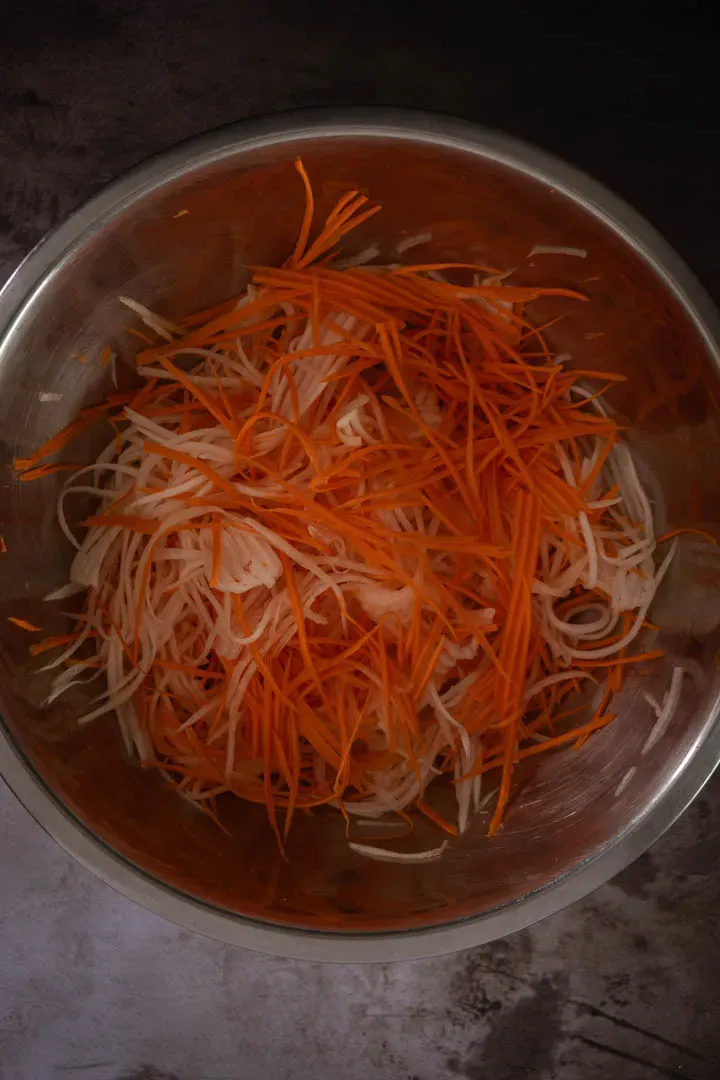
Rinse the salted vegetables under cold running water for at least 1 minute, tossing them to remove all traces of salt.
Dry the rinsed vegetables completely using a salad spinner, or spread them on a clean kitchen towel and pat dry. Excess water will dilute the pickling brine.
In a bowl or jug, combine the white vinegar, water, and sugar. Stir until the sugar is completely dissolved. Allow to cool to room temperature if using warm water.
Pack the dried vegetables tightly into a clean glass jar or airtight container. Pour the pickling liquid over them, ensuring the vegetables are fully submerged. If needed, place a small weight on top to keep them under the brine.
Cover the jar and refrigerate overnight before serving. The pickles are ready to eat the next day and improve further after 24 hours.
Date Night Tips
Wine Pairing
Skip the wine with this one. A cold Vietnamese iced coffee (cà phê sữa đá) or a light lager like Tiger Beer is the perfect companion
Music
Vietnamese lo-fi or chill indie. Try Vũ or the Saigon Soul Revival playlist for a gentle Southeast Asian vibe
Plating
Serve in a small ceramic bowl or a mason jar with a cilantro sprig on top to show off the vivid orange and white colors
Enjoy your meal!
The Official Recipe
Vietnamese Pickled Vegetables (Do Chua)
Nutrition(Per serving)
50 kcal
Calories
0g
Fat
12g
Carbs
1g
Protein
Ingredients
Instructions
Julienne the carrots and daikon into thin matchsticks, about 5 cm long and 3 mm thick. Use a julienne peeler, mandoline, or a sharp knife for consistent results.
Place the julienned vegetables in a large bowl and toss thoroughly with the salt. Let them rest for 20 minutes. This draws out excess moisture and improves the final texture.
Rinse the salted vegetables under cold running water for at least 1 minute, tossing them to remove all traces of salt.
Dry the rinsed vegetables completely using a salad spinner, or spread them on a clean kitchen towel and pat dry. Excess water will dilute the pickling brine.
In a bowl or jug, combine the white vinegar, water, and sugar. Stir until the sugar is completely dissolved. Allow to cool to room temperature if using warm water.
Pack the dried vegetables tightly into a clean glass jar or airtight container. Pour the pickling liquid over them, ensuring the vegetables are fully submerged. If needed, place a small weight on top to keep them under the brine.
Cover the jar and refrigerate overnight before serving. The pickles are ready to eat the next day and improve further after 24 hours.
Victor Vu
Victor is a Montreal home cook with a decade of experience developing date night recipes. Every dish is tested at least three times before publishing.
About the author →Frequently Asked Questions
How long do Vietnamese pickled vegetables last?
Do chua keeps up to three weeks in a sealed glass jar in the fridge. The flavor improves steadily: good by day one, genuinely addictive by day three. Keep the vegetables fully submerged, always use clean utensils, and resist leaving the jar on the counter while you graze.
Can I use regular radishes instead of daikon?
Red radishes are too small, too sharp, and they go limp when pickled. Daikon is a large, ivory-white radish with a mild flavor and firm crunch that holds up beautifully in brine. You will find it at any Asian grocery store. There is no real substitute, so make the extra stop.
Why do I need to salt the vegetables before pickling?
Salting pulls excess water out of the vegetables through osmosis. Without it, that moisture bleeds into your brine and dilutes the vinegar-to-sugar ratio. The result is soft, waterlogged pickles instead of crunchy ones. Twenty minutes of patience here separates restaurant-quality do chua from a jar you won't finish.
Can I adjust the sweetness of the brine?
Slightly, yes. Cutting the sugar by more than 25% makes the brine one-note sour and sharp, not something you want on a banh mi. The sugar rounds out the vinegar, helps with preservation, and balances the tangy bite. Go a touch sweeter if you prefer, but do not slash it.
Do these pickled vegetables need to stay refrigerated?
Always. Do chua is a quick fridge pickle, not a shelf-stable preserve. The brine is not acidic enough to be safe at room temperature for extended periods. Keep them cold, use a clean fork every time, and do not leave the jar sitting out while you cook. Cold storage is non-negotiable.