Spicy Gochujang-Kimchi Seafood Bucatini
Gochujang, kimchi, and three kinds of seafood on bucatini. Spicy, funky, and the kind of bold you cook when you're trying to impress.

Prep
20 min
Cook
25 min
Total
45 min
Difficulty
Medium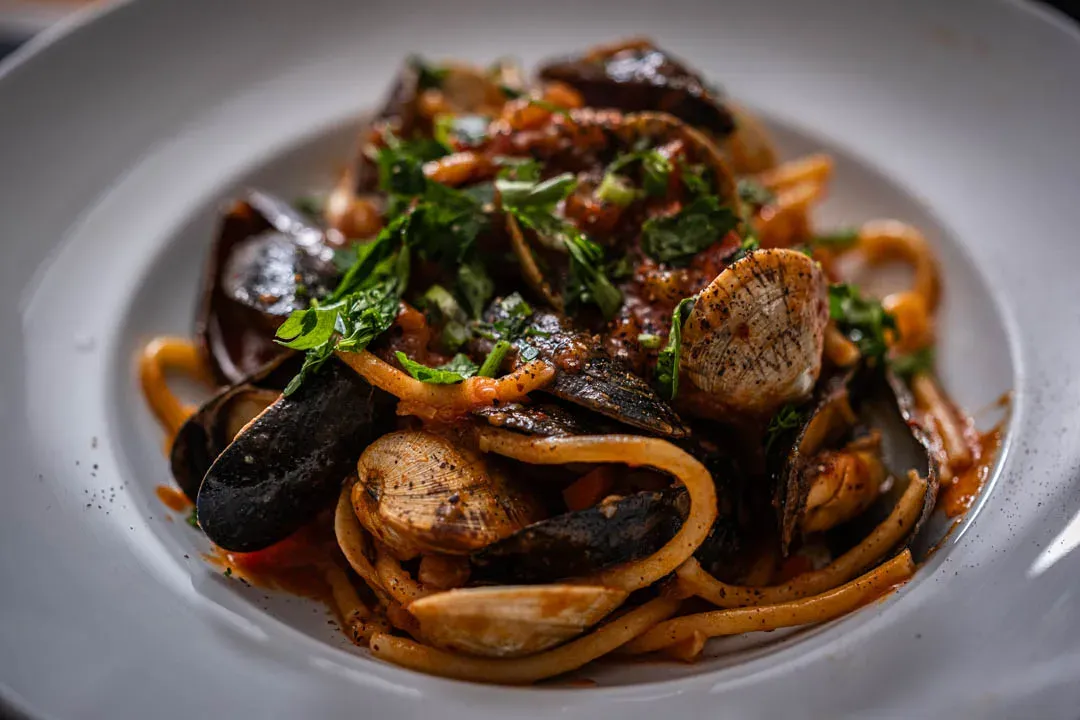
“Gochujang-kimchi seafood bucatini is a Korean-Italian fusion pasta combining mussels, shrimp, and scallops in a spicy sauce built on gochujang, chopped kimchi, and passata. The seafood is cooked in stages to avoid overcooking, then returned to the sauce just before serving. Finishing with lemon zest and fresh herbs balances the heat.”
This is the pasta you make when you want to say, “I’m fun, I’m a little spicy, and I definitely know what I’m doing.” Gochujang and kimchi bring fermented heat and a funky bass note that transforms a simple tomato base into something with genuine personality. The sauce reduces into a glossy, clingy coating that grabs every strand of bucatini so completely that pooling at the bottom of the bowl is not an option. Three kinds of seafood go in at the end, cooked in careful stages so nothing turns rubbery. Total active time is under an hour, and most of that is the sauce simmering while you pour the wine. The impressive part is not how hard this is. It’s how confidently it lands on the table.
Why this pasta hits different
You get a thick, clingy sauce that actually coats the noodles instead of sliding off into a sad puddle. You get tender seafood, cooked exactly right because you pulled it at the perfect moment. You get big flavor from a short list of ingredients and minimal active effort. And you get a dish that looks and tastes like you spent the whole afternoon in the kitchen, when really you spent 45 minutes and most of that was hands-off.
The combination of gochujang and passata should not feel this natural. Korean fermented chili paste has no business being this at home in an Italian tomato sauce, and yet the pairing makes complete sense once you taste it. Gochujang brings a slow-building, rounded heat, nothing like the sharp spike of fresh chili. Kimchi adds sour funk that keeps the sauce from feeling heavy, a byproduct of the lactic acid bacteria (primarily Leuconostoc mesenteroides) that drive Korean fermentation. Fish sauce, used in drops rather than pours, amplifies the umami of the shellfish without ever reading as fishy. If you want to understand the science behind that high-heat sear on the seafood, our guide to getting wok hei at home covers the same principles of extreme heat and quick cooking that make this dish sing.
If this kind of confident cross-cultural cooking speaks to you, penne alla vodka is another dish that makes a bold move on Italian tradition. For a seafood main that goes in a completely different direction, our quinoa-crusted salmon brings Nikkei fusion to the table with the same boldness. And for the opposite end of the spectrum, cacio e pepe proves that sometimes the whole point is saying everything with almost nothing.
Shopping notes and smart substitutions
Cockles are the first choice here because they’re smaller, sweeter, and cook faster than littleneck clams. If you can only find clams, they work fine; just give them an extra minute in the pot. For scallops, the single most important thing is patting them bone dry with paper towels before they go anywhere near the pan. Wet scallops release steam that thins the sauce and prevents a clean sear. Dry scallops give you that glossy consistency you just spent 15 minutes building.
Kimchi quality matters. Look for a brand with visible chili flakes and a sour, funky smell. If yours is mild, add a bit more gochujang to compensate. The wine should be dry and something you would actually drink. A cheap Sauvignon Blanc or Pinot Grigio works perfectly. Fish sauce is the invisible backbone of this dish: start with half a teaspoon, then adjust at the end. You want depth, not fishiness. If you are new to fish sauce, go slow and taste often. The line between “where did this flavor come from?” and “too much” is about half a teaspoon apart.
The clingy sauce secret
The difference between a sauce that coats every strand and one that pools at the bottom comes down to reduction and patience. Simmer the passata uncovered for 10 to 15 minutes, stirring occasionally, until dragging a spoon through the sauce leaves a clean trail that does not fill back in. That is the spoon test, and it is the single most reliable indicator that your sauce is ready for the seafood.
Reduce the sauce fully before the mussels and clams go in. If you try to reduce after, you will overcook the shellfish while you wait, and that mistake shows up in every bite. Pasta water is the other key: add it one tablespoon at a time while tossing the bucatini over low heat. Too much dilutes the cling you spent 15 minutes building. Too little and the sauce grabs but does not flow. Two to four tablespoons is usually the sweet spot.
The final balance comes right at the end. Salt, fish sauce, and lemon are three separate adjustment levers. When all three are dialed in, the dish stops tasting like ingredients and starts tasting like a recipe. Adjust one at a time, tasting between each, until it clicks.
Making it a date night
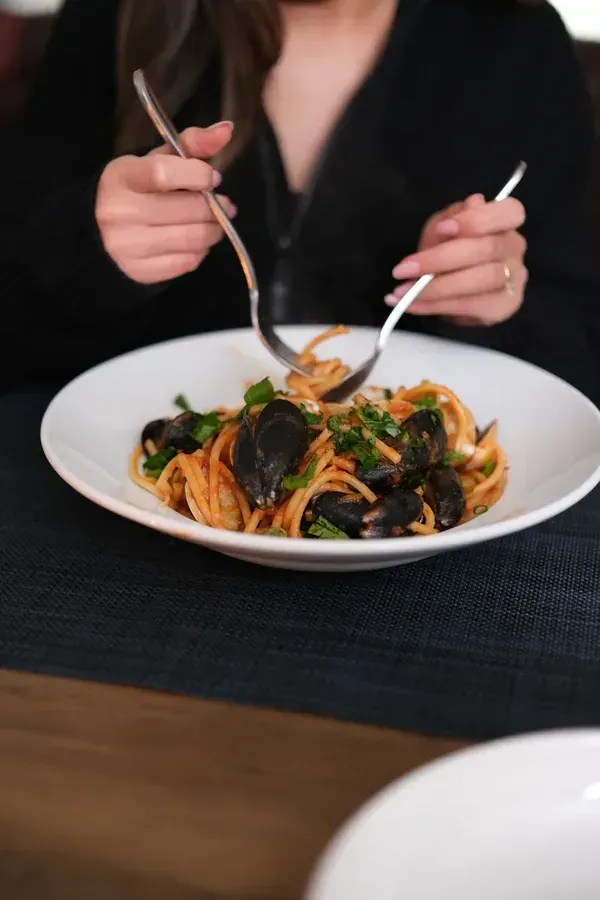
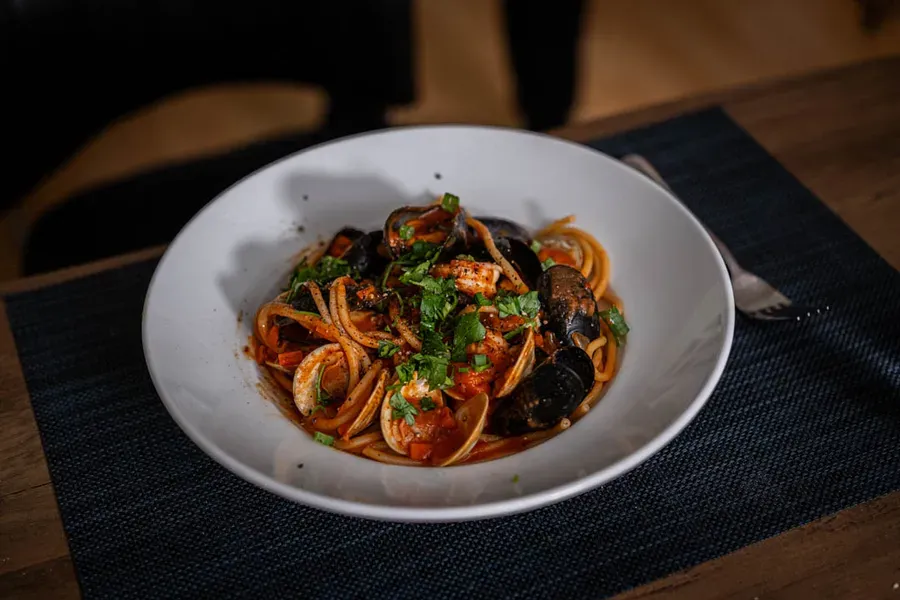
The vibe of this dish is bright, spicy, and a little bit fun. It is not a white-tablecloth pasta. It is the eat-with-your-hands, mop-the-bowl-with-bread, laugh-about-the-spice-level kind of dinner. And that energy is exactly what makes it work on a date.
Here is the game plan. Build the sauce through the reduction step before your date arrives. The kitchen already smells incredible, you look impossibly calm, and you have done most of the work. When they show up, finish the pasta together in the last 10 minutes. Hand them a spoon and let them taste for balance: salt, lemon, maybe a drop more fish sauce. That is the move. It turns them from audience into co-creator, which is way more intimate than just plating something and sliding it across the table. Serve in warm bowls, grate lemon zest at the table, and act like you do this all the time.
This dish works for a date because it is interactive without being stressful. The hardest part is already done by the time anyone walks through the door. The rest is tossing pasta and adjusting seasoning, tasks that feel collaborative rather than performative. You are cooking together, not cooking for someone. That shift changes the whole energy of the evening.
(You do now.)
What to serve alongside
Keep it simple. A hunk of crusty bread is non-negotiable because someone is going to want to soak up the last of that sauce, and honestly that might be you. A green salad with a bright lemon vinaigrette cuts through the richness and the spice. Sparkling water with lemon is the ideal non-alcoholic pairing; it cleanses the palate between bites and keeps the heat from building too aggressively. For wine, a crisp Albariño or dry Riesling handles the spice beautifully, and a Chablis works if you want a more classic shellfish pairing.
Skip heavy sides. This pasta is the main event and it does not need competition. The bread, the salad, and the company are more than enough.
The confidence factor
I will be honest: this recipe looks more complicated than it is. The ingredient list is long because seafood pasta has moving parts, but every step is straightforward and nothing requires special equipment or technique. If you can sauté vegetables, simmer a sauce, and boil pasta, you already have the skills. The rest is just timing, and the timing is forgiving because the seafood comes out of the sauce before it can overcook.
The real confidence comes from knowing what you are serving. This is not a safe, crowd-pleasing pasta. It is a dish with a point of view. It says you are someone who knows their way around fermented chili paste and shellfish, who can balance heat and acid and salt without a safety net. That energy reads at the table. It reads on a date. Cook it once, and I promise you will cook it again.
Spicy Gochujang-Kimchi Seafood Bucatini
Instructions
Scrub mussels and clams under cold water. Discard any that don't close when tapped. Pat shrimp and scallops very dry with paper towels.
Boil bucatini in well-salted water, cooking 1 minute shy of al dente. Reserve 250 ml of pasta water, then drain.
In a large pot or Dutch oven over medium heat, sauté shallot, garlic, celery, and carrot in 1–2 tbsp olive oil until softened, about 5 minutes.
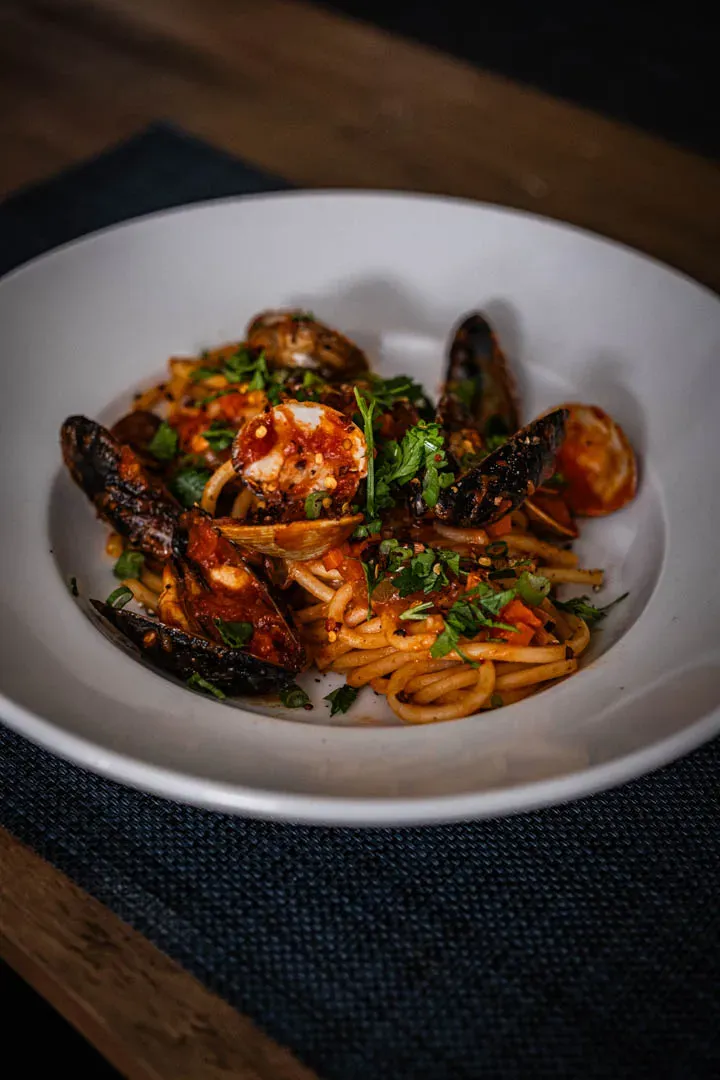
Add kimchi and gochujang. Cook 2 minutes until fragrant. Stir in tomato paste and cook 1 more minute. This is the cling insurance policy.
Add white wine, scrape up the browned bits from the bottom of the pot, and reduce for about 2 minutes.
Stir in passata, chili flakes, a splash of fish sauce, and a pinch of salt. Simmer uncovered 10–15 minutes, stirring occasionally, until the sauce is glossy and dragging a spoon through it leaves a clean trail.
Add mussels and clams, cover, and cook 2–4 minutes until they start opening. Discard any that remain closed.
Add shrimp and scallops. Cover for 1–2 minutes until just opaque. Immediately transfer all seafood to a bowl to stop cooking.
Add drained pasta to the sauce. Add 2–4 tbsp of reserved pasta water and toss over low heat for 1–2 minutes until the sauce coats every strand.
Return seafood to the pot just to warm through. Stir in parsley and scallions. Finish with lemon zest and a squeeze of lemon juice. Serve immediately in warm bowls.
Date Night Tips
Wine Pairing
A crisp Albariño or dry Riesling handles the spice beautifully. Chablis also works for a more classic shellfish pairing
Music
Lo-fi Korean indie or upbeat J-pop, something bright with an effortlessly cool undercurrent
Plating
Serve in wide, warm bowls with the shellfish arranged on top, finish with lemon zest grated tableside, and add a pinch of extra chili flakes for colour
Enjoy your meal!
The Official Recipe
Spicy Gochujang-Kimchi Seafood Bucatini
Nutrition(Per serving)
620 kcal
Calories
12g
Fat
72g
Carbs
48g
Protein
Ingredients
Seafood
Vegetables & Aromatics
Sauce
To Serve
Instructions
Scrub mussels and clams under cold water. Discard any that don't close when tapped. Pat shrimp and scallops very dry with paper towels.
Boil bucatini in well-salted water, cooking 1 minute shy of al dente. Reserve 250 ml of pasta water, then drain.
In a large pot or Dutch oven over medium heat, sauté shallot, garlic, celery, and carrot in 1–2 tbsp olive oil until softened, about 5 minutes.
Add kimchi and gochujang. Cook 2 minutes until fragrant. Stir in tomato paste and cook 1 more minute. This is the cling insurance policy.
Add white wine, scrape up the browned bits from the bottom of the pot, and reduce for about 2 minutes.
Stir in passata, chili flakes, a splash of fish sauce, and a pinch of salt. Simmer uncovered 10–15 minutes, stirring occasionally, until the sauce is glossy and dragging a spoon through it leaves a clean trail.
Add mussels and clams, cover, and cook 2–4 minutes until they start opening. Discard any that remain closed.
Add shrimp and scallops. Cover for 1–2 minutes until just opaque. Immediately transfer all seafood to a bowl to stop cooking.
Add drained pasta to the sauce. Add 2–4 tbsp of reserved pasta water and toss over low heat for 1–2 minutes until the sauce coats every strand.
Return seafood to the pot just to warm through. Stir in parsley and scallions. Finish with lemon zest and a squeeze of lemon juice. Serve immediately in warm bowls.
Victor Vu
Victor is a Montreal home cook with a decade of experience developing date night recipes. Every dish is tested at least three times before publishing.
About the author →Frequently Asked Questions
Can I make this dish ahead for a date night?
The gochujang-kimchi sauce can be built through the reduction step and refrigerated up to a day ahead. It actually deepens in flavor overnight, making advance prep a genuine upgrade. Cook the bucatini and the mussels, shrimp, and scallops fresh in the final 15 minutes for the best texture.
Can I use frozen seafood?
Frozen seafood works well if you thaw it completely in the fridge overnight and pat everything very dry before cooking. Excess water from frozen shrimp, scallops, or mussels will thin the sauce you spent 15 minutes reducing. Paper towels do real work here; dry seafood means a clingy, glossy sauce.
What if my sauce is too thick or too thin?
For sauce that is too thick, add reserved pasta water one tablespoon at a time while tossing over low heat. For sauce that is too thin, simmer uncovered for a few more minutes before the seafood goes in. Either fix takes about 90 seconds and solves the problem completely.
Can I substitute the gochujang or kimchi?
Gochujang can swap for Calabrian chili paste or sambal oelek if you need heat without the fermented depth. For kimchi, sauerkraut plus extra chili flakes gets you partway there. The real ingredients are the soul of this sauce, though, and worth the trip to an Asian grocery.
What pasta shape works best if I can't find bucatini?
Spaghetti is the closest substitute with nearly identical performance. Linguine also works beautifully. Short pasta like penne or rigatoni will not; the long strands and the tossing motion are what create that glossy, clingy coating. This is a twirling pasta, not a scooping one.
You might also like
Continue your culinary journey
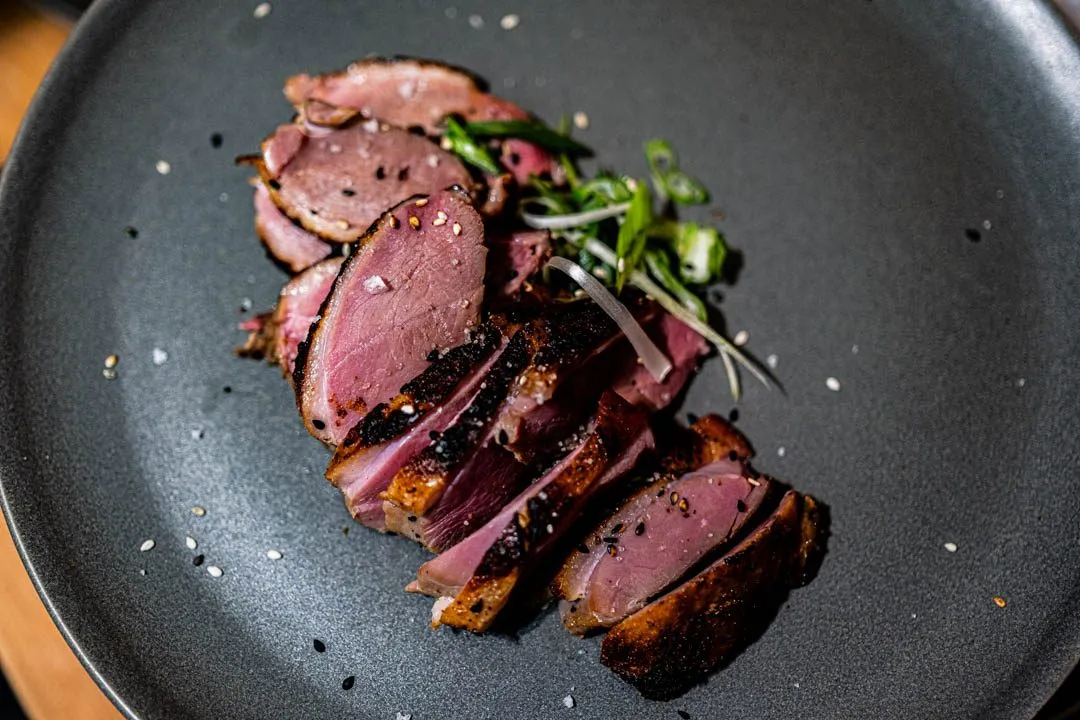
3-Day Miso Duck Breast (Crisp Skin)
Miso-cured duck breast with shatter-crisp skin and a Japanese-French glaze. Three days of patience, one unforgettable bite. The ultimate date night flex.
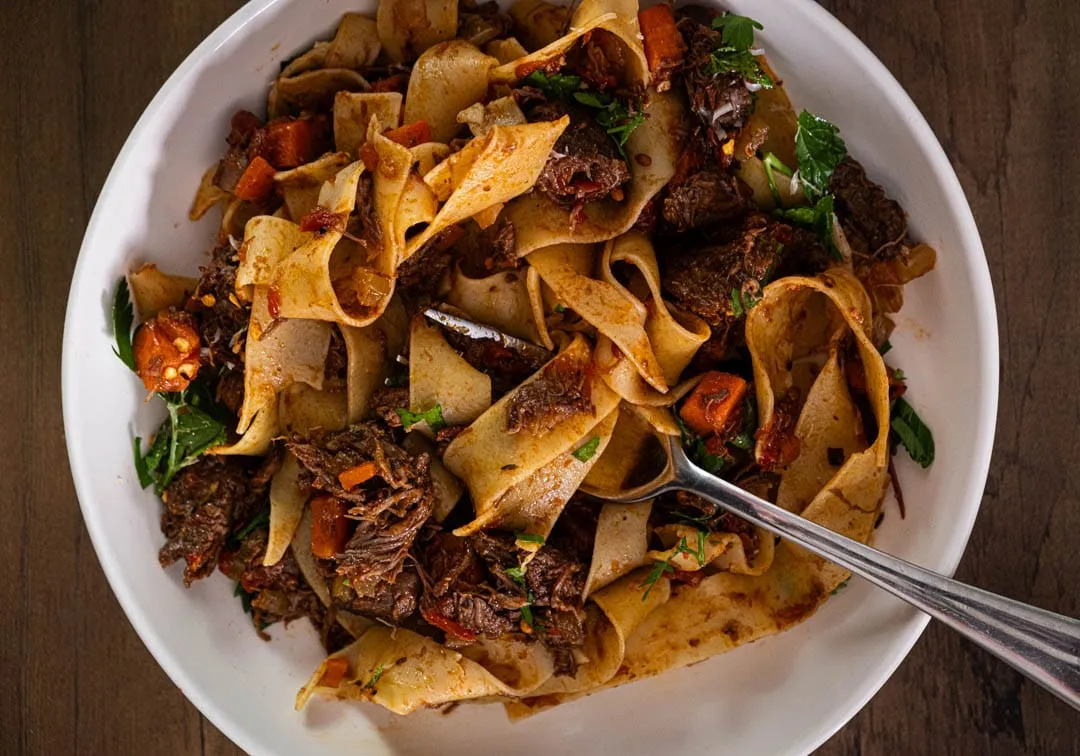
Slow-Cooked Beef Ragu with Pappardelle Pasta
The slow-cooked ragu that says 'I've been thinking about you all day.' Chuck roast, red wine, and pappardelle worth every minute.
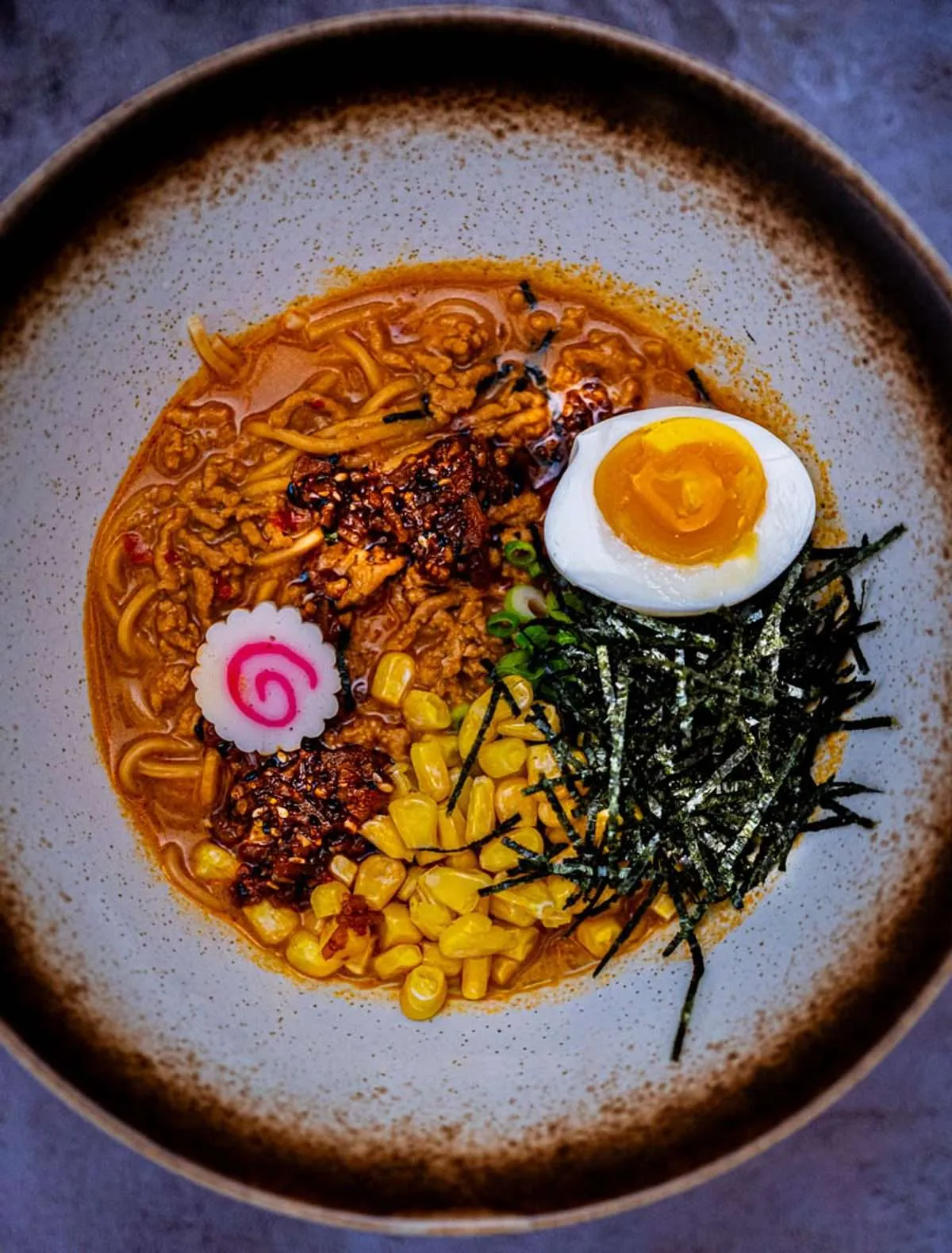
Bold Spicy Miso Ramen (Restaurant-Style)
Spicy, creamy miso ramen with ground pork and a garlic-togarashi oil that makes every spoonful dangerous. Restaurant-quality at home in 75 minutes.