Best Cutting Board Material for Home Cooks
Katori titanium, Hasegawa, wood, and HDPE tested side by side for knife care, bacteria resistance, and longevity. Here is which material wins for home cooks.

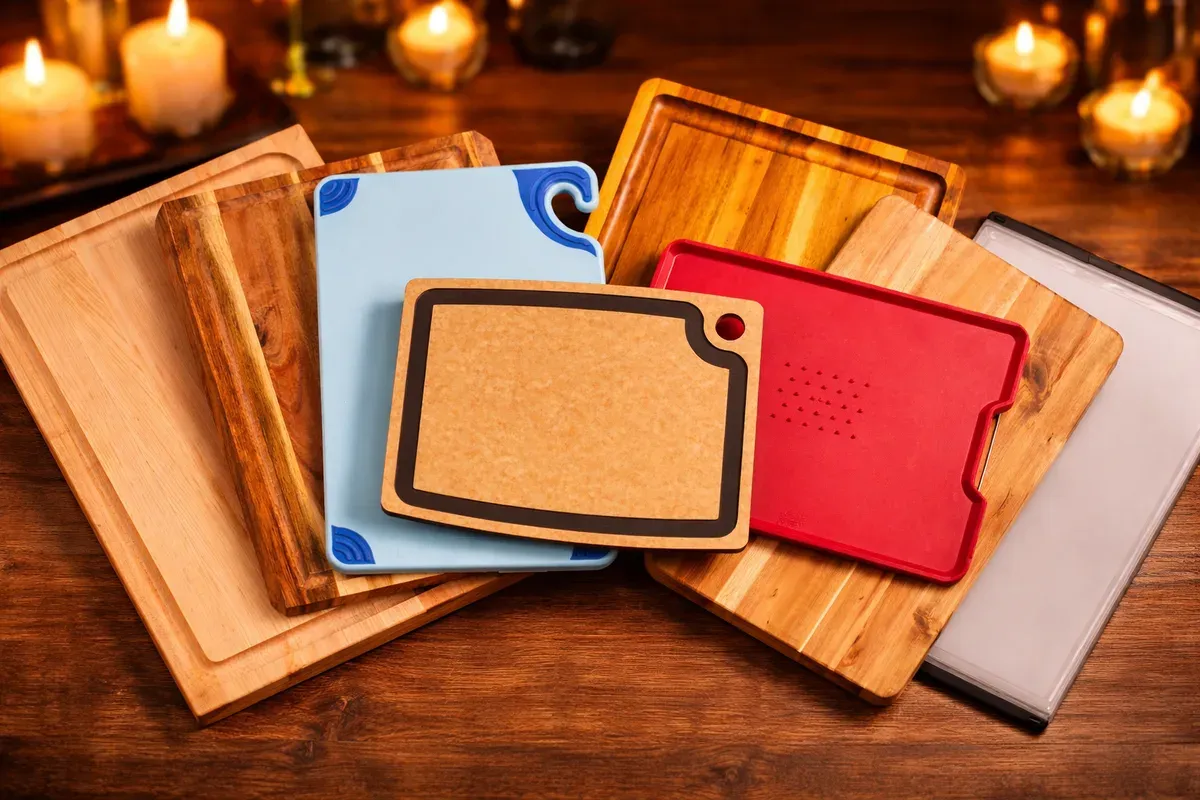
Cutting boards are one of those purchases that feel boring until you realize they control two things you actually care about: how fast your knives get dull, and how gross your kitchen gets over time. Pick the wrong cutting board material and you’re re-sharpening your good knife every three weeks while your board quietly harbors last Tuesday’s garlic.
Quick heads up: some links in this article are affiliate links. If you buy through them, I earn a small commission at no extra cost to you. This breakdown is also informed by a Prudent Reviews comparison that tested cutting board materials specifically for knife dulling and real-world usability.
The quick answer: what to buy right now
If you just want the “tell me what to get” version:
Best all-around for most home cooks: a wood board, especially end-grain, plus a cheap plastic board for raw meat. That covers 95% of home cooking without any complicated system.
Best if you want dishwasher-safe and low-maintenance: a composite board (think Epicurean-style).
Best if you want grippy and genuinely knife-friendly: a rubber board. More of a serious-cook upgrade than a first purchase, but worth knowing about.
And if TikTok has been selling you on metal boards: stainless steel and titanium are not smart defaults for normal home cooking. They come with real tradeoffs, and the knife dulling alone makes them hard to recommend.
The 5 questions that actually decide it
Before getting into the materials, answer these five things. They narrow your options faster than any spec sheet.
What knives do you use? A cheap chef’s knife can survive more abuse. A nice knife, or any knife you care about keeping sharp, makes board material a meaningful decision.
How much do you hate maintenance? Wood is excellent, but it needs occasional oiling, hand-washing, and no dishwasher. If that sounds like a commitment you won’t keep, composite or plastic will serve you better.
Do you cook meat often? You’ll want a separate board for raw meat. More on that below.
Do you use your dishwasher? This is where composite and plastic pull ahead. Throw the board in, forget about it.
What’s your counter situation? A board that slides is a board you won’t enjoy using. Stability matters more than people admit. A non-slip cutting board mat under any board solves this cheaply.
Wood cutting boards: the crowd favorite (for good reason)
Real wood boards made from maple, walnut, cherry, or teak remain the most popular choice among home cooks who care about both performance and how their kitchen looks. The reputation is earned.
The knife-friendliness is real. A wood surface, especially end-grain, lets the blade pass between wood fibers rather than across them. That means less micro-damage to the edge per cut, which means your knife stays sharp longer between honing sessions.
End-grain vs edge-grain: End-grain boards have that checkerboard pattern. They’re gentler on knives and partially self-healing: small surface cuts compress closed over time. They’re also usually thicker, heavier, and pricier. Edge-grain boards are the flat-grained ones, typically cheaper and thinner. Still good, just not as plush.
Wood is knife-friendly, beautiful on the counter (a genuine date-night visual), and stable when thick enough. The downside: it needs occasional oiling and hates the dishwasher. Soak it or leave it in standing water and it’ll warp. It’s not high maintenance, just specific about how it’s treated.
An end-grain maple cutting board 16x12 covers most home prep without crowding a standard counter. Grab food-grade mineral oil at the same time and condition the board once before first use.
Plastic, bamboo, and composite: the practical workhorses
Plastic (HDPE) is cheap, dishwasher-safe, and excellent as a dedicated raw-meat board. Knife marks accumulate faster than on wood, and deep grooves can harbor bacteria if the board isn’t replaced regularly, but for something that goes straight into the dishwasher after every raw chicken encounter, it’s the right tool for the job. A set of HDPE cutting boards in multiple sizes costs almost nothing and keeps raw meat completely separate from everything else.
Bamboo looks like wood but behaves differently. Technically a grass compressed and laminated into boards, bamboo tends to be denser than hardwood, which means it can be harder on knife edges over time. The laminated glue seams can also weaken with repeated washing. It’s a fine choice if you treat it gently and don’t expect much from your knives anyway. If you still want one: a thick bamboo cutting board is a reasonable starting point, just be realistic about edge care.
Composite boards (Epicurean-style, paper-and-resin construction) offer a middle path: dishwasher-safe, thin enough to store easily, and lower maintenance than wood. They can be louder when chopping and lack the visual warmth of solid wood, but for a no-fuss daily driver that doesn’t need oiling or special washing, they hold up well. The Epicurean composite cutting board is the standard reference point in this category.
Rubber and metal: the niche picks
Rubber boards are the “if you know, you know” option. Prudent Reviews specifically highlights Hasegawa as the benchmark here, and that reputation is consistent across serious home cooks and professional kitchens. The surface has a slight give that is notably kinder to knife edges than plastic or composite, and the grip means your board stays put without needing a mat underneath.
Honestly, if I were building a cutting board setup from scratch today for regular serious cooking, a Hasegawa-style rubber board would be at the top of my list. The chopping feel is satisfying in a way that’s hard to explain until you’ve used one. Hasegawa is most reliably found through Japanese specialty retailers or cookware shops: look for “Hasegawa Pro-PE Lite” and verify the seller lists “made in Japan” and a specific model. Japanese grocery stores sometimes stock or can special-order these.
Stainless steel boards are easy to sanitize and absorb no smells, but they are hard on knife edges and loud when you chop. If you want to see what you’re signing up for: stainless steel cutting board.
Titanium boards are having a moment. They’re durable and easy to clean, but expensive and divisive in actual cutting feel. Every consistent review I’ve seen lands in the same place: niche product, not a meaningful upgrade for most people. If you want to see what the hype is: titanium cutting board.
The two-board setup that covers everything
This is the practical recommendation: two boards, both serving a distinct purpose, no complexity.
Board one (main board): Wood, ideally end-grain, or rubber. Use this for vegetables, bread, herbs, fruit, cooked proteins, and anything that isn’t raw meat. Treat it well and it keeps your knives in good shape.
Board two (meat board): Cheap plastic or HDPE, dedicated to raw meat and poultry. It goes in the dishwasher every single time, no exceptions, no debate.
That combination covers the whole kitchen without any elaborate cleaning system. The investment in board one does real work for your knife edges. Board two exists to take abuse and be replaced when it gets too scarred.
Shopping tips and the date-night logic
A few things worth knowing before you buy:
Bigger is almost always better. A board that’s too small makes cooking stressful: ingredients fall off the edge, there’s no room to push things aside, and every session feels cramped. Err on the side of larger.
If your board slides, a non-slip cutting board mat under it is a $10 fix for a problem people tolerate for years. There’s no reason to cook on a moving surface.
If you buy wood, oil it. Once a month is enough for most home cooks. It takes two minutes and actually extends the board’s life by years. Food-grade mineral oil works; skip the olive oil (it goes rancid in the wood).
Here’s the date-night angle: a big, stable wood board genuinely changes the vibe of cooking together. Less chaos, less scrambling, more of that easy back-and-forth where you’re actually enjoying the prep instead of fighting it. An end-grain maple board on the counter looks like you know what you’re doing. Because you do.
If you’re cooking something that demands real prep work, like a beef ragu pappardelle or a 3-day aged miso duck breast, a proper board makes every step cleaner and more controlled. The right surface is not the sexy part of cooking. It’s the part that makes everything else feel easy.
Related Recipes
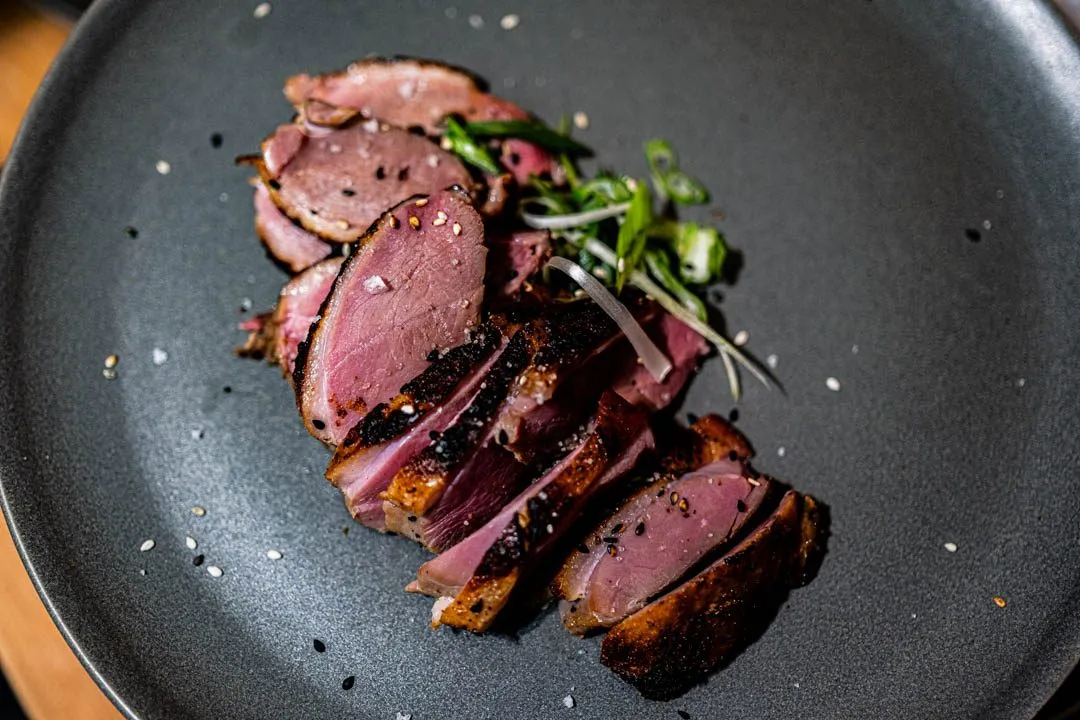
3-Day Miso Duck Breast (Crisp Skin)
Miso-cured duck breast with shatter-crisp skin and a Japanese-French glaze. Three days of patience, one unforgettable bite. The ultimate date night flex.
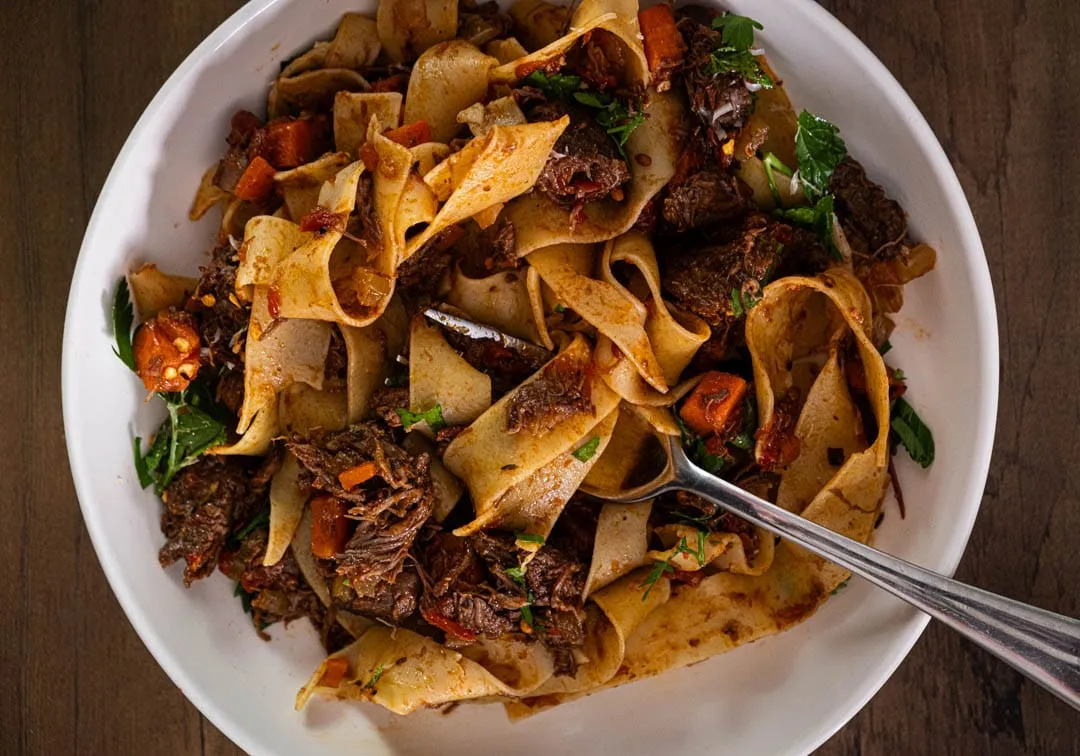
Slow-Cooked Beef Ragu with Pappardelle Pasta
The slow-cooked ragu that says 'I've been thinking about you all day.' Chuck roast, red wine, and pappardelle worth every minute.
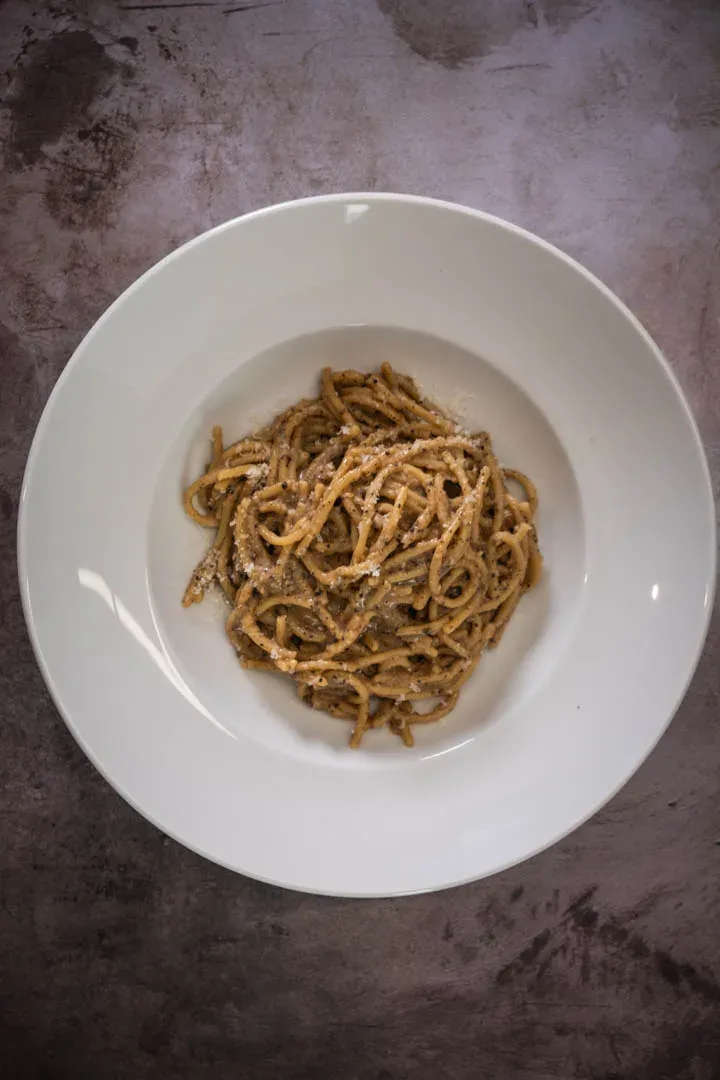
Authentic Cacio e Pepe Recipe
Five ingredients. Zero cream. The Roman pasta that makes your date put their phone down mid-bite. Cheese, pepper, and pure confidence.
Victor Vu
Victor is a Montreal home cook with a decade of experience developing date night recipes. Every dish is tested at least three times before publishing.
About the author →Frequently Asked Questions
Is bamboo actually a good cutting board material?
Bamboo looks like wood but behaves differently. Most bamboo boards are denser than hardwood, which means they can be tougher on knife edges over time. The laminated glue seams can also weaken with repeated washing. It's a reasonable choice if you treat it gently, but it's not the knife-friendly option its marketing suggests. For daily prep, a proper wood or composite board is a better call.
Do I really need separate cutting boards for meat and vegetables?
Yes, and it's simpler than it sounds. Keep a cheap plastic or HDPE board dedicated to raw meat and poultry: it goes in the dishwasher after every use. Use your nicer wood or composite board for everything else. This two-board setup eliminates cross-contamination risk without requiring any special cleaning routine. It also makes cooking feel more organized, which matters when someone's watching.
Are titanium or stainless steel cutting boards worth it?
They clean easily and resist odors, but both are hard on knife edges. A standard chef's knife dulls noticeably faster on metal surfaces than on wood, rubber, or composite. Unless you're using ceramic knives or need commercial-kitchen sanitization standards, metal boards are a visual trend with real tradeoffs. The knife dulling alone makes them hard to recommend for everyday home cooking.