Cooking Essentials: A Starter Kit
Build your kitchen confidence with the 10 essential tools every beginner needs. From chef's knives to thermometers, start cooking amazing meals at home.

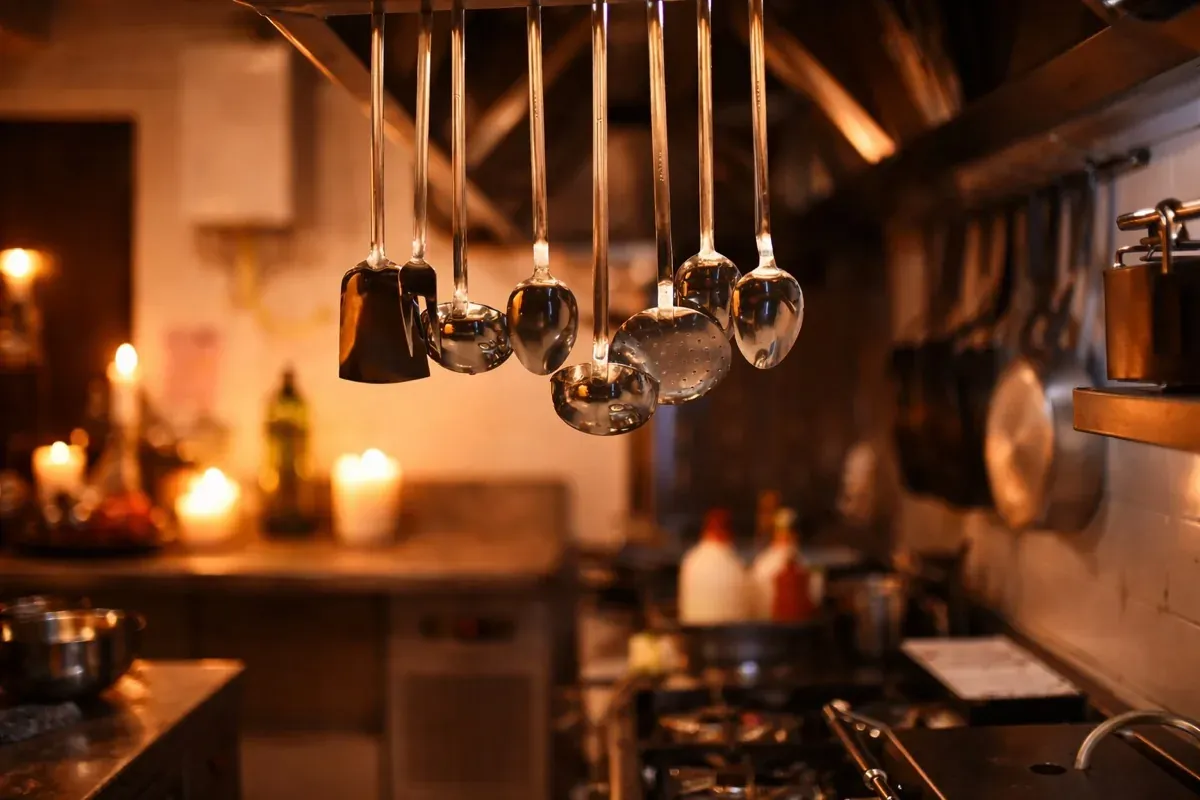
If you are building a kitchen from scratch, you do not need a drawer full of gadgets. You need a small, reliable set of essentials that make cooking faster, safer, and genuinely less stressful. This is the kit I would buy first.
The internet will try to sell you a 47-piece kitchen set for $89. Don’t fall for it. Most of those pieces end up wedged in the back of a drawer between a garlic press you used once and a melon baller you forgot you owned. What you actually need is a tight, deliberate collection of tools that do real work, not shelf decoration.
Affiliate note: The links in this article are Amazon affiliate links. If you buy through them, I may earn a small commission at no extra cost to you.
Top 10 Must-Have Tools for Beginner Home Cooks
Every pick below includes what it actually does, what to look for so you don’t waste money, and how to use it so your food tastes better. Professional cooks use maybe a dozen tools daily. The rest is specialty gear. A sharp knife, a solid pan, and a reliable thermometer will outperform a kitchen full of gadgets every single time. Think of it like a capsule wardrobe for your kitchen: ten pieces, infinite combinations.
1. Chef’s Knife (8-inch)
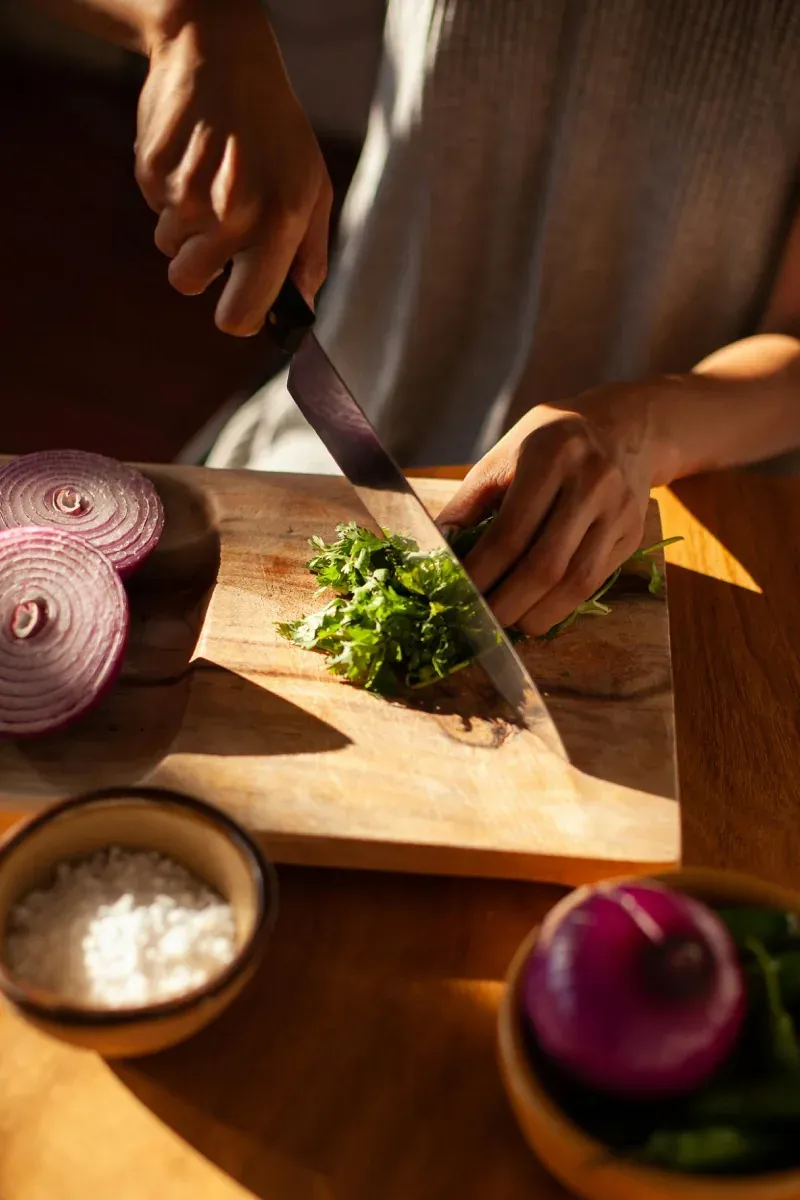
If chopping feels like a chore, cooking will feel like a chore. A decent knife makes onions, herbs, and chicken easier, and it is safer because you are not forcing a dull blade through food. This is your all-purpose tool, the one that touches almost every meal you will ever make. Not a knife set (those are mostly filler), not a santoku (fine but less versatile for beginners). One 8-inch chef’s knife handles mincing garlic, slicing onions, breaking down a chicken, and chopping herbs. Countless tasks, one blade.
What to look for: a comfortable handle, balanced feel, and enough knuckle clearance so your fingers are not slamming into the cutting board. Keep it sharp. A mediocre sharp knife beats an expensive dull one every day of the week. Learn the claw grip once and it pays you back forever.
The Victorinox Fibrox is the knife culinary schools hand to first-year students. It takes and holds an edge, the handle is comfortable for hours of prep, and it costs less than a nice dinner out. There is genuinely no reason to spend $200 on a beginner knife when this one exists.
2. Large Cutting Board
A big board makes everything calmer. You can prep without ingredients falling off the edge every 10 seconds, and your knife stays sharper longer on a proper surface. Flimsy boards slide around, dull your blade, and make prep feel like punishment.
What to look for: a big surface, a stable grip (or just put a damp towel underneath for zero sliding), and easy cleanup. If it smells like garlic forever, scrub with salt and lemon. The OXO Good Grips board checks every box. Non-slip feet, a juice groove for catching liquids, and it is dishwasher-safe. It will not warp on you after six months like the cheap bamboo ones. If you want to go deeper, our cutting board material guide breaks down every surface worth considering.
3. Stainless Steel Skillet (10 to 12-inch)
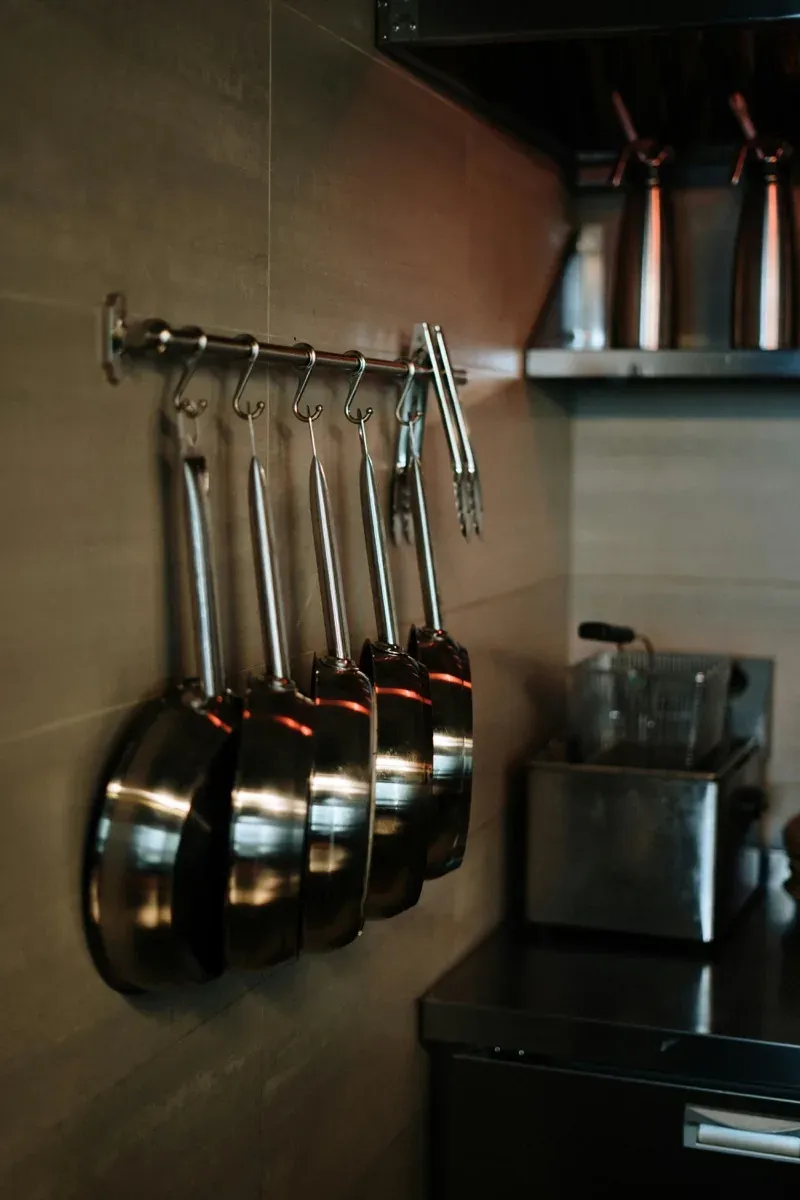
If you want that “restaurant sear,” this is the pan. Stainless steel is where real browning happens, and those browned bits (the fond) turn into pan sauce. It is the foundation of “sear, deglaze, sauce,” and nonstick simply cannot give you that. A recipe like pork osso buco starts with exactly this technique.
What to look for: tri-ply or fully clad construction for even heating, a 10 to 12-inch diameter, and an oven-safe handle. Preheat, then add oil, then add protein. If food sticks, it usually means it is not ready to release yet. Patience wins here.
The Tramontina Tri-Ply is a restaurant industry workhorse. Even heat distribution, oven-safe to 500F, and it costs a fraction of the All-Clad that does the same job. Season it properly, learn to preheat it, and this pan will outlast every nonstick you will ever buy.
4. Nonstick Skillet (8 to 10-inch)
This is your “easy wins” pan. Eggs, pancakes, delicate fish, tofu. Every kitchen needs one alongside the stainless. What to look for: a comfortable handle, even heating, and not too heavy. The trick is keeping the heat at medium. High heat kills nonstick coatings fast. Use silicone or wooden utensils instead of metal, and this pan will last you years instead of months.
A solid pick for nonstick: OXO Non-Stick Pro 10-inch skillet.
5. Saucepan with Lid (2 to 3 quart)
Rice, pasta sauce, quick noodles, reheating leftovers, small soups. You will grab this constantly, probably more often than you expect. It is the pan behind something like cacio e pepe, where controlling heat in a small surface area matters. Look for a lid that fits well and a thicker base so it does not scorch dairy or sugar-based sauces. Lower heat than you think, and stir once you see bubbles forming around the edge.
A solid everyday option: Cuisinart MultiClad Pro 3-quart saucepan.
Scale, Measure, and Roast Right
The rest of your kit is less glamorous but just as important. Pots, a scale, oven gear. Nothing needs to cost a fortune here.
6. Stock Pot or Dutch Oven
This is how you level up from “I cooked dinner” to “I have food for the week.” Pasta nights, chili, soups, braises. A beef ragu with pappardelle is exactly the kind of recipe where a Dutch oven earns its place. If you are choosing between a big stock pot and a Dutch oven, think about what you cook most. Stock pot for boiling pasta and making large batches of soup. Dutch oven for braises and stews that go from stovetop to oven.
Look for enough capacity to actually be useful and a lid that seals decently. For braises, season in layers: salt early, acid late. For soup that tastes flat, the fix is usually salt and a finishing touch (lemon, vinegar, fresh herbs).
Good starting points: 8-quart stainless steel stock pot or Lodge 6-quart enameled Dutch oven.
7. Instant-Read Thermometer
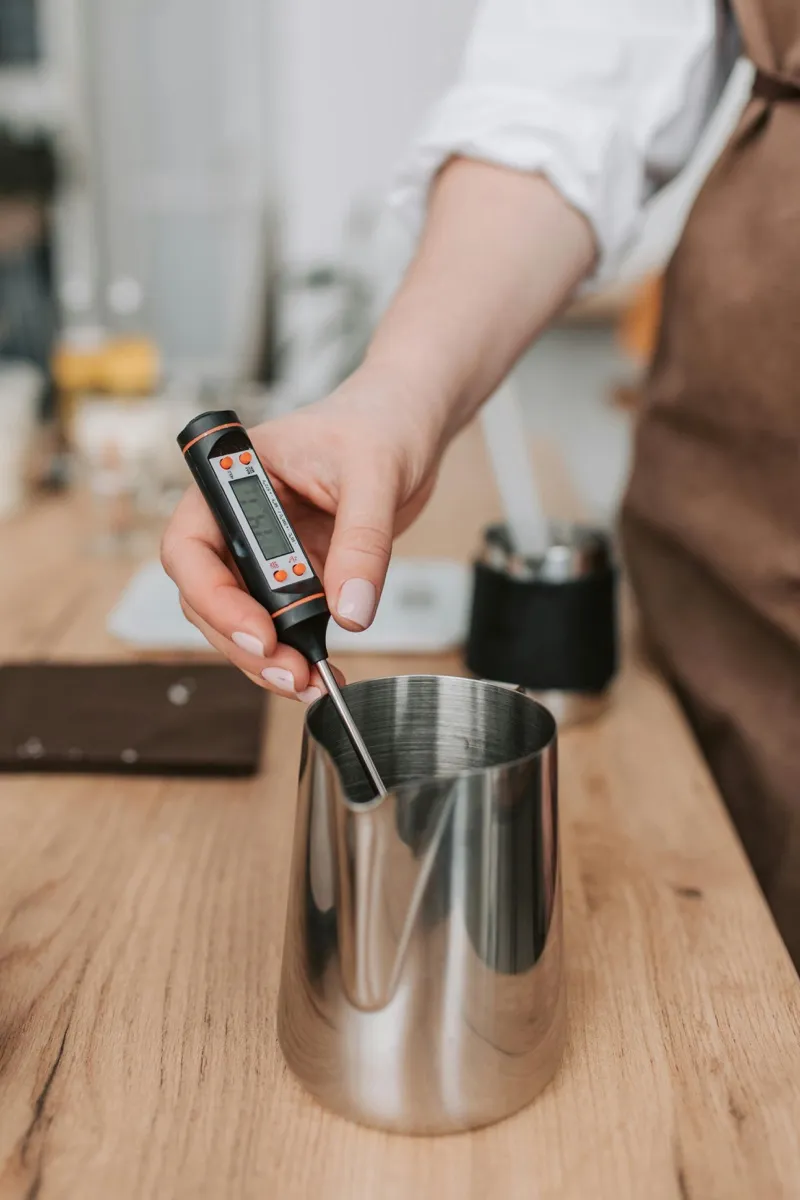
This removes the whole “is this cooked?” anxiety. It is almost cheating. No more cutting into a chicken breast to check doneness. No more serving a pork chop that is either raw in the middle or dry as cardboard. You stick the probe in, read the number, and know exactly where you stand.
What to look for: a fast read and an easy-to-read screen. Use it to learn feel. After a month, you will need it less. Pull meat slightly early and let it rest; carryover cooking does the last bit of work for you.
The ThermoPop reads in three seconds, is accurate to within one degree, and has a backlit display you can actually read. It is the kind of tool that makes you wonder how you ever cooked without it.
8. Digital Kitchen Scale
Baking by volume (cups and tablespoons) is imprecise. A “cup of flour” can vary by 30% depending on how you scoop it. A digital kitchen scale removes that variable entirely. It also makes cleanup easier: weigh ingredients directly into the bowl instead of dirtying six measuring cups. Two things to look for: grams and a tare button. That is it.
A reliable option: Escali digital kitchen scale.
9. Rimmed Sheet Pan
Roasting is beginner-friendly because the oven does most of the work, and a proper sheet pan makes it almost foolproof. Roast vegetables, bake fish, toast nuts, catch drips under a broiler. Look for a heavy-gauge pan that does not warp and has a full rim. The key to great roasting: do not crowd the pan. Give things space. High heat plus oil plus salt equals roasted flavor every time.
This is the classic workhorse: Nordic Ware half sheet pan.
10. Tongs (12-inch)
Once you own a good pair of tongs, you stop using forks for everything. Flip meat cleanly, toss pasta right in the sauce, serve salad like you actually know what you are doing. Look for a strong spring, grippy tips, and a lock mechanism that is not annoying. They act as an extension of your hand, and you will reach for them more than anything except the knife.
For tongs you will actually use every day: OXO Good Grips 12-inch kitchen tongs.
Quick Buy Priority Order
If your budget is tight, buy in this order. The first five items alone will cover most cooking techniques:
- Chef’s knife and cutting board (everything starts here)
- Instant-read thermometer (confidence with every protein)
- Stainless steel skillet (searing, sauteing, pan sauces)
- Saucepan (soups, sauces, grains, pasta)
- Rimmed sheet pan (oven roasting, baking, broiling)
You can get these five for well under $150 CAD. That is less than two months of takeout, and these tools will serve you for years. No excuses. Start cooking.
Recommended Products
Victorinox Fibrox 8-inch Chef's Knife
The best budget chef's knife for beginners
OXO Good Grips Large Cutting Board
Low-maintenance, non-slip cutting board
Tramontina Tri-Ply 12-inch Stainless Skillet
Restaurant-quality searing at a budget price
ThermoPop Instant-Read Thermometer
Takes the guesswork out of doneness
Victor Vu
Victor is a Montreal home cook with a decade of experience developing date night recipes. Every dish is tested at least three times before publishing.
About the author →Frequently Asked Questions
What kitchen tools should a beginner buy first?
Start with a chef's knife, cutting board, stainless steel skillet, instant-read thermometer, and a rimmed sheet pan. These five tools cover most cooking techniques.
How much should I spend on starter kitchen tools?
You can get a solid starter kit for under $200 CAD. Invest more in the knife (you will use it daily) and save on items like sheet pans and tongs.
Do I need both a stainless steel and nonstick skillet?
Eventually, yes. Start with stainless for searing and browning, then add nonstick later for eggs, pancakes, and delicate fish.