Miso Udon Carbonara (Silky, No-Cream)
Chewy udon noodles in a silky egg yolk and cheese sauce with white miso and crispy bacon. No cream, 20 minutes, genuinely impressive.

Prep
10 min
Cook
10 min
Total
20 min
Difficulty
Easy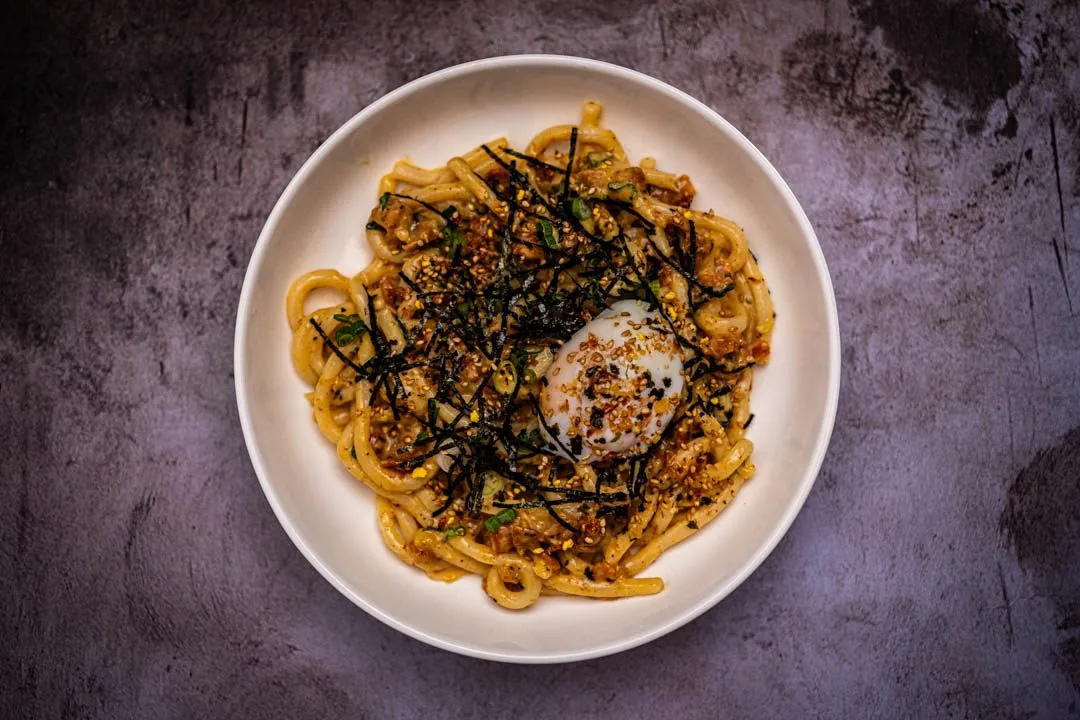
This is my go-to “date night at home” move. Chewy udon noodles tossed in a glossy, no-cream sauce built from egg yolk, cheese, and black pepper, with a quiet hit of white miso for depth. Bacon makes it feel indulgent. The whole thing comes together in about 20 minutes. If you want a dish that says I planned this even when you absolutely did not, this is it.
The story behind the bowl
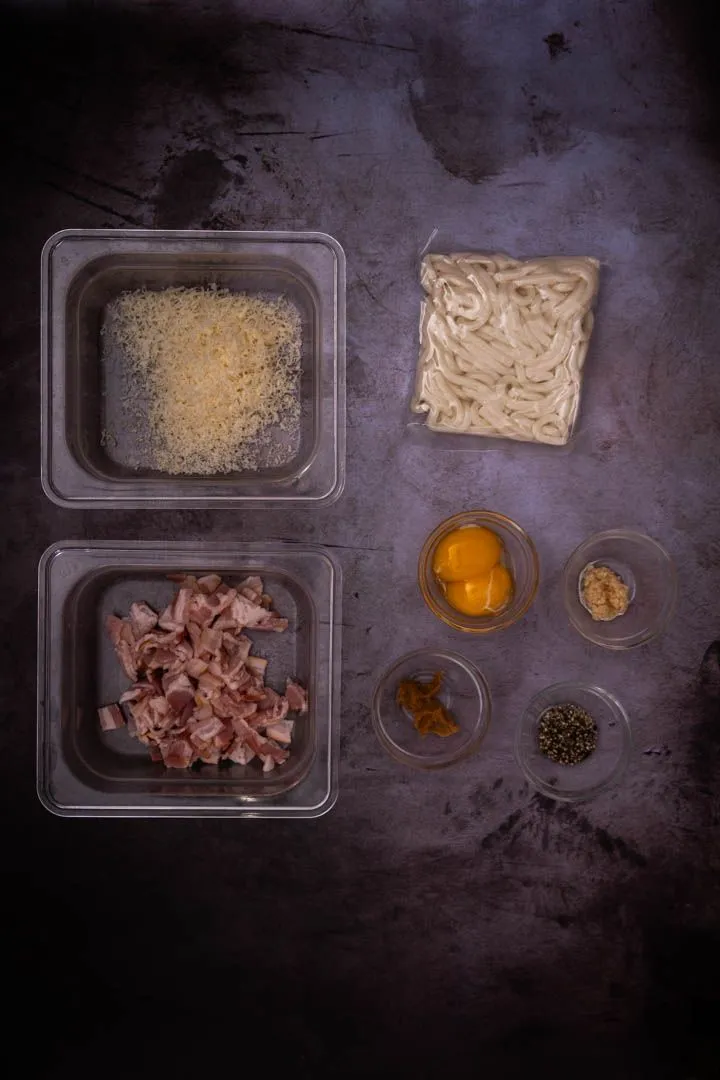
Carbonara is the ultimate homecook flex. Simple, fast, and when it lands, genuinely restaurant-level. The magic is that you get a creamy sauce without cream by emulsifying yolk, melted cheese, and starchy noodle water.
Udon is the twist here because it is thick and bouncy, so it grabs sauce like it was built for it. The dish feels playful and modern: yes, it is carbonara, but it is also a cozy noodle bowl you would absolutely order on a rainy Montreal night.
And then the miso. Not trying to turn this into miso soup. Just enough white miso to add umami, round out the cheese, and make the whole thing taste more layered. Two teaspoons disappear into the sauce, but you notice when they are gone. If you want miso as the main event rather than the background note, Bold Spicy Miso Ramen is the move.
Why each ingredient pulls its weight
Udon noodles grip sauce the way thinner pasta simply cannot. Those thick noodles hold onto the emulsion, so every bite stays glossy instead of sliding off. The starch content is higher and the chew gives the finished bowl a satisfying weight that spaghetti never quite delivers.
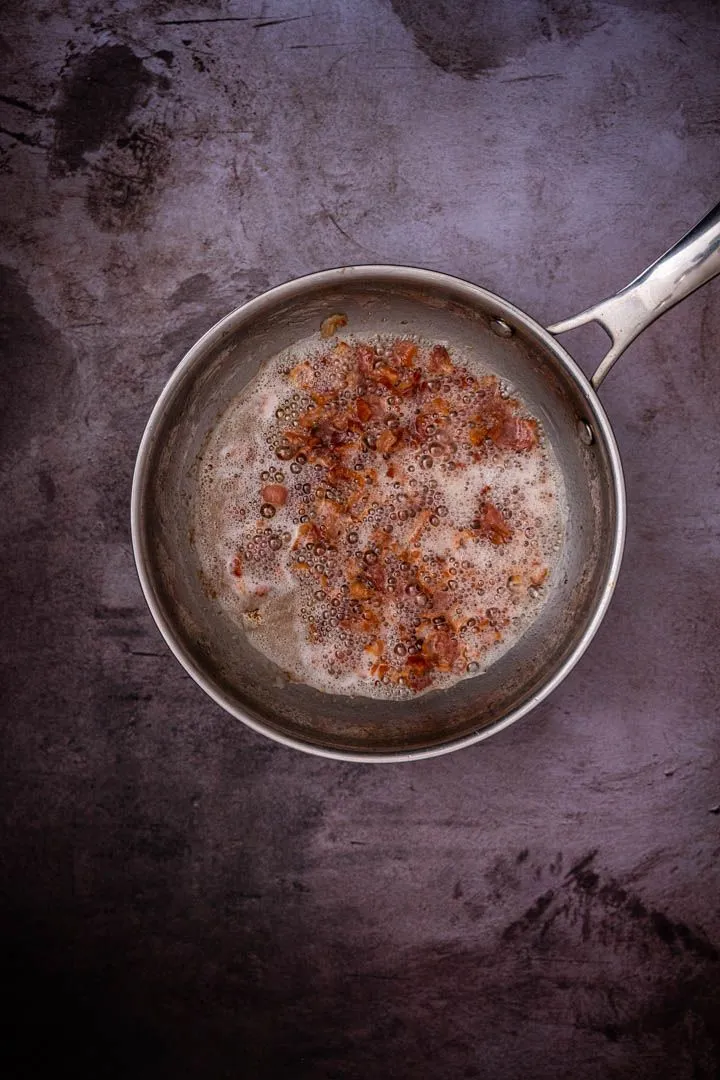
Bacon fat is the base note. It carries the garlic aromatics and coats the noodles before the egg mixture even arrives. Starting with a cold pan and rendering slowly means you extract more usable fat, and that fat layer is what makes the sauce emulsify cleanly rather than seize or separate.
Egg yolks and cheese build the sauce without cream. As Harold McGee explains in On Food and Cooking, egg yolk proteins begin to denature around 65 C, well below the temperature of a hot pan but above room temperature. The residual heat of freshly cooked noodles is exactly enough to thicken the yolks gently without scrambling them, as long as the pan has had 30-60 seconds off heat first. The Foolproof Egg Formula goes into the exact temperatures where yolks set, which makes the 30-second rest off heat make a lot more sense.
White miso is the ingredient people question and then never leave out again. Fermentation produces glutamate-rich compounds that amplify the savory quality of the cheese without making the dish taste like miso soup. Miso plus aged cheese creates depth that neither produces on its own. The sauce ends up tasting aged, like it got overnight depth in twenty minutes. Stick to white (shiro) miso here. Red miso has a stronger fermented punch that tends to take over.
The one rule that keeps it silky
If carbonara has ever betrayed you, it is always the same reason: too much heat. Yolk proteins that hit a screaming-hot surface tighten immediately and form curds. Still edible, still tasty, but not the vibe when you are trying to impress.
The fix: turn the heat off, wait 30-60 seconds, then toss hard. That pause is the entire margin between silky and scrambled. The noodles stay hot enough to thicken the sauce; the pan cools just enough to stop the proteins from seizing.
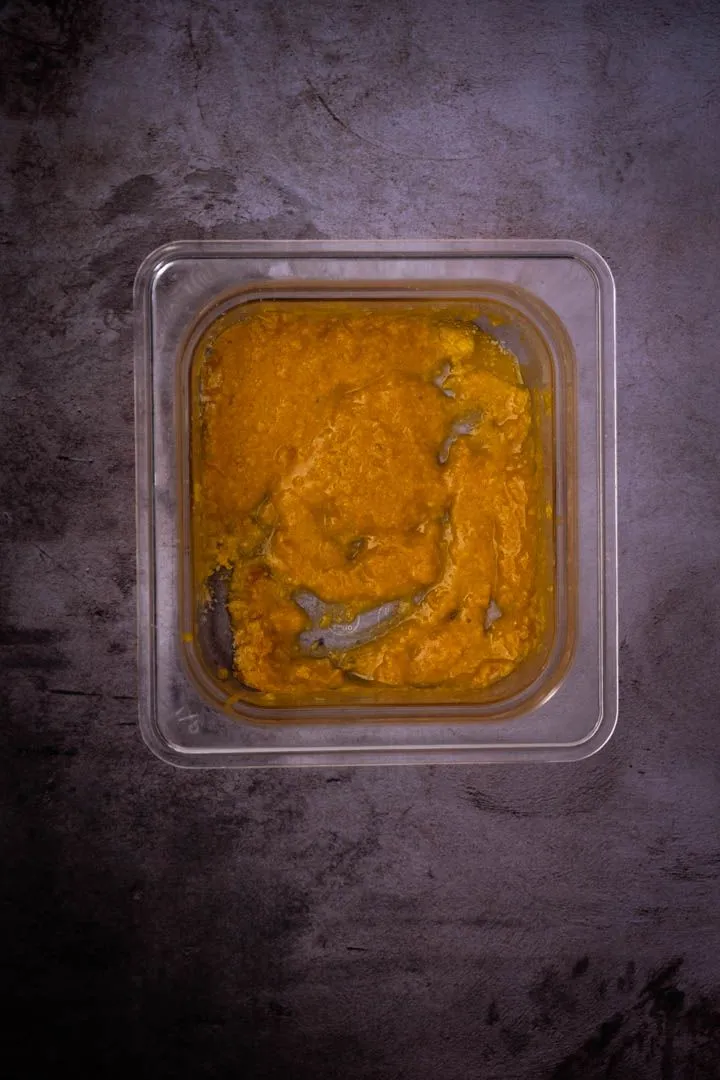
Udon water does the rest. The starch in udon cooking water is higher than in standard pasta water, so it binds fat and protein into a stable emulsion quickly. Add it in small splashes while tossing vigorously, and stop the moment the sauce turns shiny and stops pooling at the base of the pan. Whisking a tablespoon of hot udon water into the yolk mixture beforehand also helps: it warms the eggs slightly and dissolves the miso fully so there are no unmixed bits to chase later.
Bringing it all together
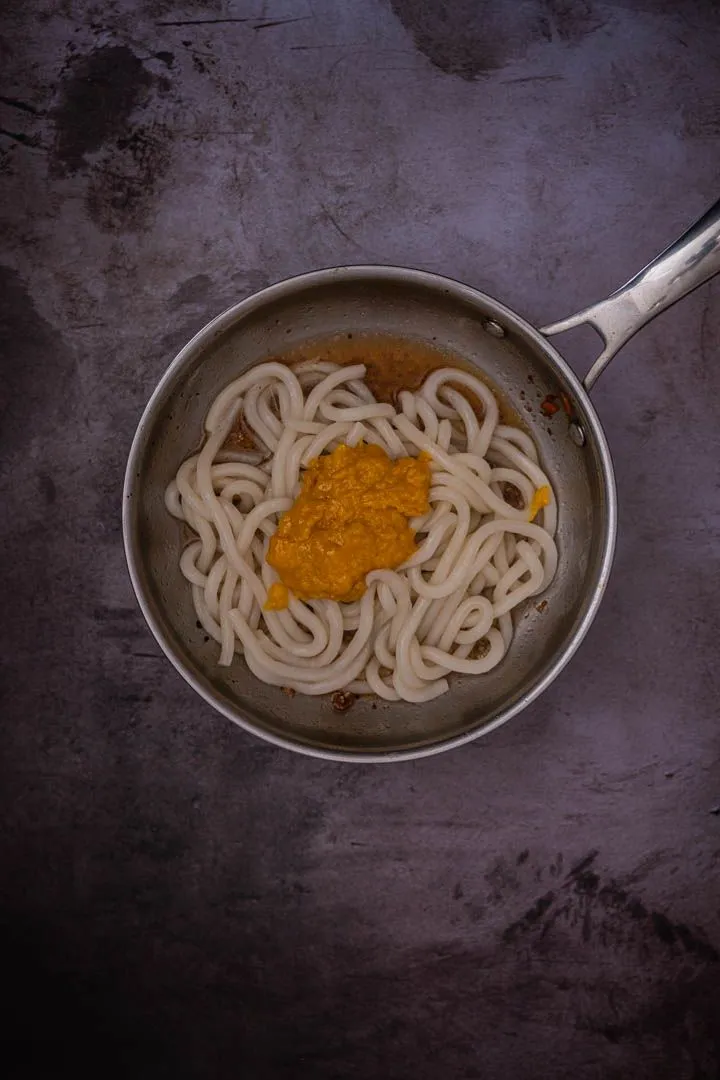
A few things that make the difference between good and really good here. Grate the cheese finely. Pre-grated from a bag has anti-caking agents that block the emulsion. A microplane and thirty seconds of grating is the difference between a sauce that flows and a sauce that clumps.
Use noodle water like a dial: add a little, toss, and stop the moment it turns glossy. Salt last, if at all. Cheese and miso together are already intense, so taste before reaching for the salt.
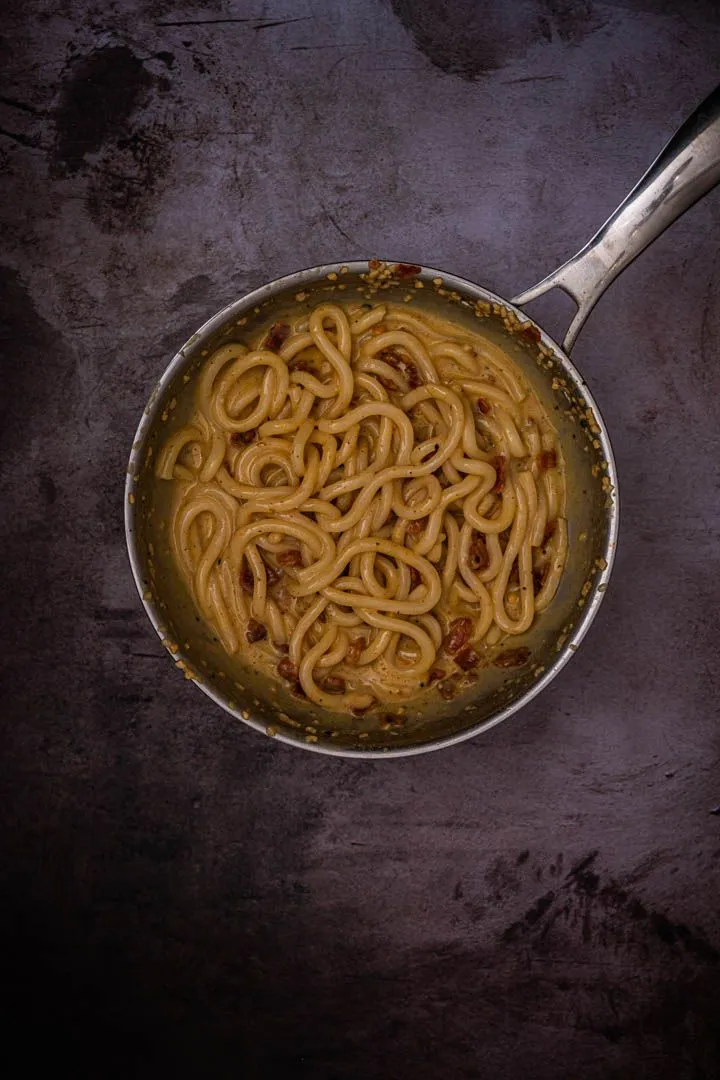
If it looks too thick, it is not ruined. It just needs more water and aggressive tossing. If it scrambled, add water and toss off heat. It will smooth out, not perfectly glossy, but still very good. If it is too salty, a squeeze of lemon, a handful of wilted greens, or more noodles will bring it back.
Making it a date night
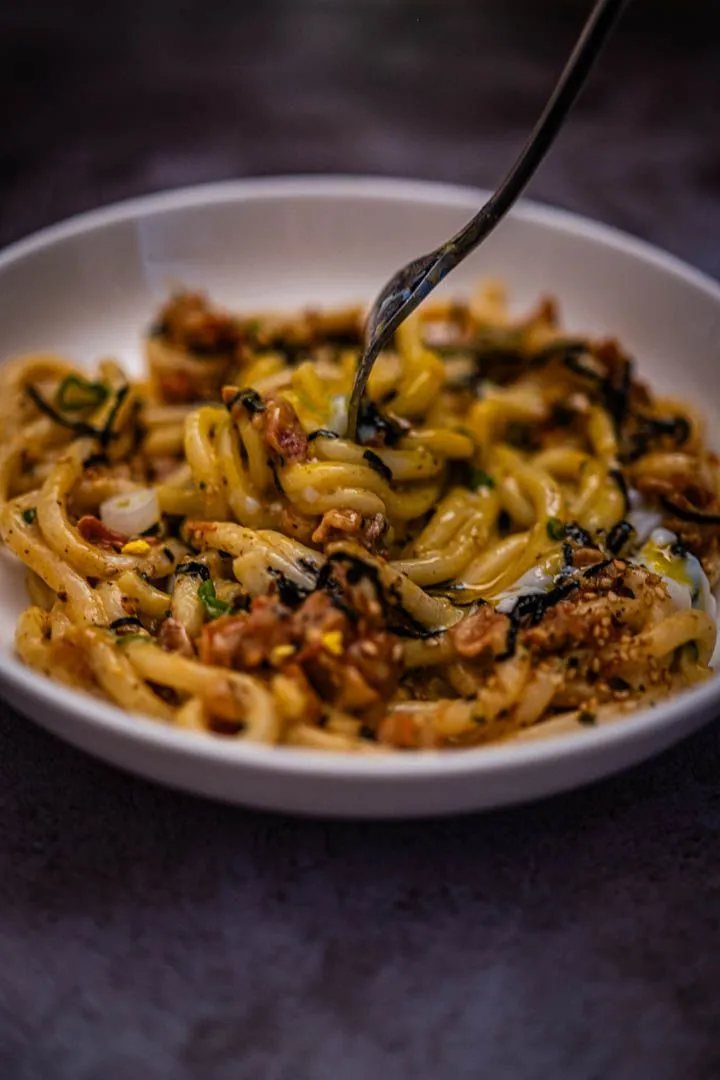
Twenty minutes means the kitchen stays relaxed. No hour-long braise, no timing anxiety, no one stuck at the stove while the other person sits around. You can have a drink and a real conversation while the bacon renders.
Prep before your date arrives: grate the cheese, mince the garlic, whisk the yolks with the miso and pepper. Put the bowl next to the stove. When they show up, the only active work is crisping the bacon and boiling the udon. About 10 minutes, start to finish.
Share one small task. Grating cheese or slicing chives takes two minutes and feels quietly collaborative. Taste together and decide if you are feeling more sharp (Pecorino) or more mellow (Parmesan). Warm the bowls with hot tap water while you cook, twist the udon into a neat mound with tongs, and add nori or furikake only at the very end so it stays crisp. Nothing performative. Just a simple rhythm that makes dinner at home feel like a date.
Variations worth trying
If you want to skip the pork, brown mushrooms hard in butter or olive oil until the liquid evaporates and the edges caramelize. Use that fat in place of bacon fat and proceed from the sauce step. Deeply browned mushrooms bring the same glutamate hit that makes the miso base work.
For heat, chili crisp or a pinch of gochugaru at the end gives clean, adjustable spice without cooking bitterness into the fat. For a more forgiving sauce, add one whole egg alongside the four yolks. The extra white makes the emulsion slightly looser, which helps if you are still building confidence with heat control. Nori flakes on top push the whole thing in a more Japanese direction, and they pair with the miso in a way that makes the bowl feel complete.
Browse all date night recipes for more ideas along those lines. If the emulsion technique interests you, cacio e pepe is the Roman original this recipe borrows from. For the same glossy noodle energy but with a lot more fire, gochujang kimchi seafood bucatini is the answer. And if you want to slow things down, pork osso buco is the braised counterpart for a longer evening in.
Miso Udon Carbonara (Silky, No-Cream)
Instructions
Add bacon to a cold pan and set over medium heat. Cook until crisp and a good amount of fat has rendered, about 8 minutes.
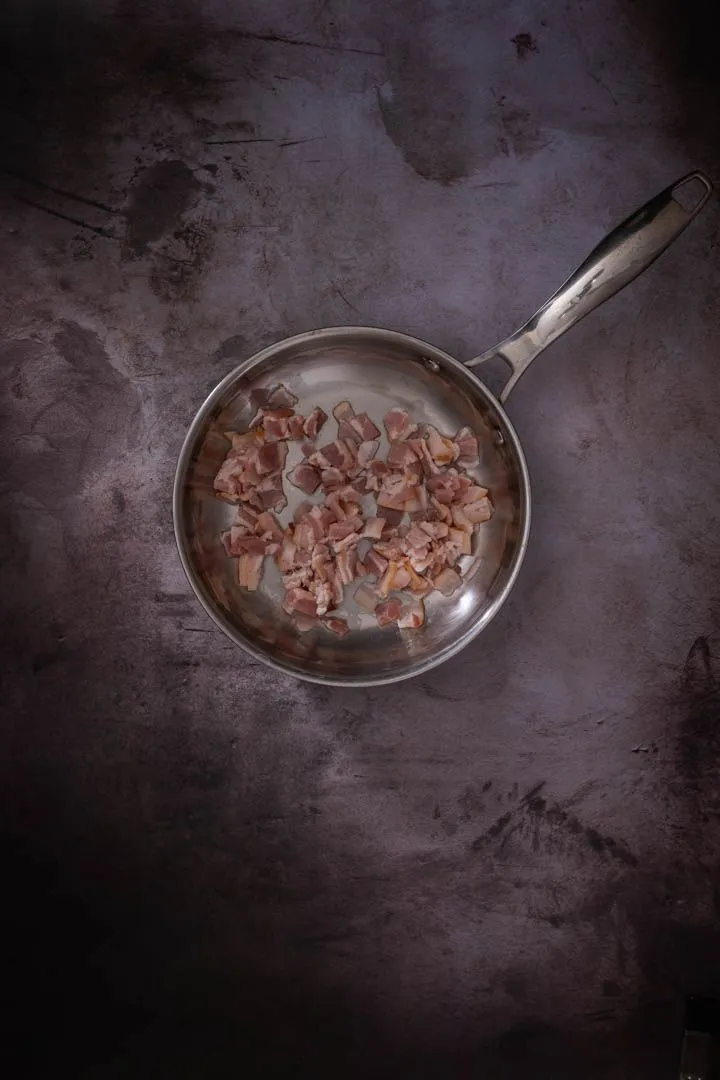
Lower the heat. Stir in minced garlic for 20-30 seconds until fragrant but not browned. Scoop the garlic out with a spoon, leaving the bacon fat in the pan. Turn the heat off.
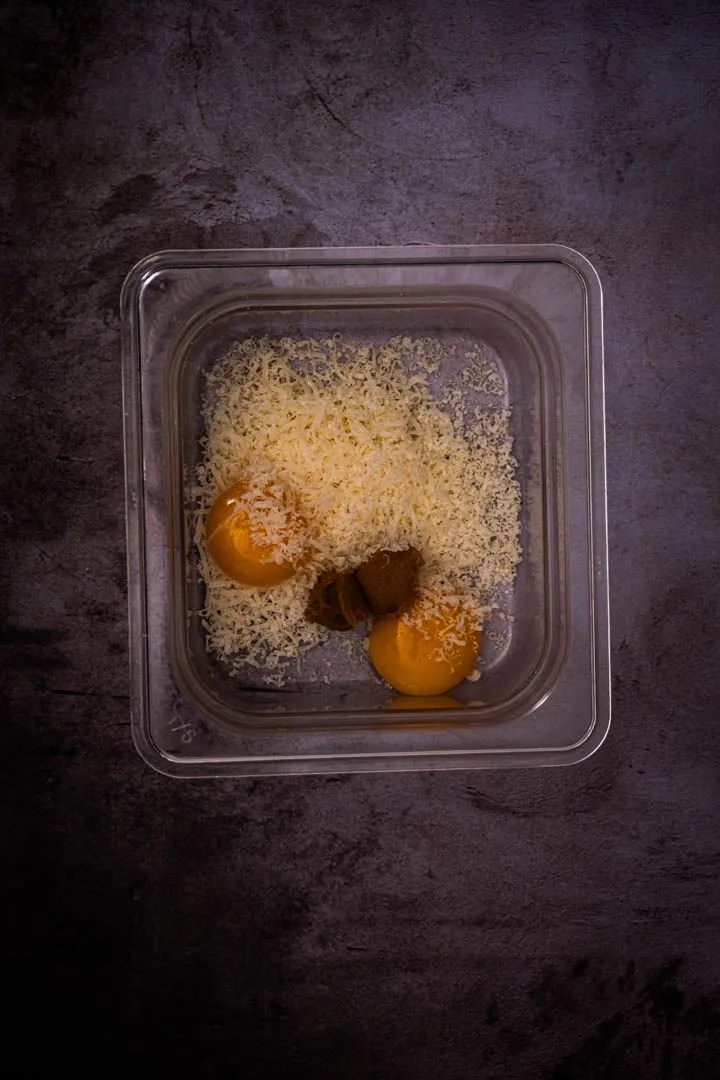
In a bowl, whisk together egg yolks, grated cheese, miso, and black pepper. Add 1-2 tbsp of hot udon water and whisk until smooth. Set aside.
Boil udon just until loosened, about 60-90 seconds for frozen. Reserve at least 1/2 cup (120 ml) of the starchy cooking water, then drain.
Let the pan sit off heat for 30-60 seconds. This is the step that separates silky carbonara from scrambled egg bits.
Add drained udon to the pan and toss to coat evenly in the bacon fat.
Pour in the yolk-cheese mixture and toss vigorously off heat. Add reserved udon water a splash at a time, tossing between each addition, until the sauce turns shiny and clingy.
Divide between warm bowls. Top with chives or green onion, extra black pepper, and nori flakes or furikake if using. Serve immediately.
Date Night Tips
Wine Pairing
A clean Pinot Gris or dry sake both complement the miso and egg richness without competing with the umami. A light Burgundy Chardonnay is the reliable pick if you want to stay in the wine lane.
Music
A Tokyo cafe playlist or lo-fi hip hop: something that makes the kitchen feel quietly sophisticated without trying too hard.
Plating
Warm the bowls with hot tap water while you cook, twist the udon into a neat mound with tongs, and add nori or furikake only at the very end so it stays crisp.
Enjoy your meal!
The Official Recipe
Miso Udon Carbonara (Silky, No-Cream)
Nutrition(Per serving)
780 kcal
Calories
38g
Fat
72g
Carbs
38g
Protein
Ingredients
Noodles and Protein
Sauce
To Serve
Instructions
Add bacon to a cold pan and set over medium heat. Cook until crisp and a good amount of fat has rendered, about 8 minutes.
Lower the heat. Stir in minced garlic for 20-30 seconds until fragrant but not browned. Scoop the garlic out with a spoon, leaving the bacon fat in the pan. Turn the heat off.
In a bowl, whisk together egg yolks, grated cheese, miso, and black pepper. Add 1-2 tbsp of hot udon water and whisk until smooth. Set aside.
Boil udon just until loosened, about 60-90 seconds for frozen. Reserve at least 1/2 cup (120 ml) of the starchy cooking water, then drain.
Let the pan sit off heat for 30-60 seconds. This is the step that separates silky carbonara from scrambled egg bits.
Add drained udon to the pan and toss to coat evenly in the bacon fat.
Pour in the yolk-cheese mixture and toss vigorously off heat. Add reserved udon water a splash at a time, tossing between each addition, until the sauce turns shiny and clingy.
Divide between warm bowls. Top with chives or green onion, extra black pepper, and nori flakes or furikake if using. Serve immediately.
Victor Vu
Victor is a Montreal home cook with a decade of experience developing date night recipes. Every dish is tested at least three times before publishing.
About the author →Frequently Asked Questions
Can I use fresh udon instead of frozen?
Yes, fresh udon works well in this recipe. Cook it just until loosened and still chewy, roughly 30-60 seconds less than the package suggests. The key is keeping the noodles al dente so they hold up when tossed in the hot bacon fat and yolk sauce without going mushy.
Can I add protein beyond the bacon?
Crispy mushrooms are an excellent addition and work beautifully with the miso base. Shrimp is another option, but cook it separately and return it to the bowl at the end. Adding shrimp during the tossing step means it overcooks in the residual heat before the noodles are done.
Do I need both Parmesan and Pecorino Romano?
No. Use whichever cheese you have. Pecorino Romano is saltier and sharper, which amplifies the miso. Parmesan is softer and nuttier, giving a mellower result. Either works. The main thing is grating the cheese finely so it melts smoothly into the emulsion rather than clumping.
Can I add cream to the sauce?
You can add a splash, but this recipe is built to work without it. The silky texture comes entirely from emulsifying egg yolks, finely grated cheese, and starchy udon water with the hot noodles off heat. Cream would mute the miso and make the sauce heavier than it needs to be for a 20-minute weeknight dish.
You might also like
Continue your culinary journey
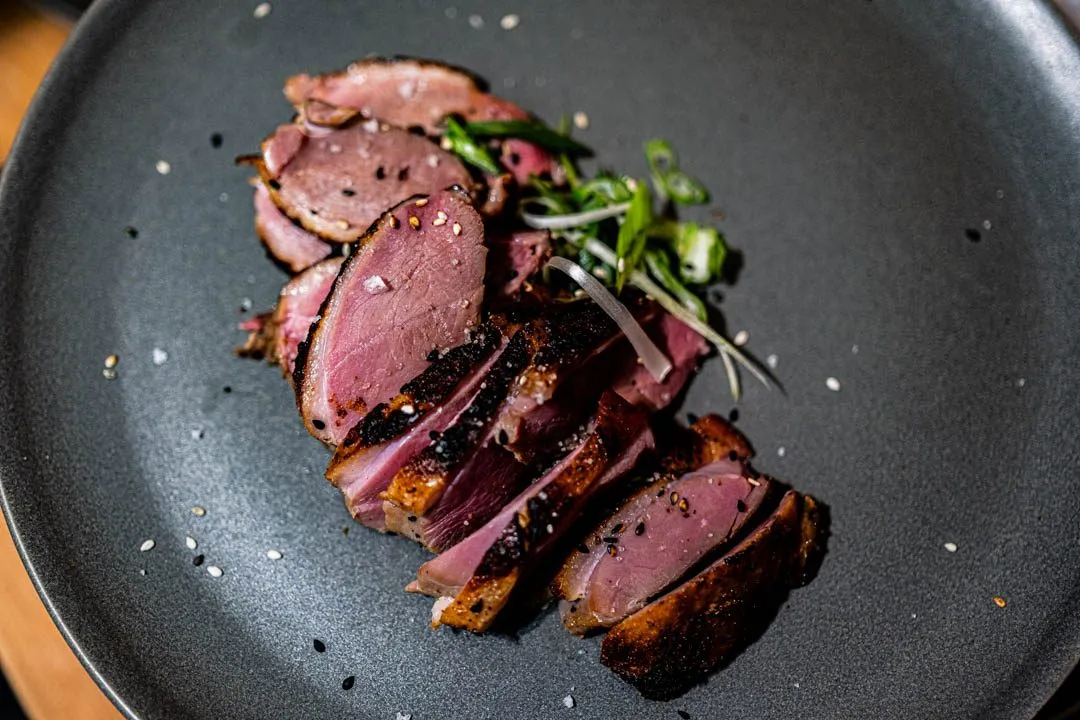
3-Day Miso Duck Breast (Crisp Skin)
Miso-cured duck breast with shatter-crisp skin and a Japanese-French glaze. Three days of patience, one unforgettable bite. The ultimate date night flex.
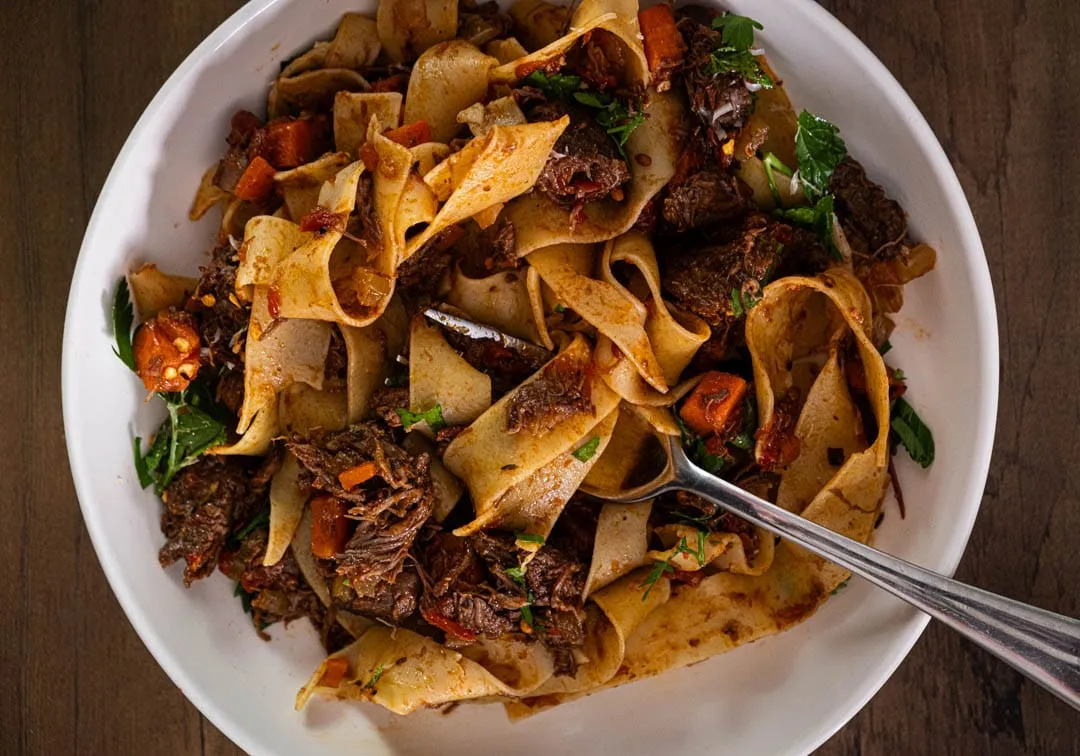
Slow-Cooked Beef Ragu with Pappardelle Pasta
The slow-cooked ragu that says 'I've been thinking about you all day.' Chuck roast, red wine, and pappardelle worth every minute.
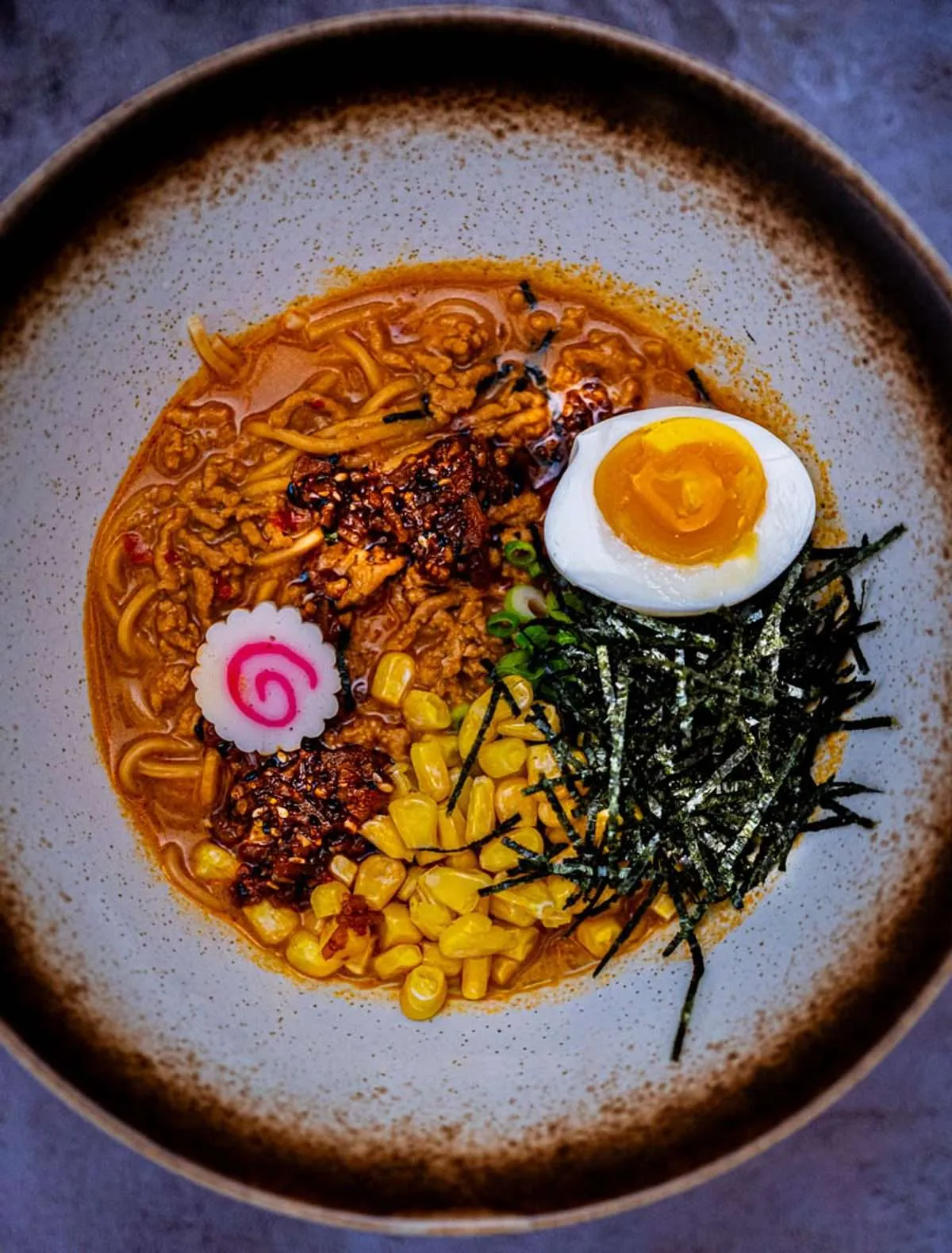
Bold Spicy Miso Ramen (Restaurant-Style)
Spicy, creamy miso ramen with ground pork and a garlic-togarashi oil that makes every spoonful dangerous. Restaurant-quality at home in 75 minutes.